
Here we showcase postcards of interest to our members who contribute from their collections. These might be related to Edinburgh and the Lothians or further afield. The cards may also illustrate a particular aspect of postcard collecting; a publisher, an artist, an interesting or amusing message, an aspect of postcard history, a current event or anniversary or just something else that catches the eye of one of our members. We hope you find this useful, and that it might spark ideas for your own collecting.
Miss Edna May
- Miss Edna May Biograph.
Edna May Pettie (2 September 1878 to 1 January 1948), known on stage as Edna May, was an American actress and singer. A popular postcard beauty, May was famous for her leading roles in Edwardian musical comedies. May was known for her beauty and received tremendous attention from male admirers. In 1907, she married millionaire Oscar Lewisohn and retired from the stage. The couple settled in England. They had no children, and Lewisohn died in 1917.
Davidson Brothers of Basterfield Street, London were publishers of Christmas and postcards. There is a record of a postcard postally used on 4 November 1901. Davidsons have a unique place in postcard history for their pioneering humorous and satirical publishing. They engaged a roll call of the leading cartoonists of the day. Their Write Away and Illustrated Songs series were printed in Bavaria the latter featuring cartoons punning on popular song titles. Cards of the Theatrical Series have photos by Lafayette and others. The company came to an end in 1910.
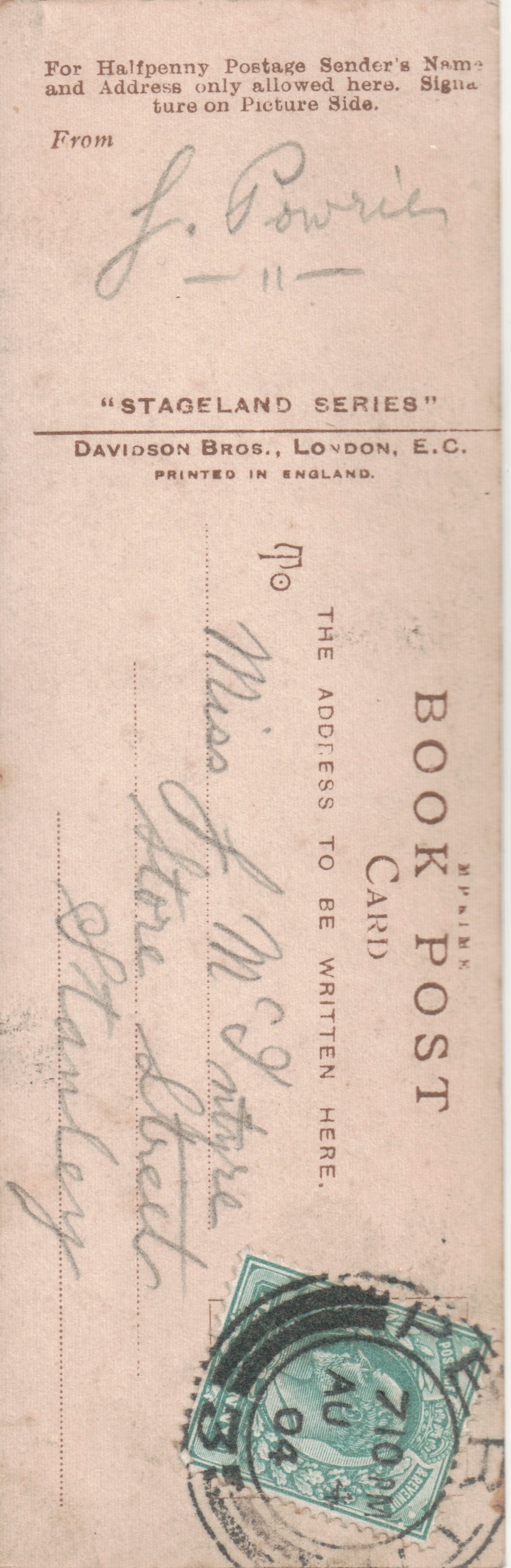
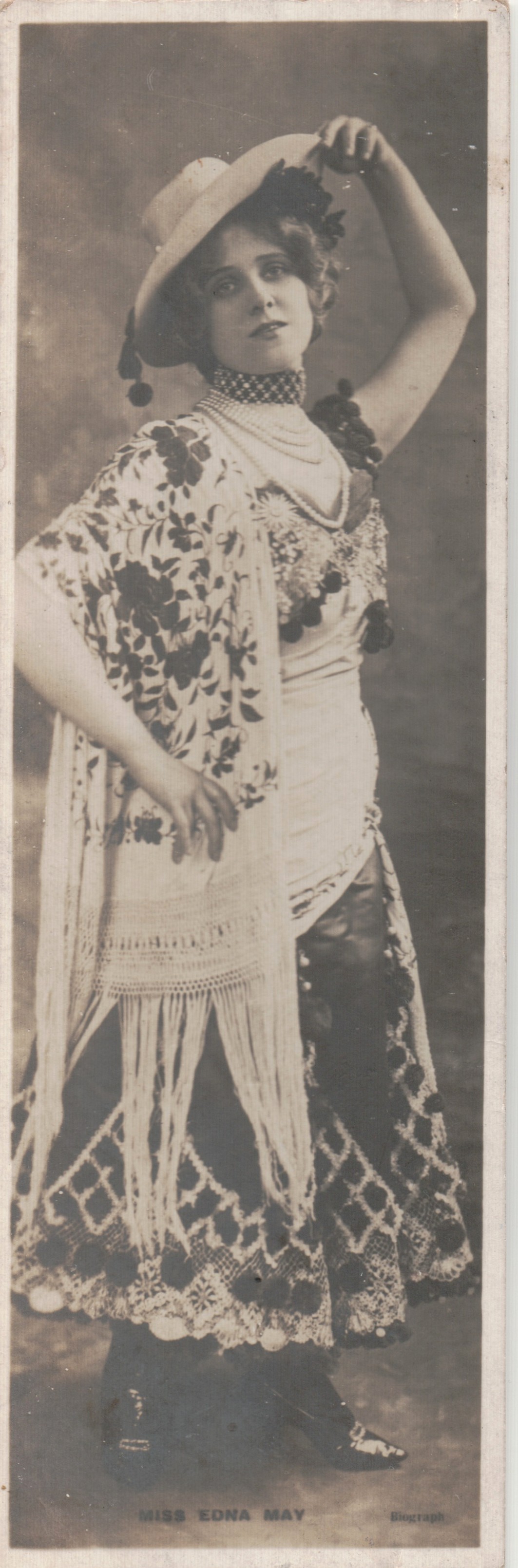
This outsize (4.5 x 13.5 centimetres) card of their Stageland Series was postally used in August 1904. The photograph is credited to the Biograph Studio, a trading name of American Mutoscope. Their Stageland Series also included standard size divided-back cards.
Sources: Undivided Back Postcard Directory D & Biograph Studio
George Morris, Dundee
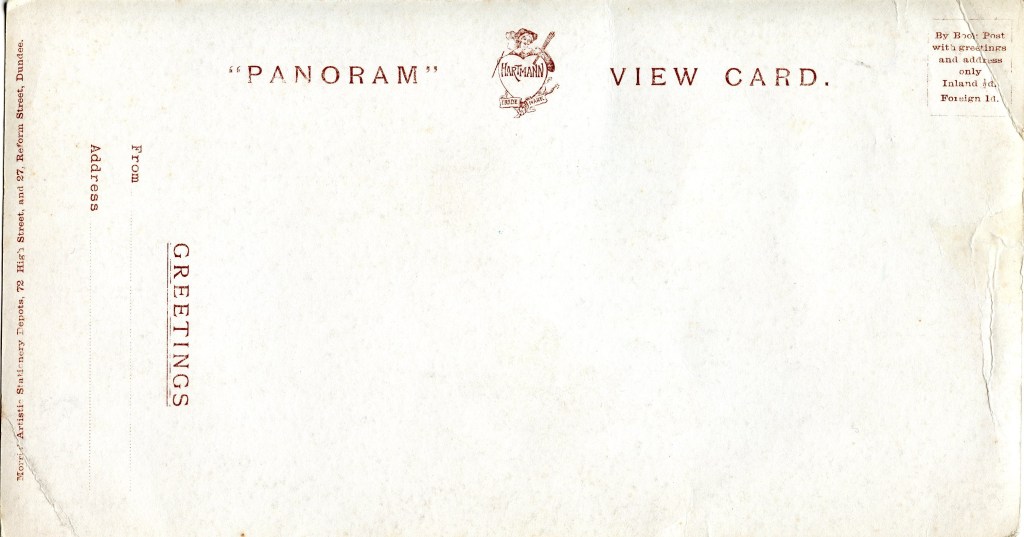
- Morris Artistic Stationery Depots, 72 High Street and 27 Reform Street, Dundee
George Morris, bookseller, 72 High Street. In 1874 Morris was living at 6 Somerville Place with his shop at the High Street. Morris had taken over the stationers previously owned by George Montgomery. In 1886 Morris was a listed as a stationer as well as a bookseller and advertised as a stockist of Walkden’s Inks, a business then claiming to have been 150 years old.
By 1890 the business was George Morris & Son, Wholesale Stationers, Printers and Paper Bag Manufacturers, 72 High Street, Dundee.
Morris further diversified such that by February 1903 he was advertising in the Dundee Evening Telegraph:
“PROGRESSIVE WHIST. INVITATIONS. SCORING CARDS. BADGES, TABLE NUMBERS, PRIZES BRIDGE. BEZIQUE, CHESS, DRAUGHTS. DOMINOES. PLANCHISTTE, PING-PONG. PUFF HOCKEY. PLAYING CARDS at all Prices.”
And in The Perthshire Advertiser in September 1903:
The Popular Picture Post Cards are here in endless variety. TARTAN GOODS. CREST WARE. All the Latest Novelties constantly added to Stock, Visitors are recommended to purchase early in the day Parcels can be sent Train, Boat, or kept till’ called for MORRIS’S ARTISTIC STATIONERY WAREHOUSE 72 HIGH STREET, DUNDEE
In 1876 Morris’s daughter Edith was enrolled at the age of 16 as a day pupil in Art School of The High School of Dundee
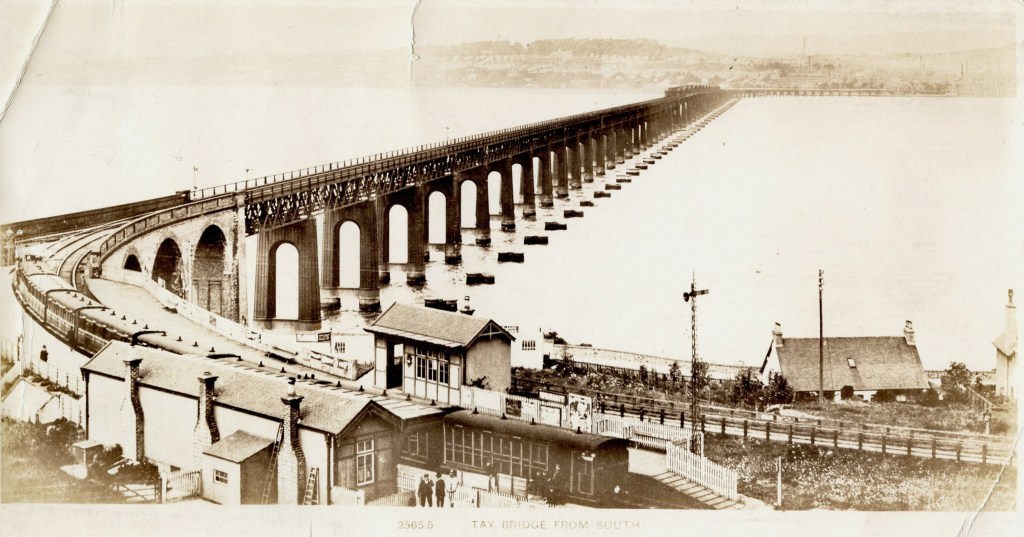
The Tay Bridge card used a photograph taken after the new bridge was constructed, opening in 1887. On the right of the bridge can be seen the remains of the previous bridge that collapsed in the Tay Bridge disaster during a violent storm on Sunday 28 December 1879, as a North British Railway passenger train on the Edinburgh to Aberdeen Line travelling from Burntisland to Dundee passed over it, killing all aboard. These remains can still be seen.
The foreground includes the Wormit rail station. Wormit railway station served the town of Wormit, Fife from 1889 to 1969 on the Newport Railway.
This card measures 14 x 26.5 cm. It was produced for Morris by Frederick Hartmann of 45 Farringdon Street, London. A publisher of postcards, Hartman was a strong advocate of the divided back postcard and was instrumental to its establishment in Britain. Hartmann may have issued the world’s first divided-back card.
Sources: wikipedia Tay Bridge Disaster; Leisure and Culture Dundee; Undivided-back Postcard Hartmann; various Dundee Directories online from the National Library of Scotland; 1890 Industries of Scotland.
Herring fleet arriving in Wick Harbour
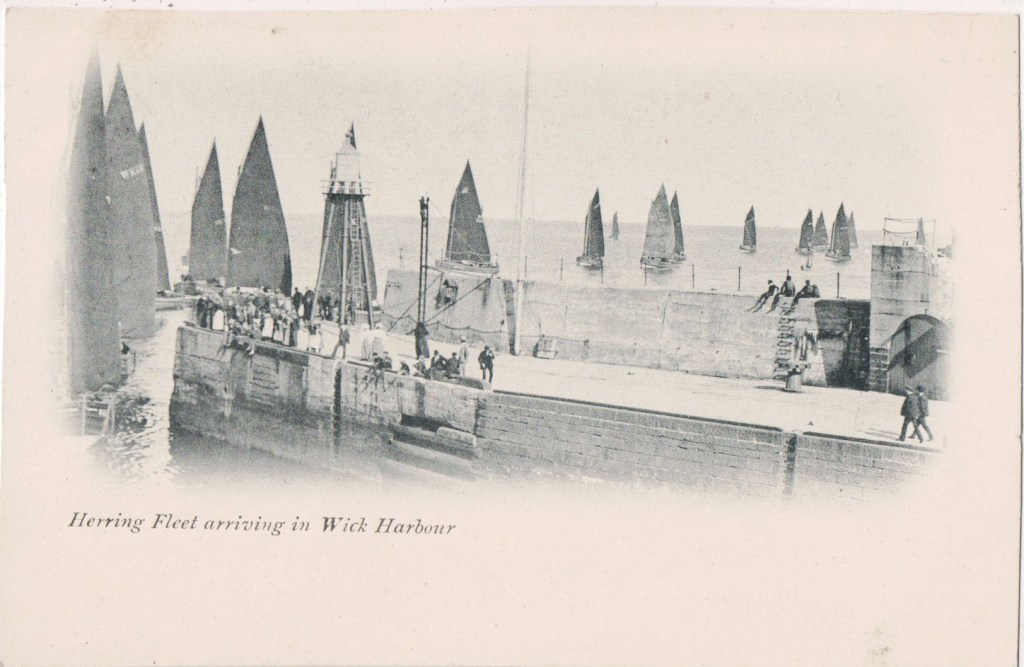
Once one of the main herring ports in the north of Scotland, Wick harbour sheltered hundreds of boats. At times there were fifteen thousand people in Wick including the fishermen and the women cleaning and packing the fish. At its peak in the 1860s, it was the largest herring port in Britain.
In a storm in 1848, 41 fishing boats (each with five men) were lost or damaged at sea. Captain Washington’s Report on the tragedy lead to every harbour requiring a barometer and the introduction of decked fishing boats.
The main types of boat used for herring fishing on the east coast were the Fifie, and the smaller Skaffie which was common around the Moray Firth. Fishermen initially resisted the introduction of decks because it reduced the space available for the catch, and they also feared that a deck would increase the risk of men being swept overboard. This card features craft with single sails, suggesting that they are Skaffies.
Gradually, the provision of decks on the boats became more common, which led to a further increase in boat size to compensate for the reduced space for the catch. In addition to decks, new boats were being built with a small forecastle in the bow, which contained bunks and provided shelter for the fishermen. This evolution in boat design led to the introduction of the Baldie in 1860 and the Zulu in 1879. By the end of the century all the east coast fishing vessels were fully decked.
In 1856 the famous Stevenson engineers built an outer harbour wall It was the only one of their constructions that failed – in a storm in 1872.
The herring industry peaked in 1900 – 50 million fish were landed and processed in 2 days and the workforce drank 3,000 litres of whisky a week. By 1955 no herring were left and fishing turned to white fish.
Sources: Harbour Master Sailing Challenge March 2019 to September 2023; wikipedia Scottish east coast fishery
William S Thomson, photographer, Fort William
- Wm. S. Thomson, Fort William
Glaswegian William Sutherland Thomson MBE (1906 to 1967) was a Scottish photographer mostly known for his landscape photographs. He was a keen mountaineer and self-taught photographer. During World War II, he lived in Orkney, where he married his Glaswegian girlfriend in 1939. They moved with their two young children to Fort William in 1945 where they lived and Thomson had his studio at Earnisaig, 3 Cameron Square. The family moved to Corpach in 1951, where they stayed until 1963. In 1963 the Thomsons settled in Edinburgh.
He published two pictoral books, The Highland in Colour, published by Oliver & Boyd in 1954, and Colourful Scotland, with the same publisher in 1956. Thomson also produced about 20 smaller booklets focused on different regions, in the Let’s See series, and a series of spiral bound books called Beauty Spots. On 1 January 1967, he received an MBE for his services to the Scottish Tourism Board. Thomson died on the Isle of Skye the same year.
Sources: Travel in Time; Travels in Time: W.S. Thomson – Lochaber Series, Part I
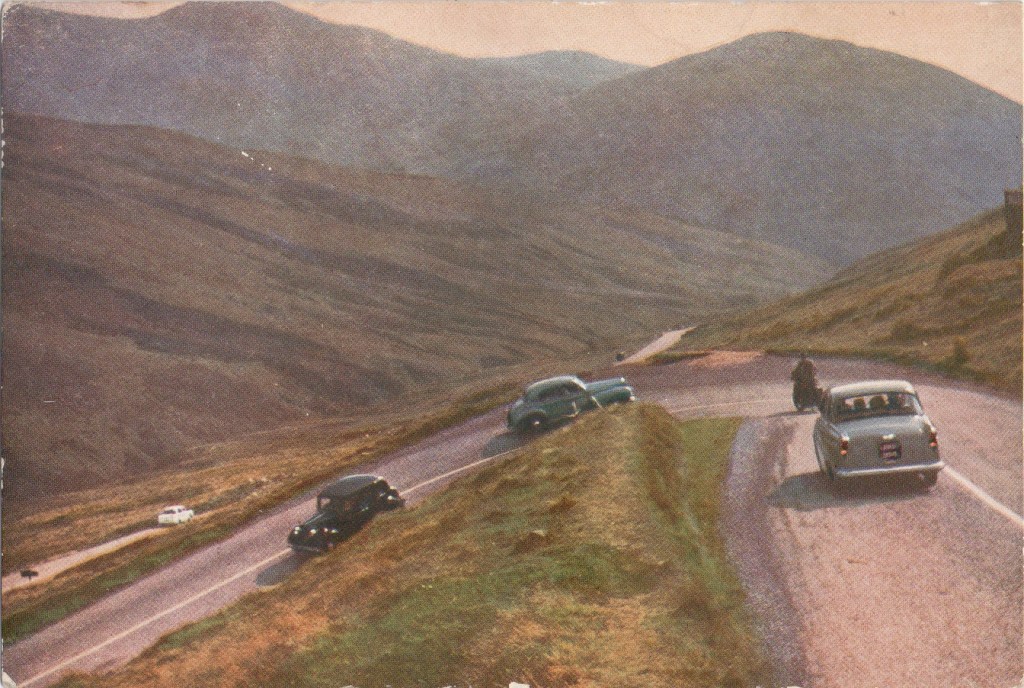
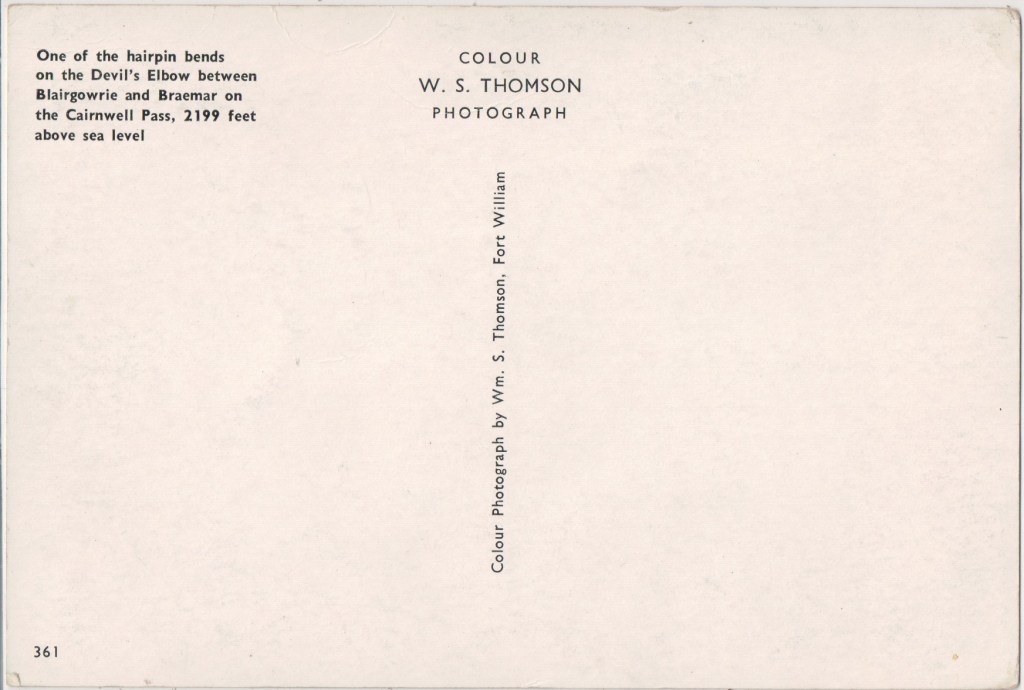
This card shows one of the hairpin bends on the Devil’s Elbow between Blairgowrie and Braemar on the Cairnwell Pass, 2199 feet above sea level.
The A93 is a major road in Scotland and the highest public road in the United Kingdom. It runs north from Perth through Blairgowrie and Rattray, then through the Grampian Mountains by way of Glenshee, the Cairnwell Pass and Glen Clunie to Braemar in Aberdeenshire. At Braemar, the road then switches east down the strath of the River Dee before crossing the A90 and terminating in Aberdeen.
The southern approach to the Cairnwell Pass used to include a notorious double hairpin bend with steep gradients known as the Devil’s Elbow. In the space of 5 miles (8 km) the height above sea level doubles from 335m (1100 feet) at Spittal of Glen Shee to 670m (2200 feet) at the highest point on the road from Blairgowrie to Braemar. In the 1960s, the old road was bypassed by a wider modern road, without such dramatic hairpin bends. Concrete blocks can still be seen in the vicinity which formed part of a World War II defensive line intended to prevent German invaders moving south from a landing in north-east Scotland.
Sources: wikipedia A93 road; The Gazetteer for Scotland
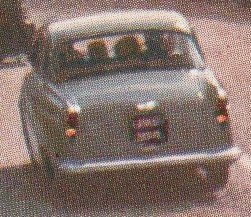
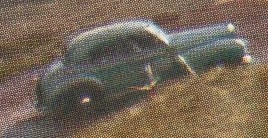
The main picture: Austin A105 possibly Vanden Plas
The Austin 105s were part of the Westminster series of large saloon and estate cars that were sold by the British manufacturer from 1954. 6,770 105s were produced between May 1956 and 1959.
The A105 was the first mass-produced Austin family car to be specially upgraded by coachbuilder Vanden Plas, following the success of the large A135 Austin Princess limousine. This was done after a personal request from Leonard Lord (15 November 1896 – 13 September 1967) then chairman of the company, in 1957. Changes included significant new interior fittings, and a grey stripe bearing the “Princess” crown on the side of the body; most bodies were in sombre colours such as black or maroon.
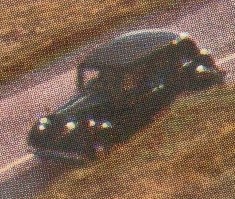
The vehicle on the lower right appears to be a classic sedan or coupe with a rounded body shape from the 1930s. It has prominent, separate headlights mounted on the front fenders. Might it be a Ford Model A? The car top right is more modern, from the 1940s.
16 November 2025 The most charming seafaring card
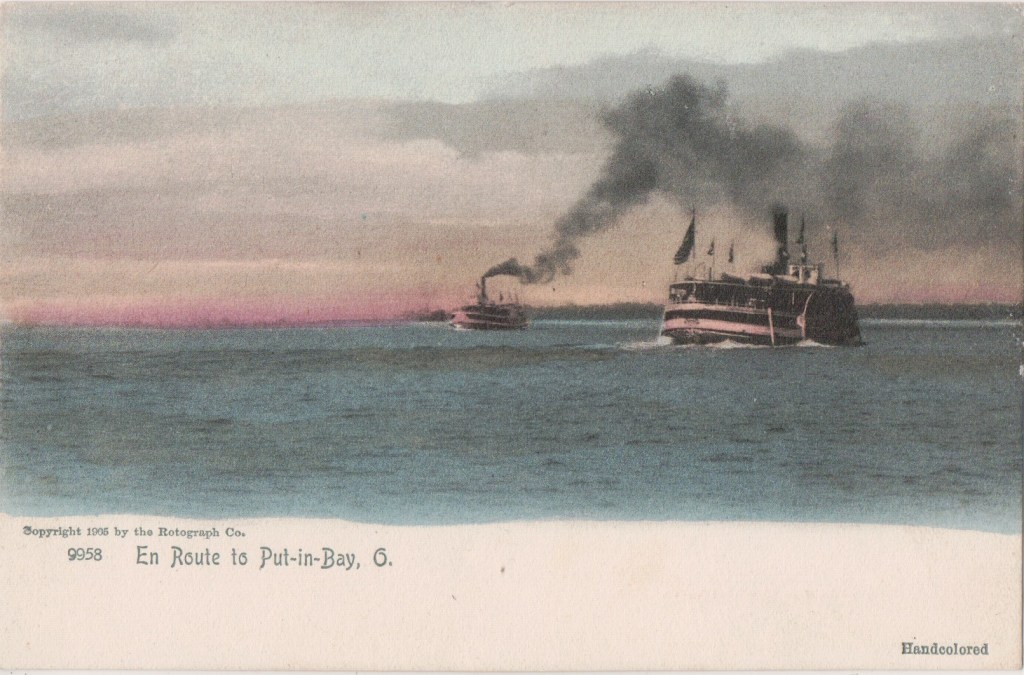
Put-in-Bay is a resort village located on South Bass Island in Put-in-Bay Township, Ottawa County, Ohio, United States, 85 miles (137 km) west of Cleveland and 35 miles (56 km) east of Toledo. The population was 154 at the 2020 census.
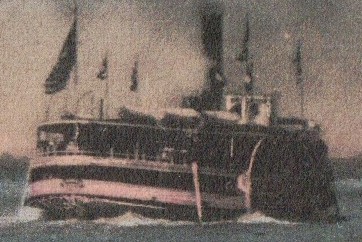
Rotograph also published the same photograph En route to Cedar Point and perhaps other places in Lake Erie. Cedar Point is a 364-acre (147 ha) amusement park located on a Lake Erie peninsula in Sandusky, It was one of a number of Ohio Passenger Paddle Steamers in the first years of the 20th century.
The Detroit and Cleveland Navigation Company (1868-1951) company offered direct sea transport connections, multi-day cruise holidays and day trips. It bought out the Detroit & Buffalo Steamship Co in 1909 and extended its dominance across the whole of Lake Erie. Changing circumstances during and particularly after the Second World War plunged the company into debt and it folded in 1951 still with five major paddle steamers on its hands
Sources: paddlesteamers.info
28 September 2025 – superb use of light
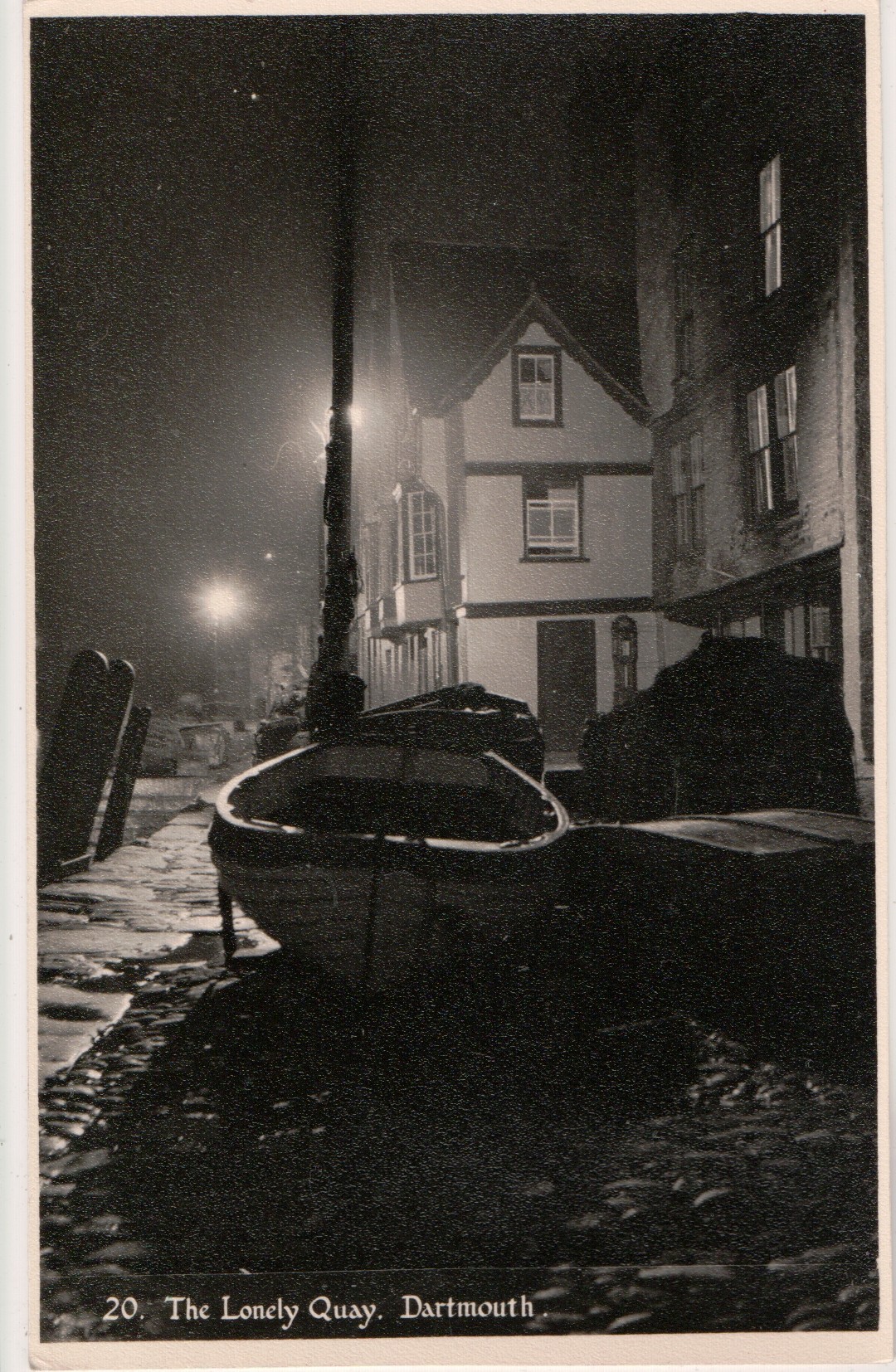
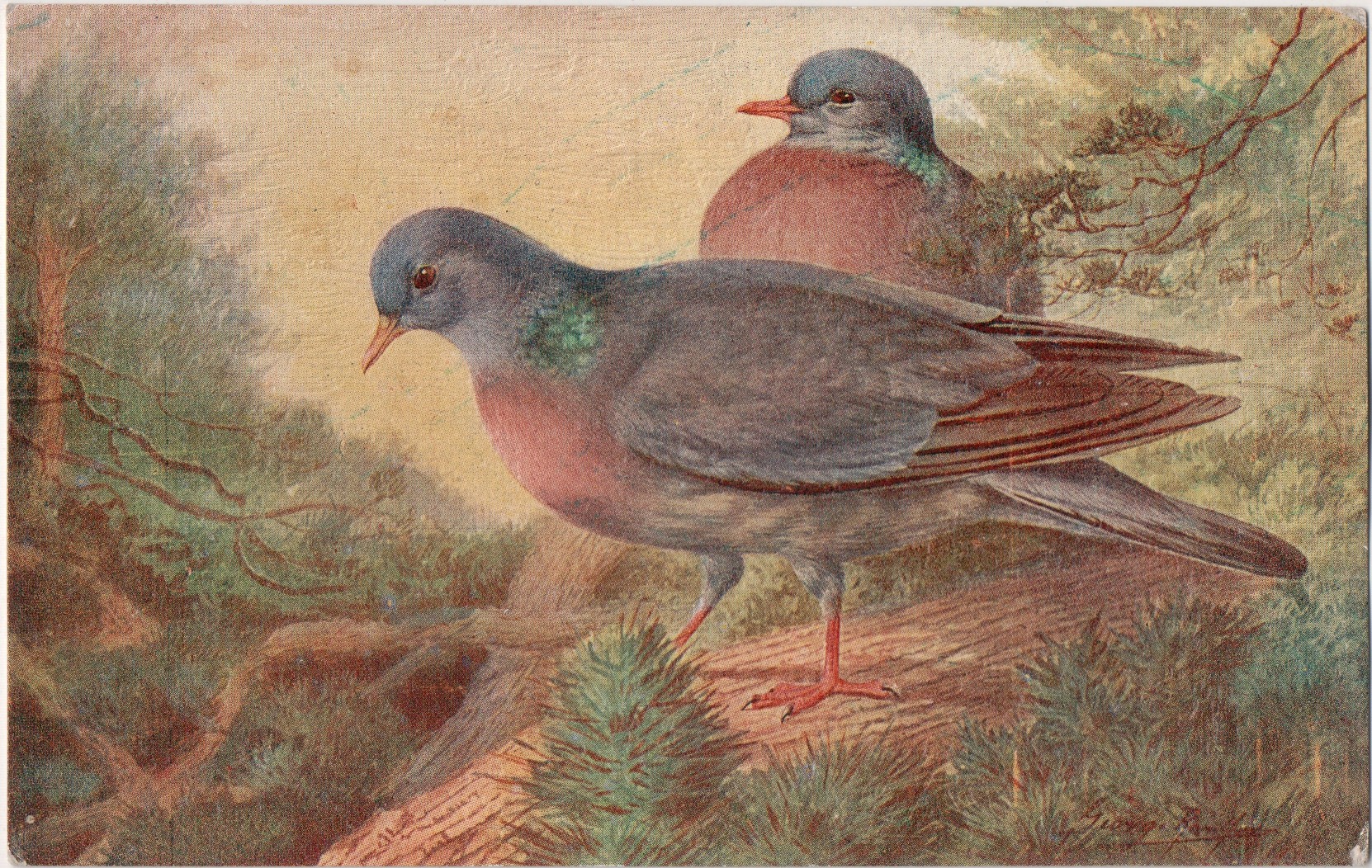
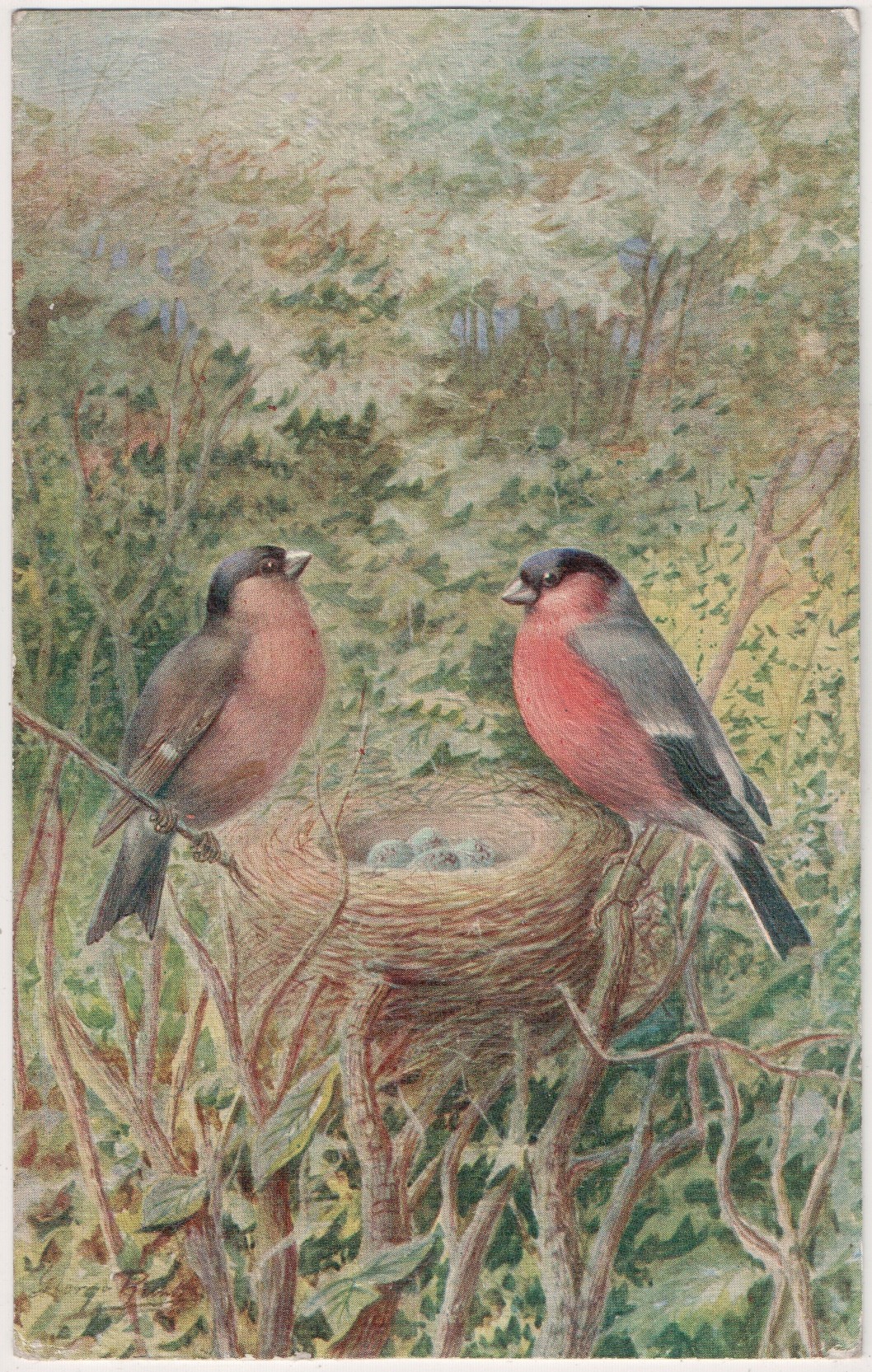
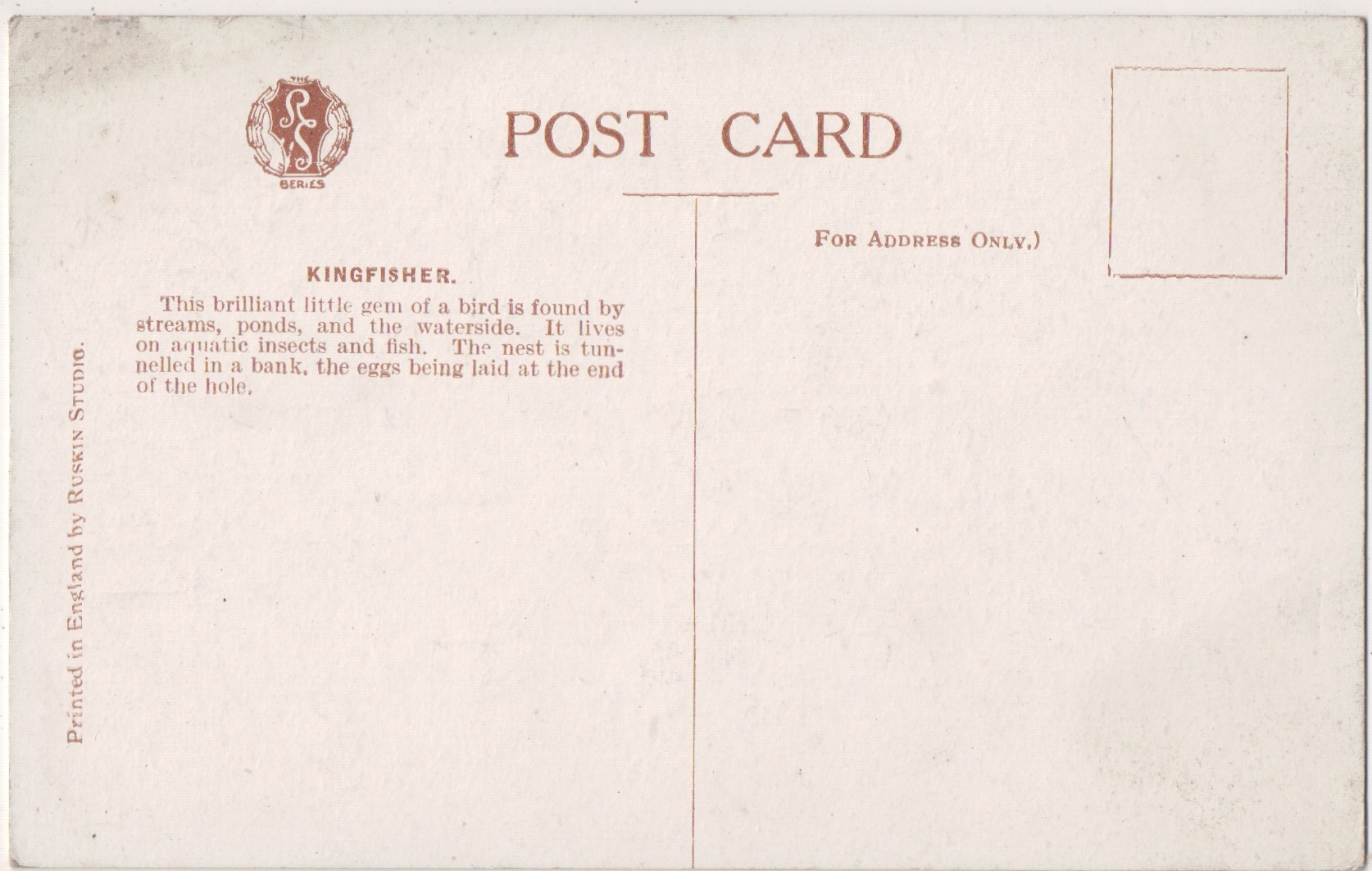
28 September 2025 – Birds, Birds, Birds
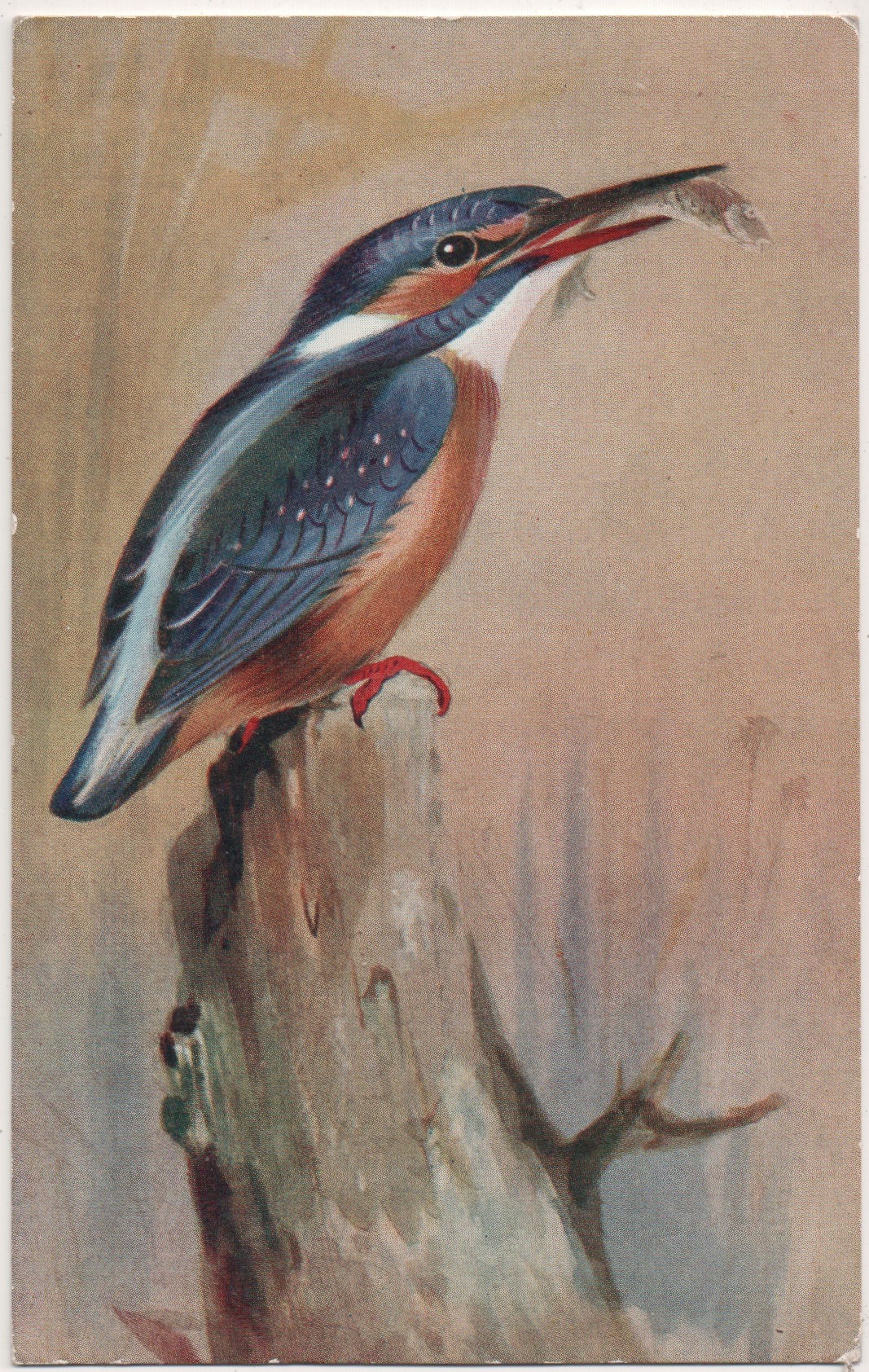
20 September 2025 – Hereford Cathedral
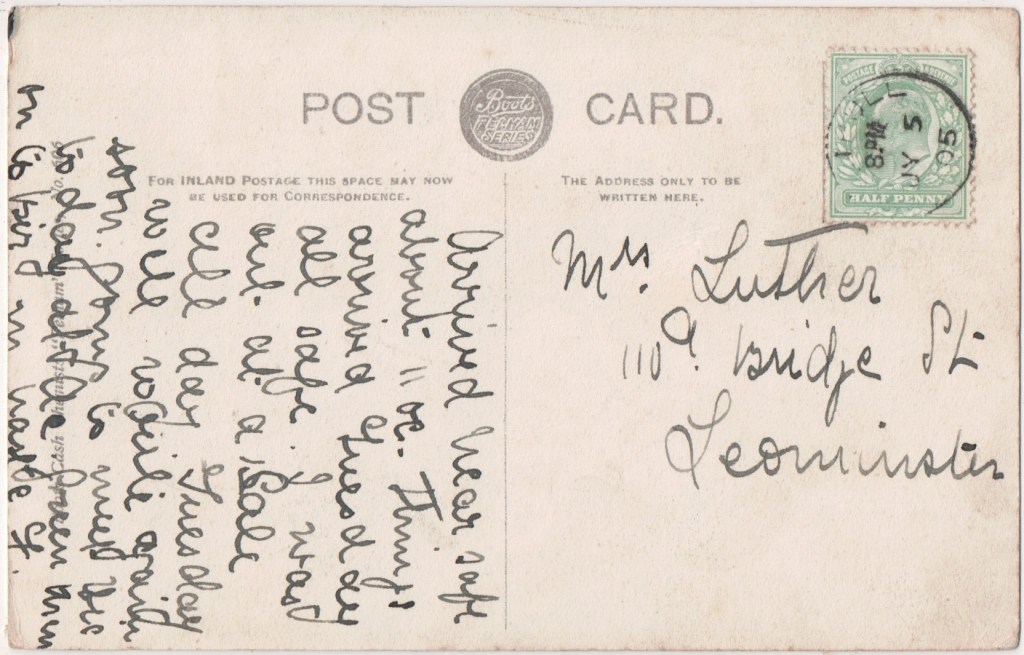
- Boots Cash Chemists “Pelham” Series No. 606
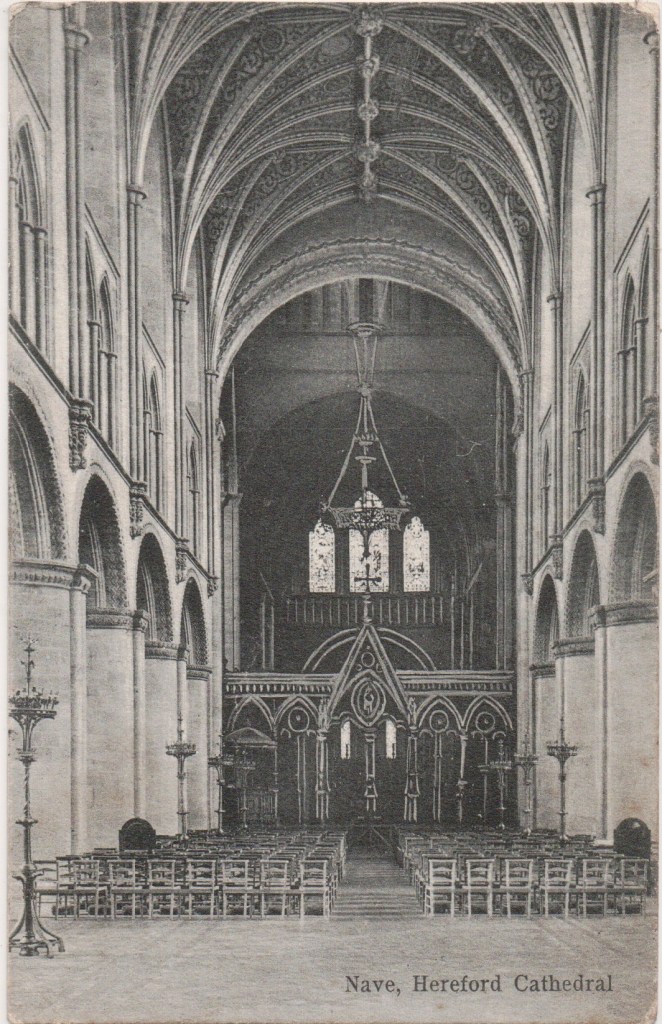
The 13th century Nave of All Saints Church in Hereford
This card takes us back to the era when Boots the Chemist published postcards.
Boots was established in Nottingham in 1849, by John Boot. Jessie Boot was born in Nottingham in 1850 and, after his father’s death in 1860, Jesse helped his mother run the family’s herbal medicine shop, which was incorporated as Boot and Co Ltd in 1883, becoming Boots Pure Drug Company Ltd in 1888. From the original chemist shop, branches in every town in Britain spawned. When fancy goods began to be sold, postcards were soon added. In 1920, Jesse Boot sold the company to the American United Drug Company. Their Pelham Series was under way by 1905 and seeems to have been discontinued in the late 1920s.
This card dates between 1902 when it was first allowed in the UK to include a message on the left of the address to which the card was being sent and 1907 when this change was authorised by the Universal Postal Union for international use.
29 March 25 Bowery, North from Grand St, New York
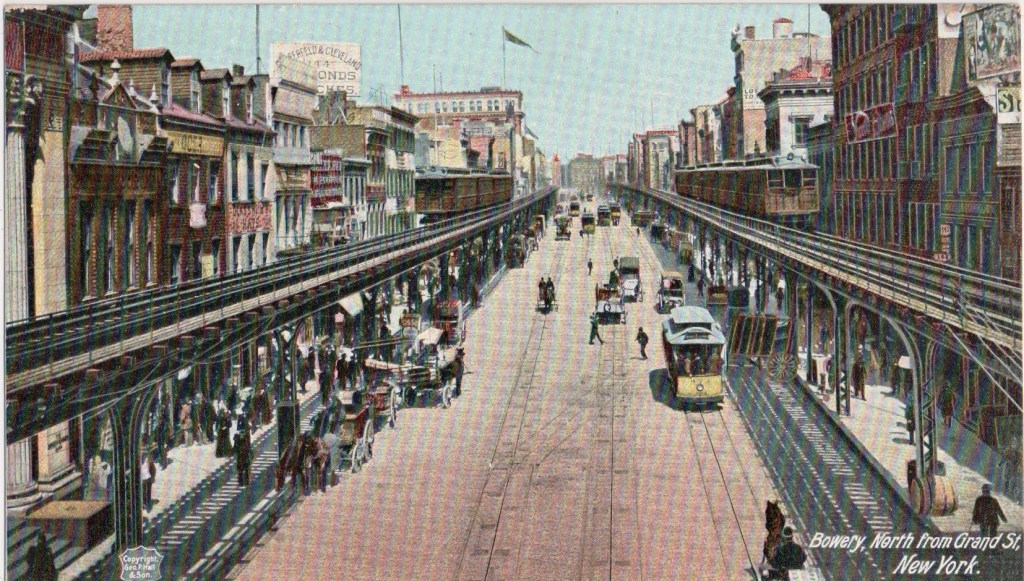
The Bowery, in the Little Italy and Chinatown neighborhoods of Lower Manhattan, is New York’s oldest thoroughfare. In 1913 Theodore Roosevelt compared the street to hell: “… one of the great highways of humanity, a highway of seething life, of varied interest, of fun, of work, of sordid and terrible tragedy; and it is haunted by demons as evil as any that stalk through the pages of the “Inferno.””
The railways in this photograph are the 3rd Avenue Elevated line constructed between 1875 and 1878 by the New York Elevated Railway Company. The line was to run from City Hall along the Bowery and Third Avenue to the Harlem River. The Manhattan Railway Company took control of the New York Elevated Railroad in 1879, and in 1891, the Manhattan Railway took over operations of a short railroad between 129th Street and 133rd Street in the southern Bronx, then operated by the Suburban Rapid Transit Company. Through service between the Bronx and Manhattan began in 1896. A 999-year lease deal made in 1902 brought the Third Avenue El under the control of the Interborough Rapid Transit Company.
The Third Avenue El was the last elevated line to operate in Manhattan. Service to South Ferry ended in 1950, and to City Hall in 1953. The main line of the 3rd Avenue elevated in Manhattan had service from Chatham Square north until 1955. From 1955 to 1973 Bronx service operated between 149th St and Gun Hill Road.
Stuck under the shadow of the “El,” the pall cast by the train tracks seemed to touch every aspect of the street. Despite its skid row reputation, the Bowery remained a cultural draw for Lower Manhattan’s German, Chinese, and Italian residents, with opera houses and theatres crowding its lower blocks. From the 1850s, the Cooper Union anchored its northern terminus, a stalwart academic institution seemingly immune from the Bowery’s woes.
At the extreme left of this photograph one can see the rightmost columns of the facade of the Bowery Savings Bank Building at 130 Bowery. Constructed from 1893 to 1895, it occupies an L-shaped site bounded by Bowery to the east, Grand Street to the south, and Elizabeth Street to the west. It was designed by Stanford White of McKim, Mead & White and is now an event venue. Today, most New Yorkers view the Bowery as the site of constant construction, home to modern hotels, upscale stores, and $17 million penthouse apartments.
This is one of many photographs of New York rail by George P Hall and his son James. It was published by the Hugh C. Leighton Company, Portland, Maine, a printer and major publisher of national view-cards, especially scenes of New England.
Sources: Curbed New York Ever-changing Bowery New York City’s oldest street is more than its skid row reputation James Nevius 4 October 2017; New York Historical George P. Hall & Son Photograph Collection.
23 February 2025 – charming advertising card
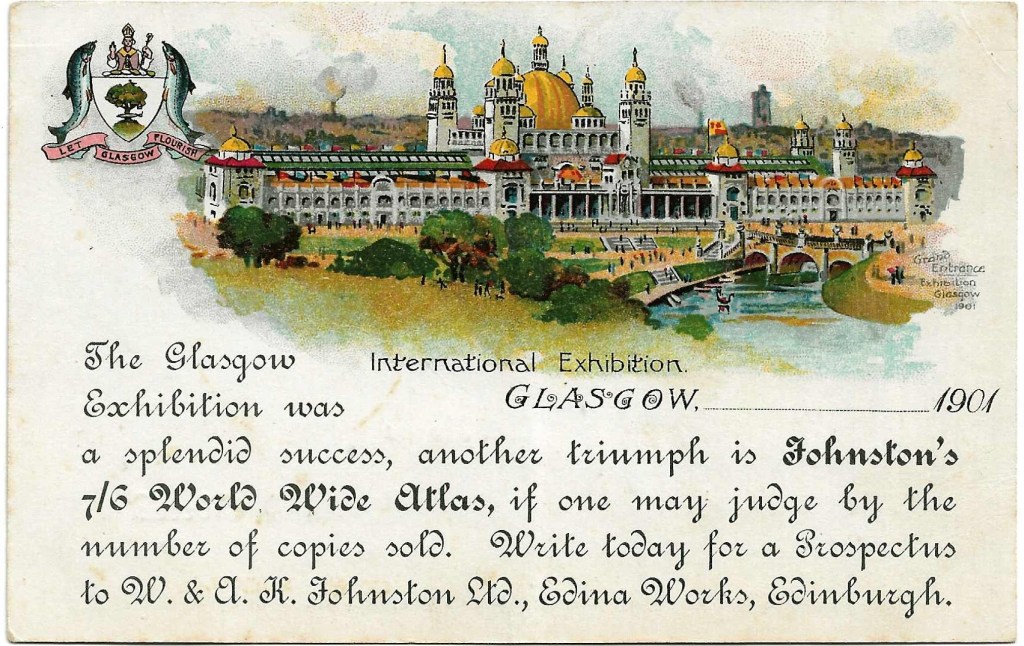
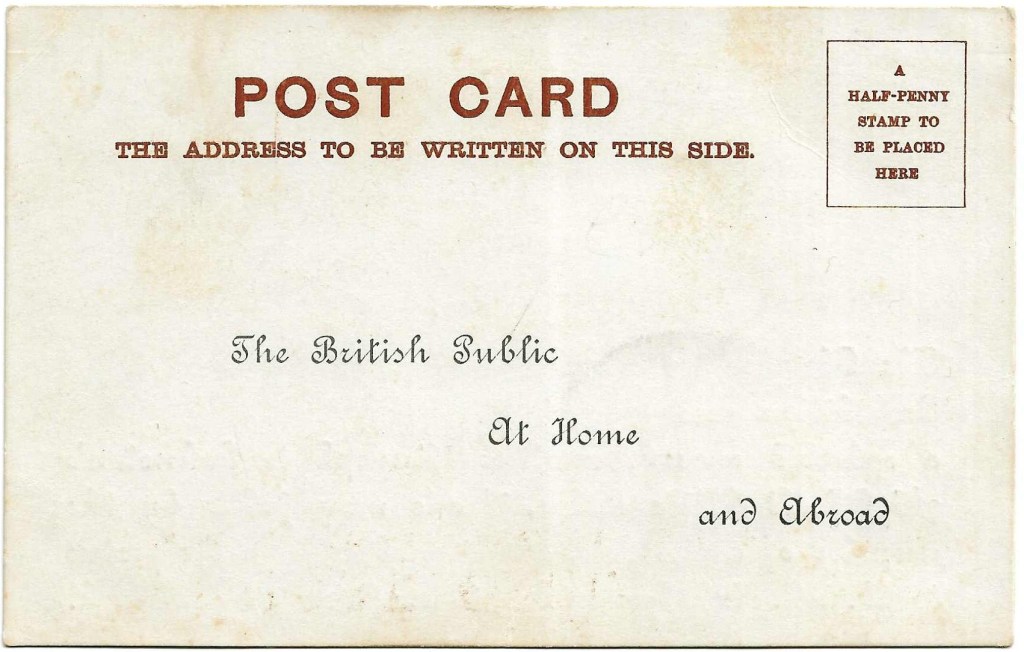
- W. & A. K. JOHNSTON, (ESTABLISHED 1825) Geographers to the Queen, Educational and General Publishers, Edina Works, Easter Road, And 16 South St. Andrew Street, Edinburgh. 5 White Hart Street, Warwick Lane, London, E.C.
The Glasgow International Exhibition (2 May to 4 November 1901) was the second of four international exhibitions held in Glasgow during the late 19th and early 20th centuries. Like the earlier 1888 exhibition, the 1901 was held in Kelvingrove Park and the exhibition hall that is now the Kelvingrove Art Gallery. The exhibition took place during a period of half-mourning requested by Edward VII but was still popular and made more than £35,000 profit.
Kelvingrove was constructed between the 1888 International Exhibition and its opening in 1901 as the Palace of Fine Arts for the Glasgow International Exhibition. It is built in a Spanish Baroque style, follows the Glaswegian tradition of using Locharbriggs red sandstone. The centrepiece is a concert pipe organ constructed and installed by Lewis & Co for the 1901 exhibition. The organ was installed in the concert hall of the exhibition, which was capable of seating 3,000 people. That hall was intended from the beginning to be a space in which to hold concerts. When the 1901 Exhibition ended, a Councillor urged the then Glasgow Corporation to purchase the organ, stating that without it, “the art gallery would be a body without a soul”.
Purchase price and installation costs were met from the surplus exhibition proceeds, and the organ was installed in the Centre Hall by Lewis and Co. The present case front in walnut with non-functional display pipes was commissioned at this time from John W. Simpson. Simpson was the senior partner of Simpson & Milner Allen, architects of the gallery building.
W. & A.K. Johnston, Edinburgh was one of the major publishing houses of the 19th century. Co-founders, brothers William (1802 to 1888) and Alexander Keith (1804 to 1871) Johnston, started out as apprentices to the Scottish globe-maker and publisher James Kirkwood in his Edinburgh workshop. Having learned their trade there, they set up their own business in 1825, also in the city. The Johnstons very astutely acquired the established Scottish printing publishing house of William Lizars, and began, at first printing by contract, and slowly expanding their repertoire into not only maps, but also atlases, gazetteers, guide books, globes and much more. In amongst the brothers’ many achievements, and one of their major claims, was that of the first physical globe, which won them a number of awards at the Great Exhibition of 1851. The globe-making element of the business continued well into the 20th century on both sides of the Atlantic. The business continued to function under the Johnston name until the 1960s5. Their postcard production started in the court-size era when they produced lithographs for the trade. An advertisement in the 1901 Post Office Directory for Edinburgh described them as Chromolithographers, Art Printers, Engravers and Geographers to the King and was liberally decorated with medals they had won.
The Johnstons’ clearly had a formal link with the Exhibition as they also published an International Exhibition Plan of Glasgow showing the Tramway and Railway Routes, Plan of Exhibition Grounds, and Description of the Exhibition. They were the natural publisher of The Heraldry of the Johnstons, With Notes on the Different Families, Their Arms, And Pedigrees. By G. Harvey Johnston in 1905, a 56-page pamphlet of which only a hundred copies were published.
Source; wikipedia 1901 Glasgow International Exhibition
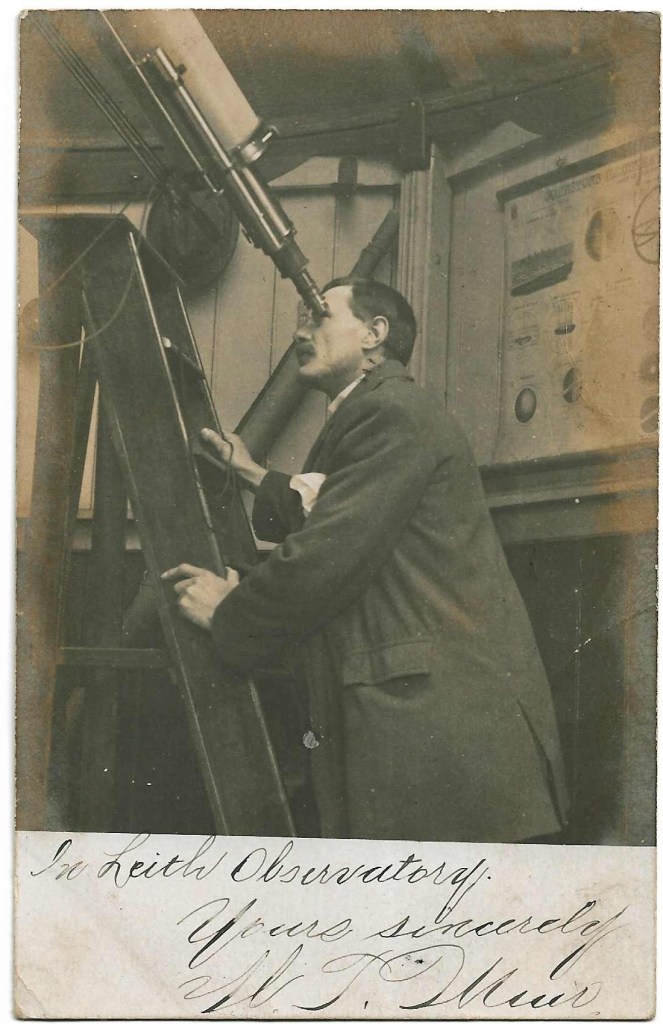
21 February 2025 – The Cooke telescope in the City Observatory, on Calton Hill,Edinburgh
In 1811 private citizens founded the Astronomical Institution of Edinburgh with John Playfair, professor of natural philosophy, as its president. The Institution acquired grounds on Calton Hill to build an observatory, which was designed by John’s nephew William Henry Playfair. During his visit of Edinburgh in 1822, George IV bestowed upon the observatory the title of “Royal Observatory of King George the Fourth”. In 1834 – with Government funding – the instrumentation of the observatory was completed.
Towards the end of the l9th Century, several new instruments were installed in the Royal Observatory; A new thirty-foot dome was built to house a 22-inch refractor. One of the largest of its time in Britain, the instrument was old and never performed well, being finally scrapped in 1926.
After the Royal Observatory moved to its present site on Blackford Hill in 1896, the original building remained as the Playfair building of the City Observatory. The dome upstairs which formerly housed the Altazimuth Instrument, played host to a 24-inch reflector before 1896, when the fine six-inch Cooke Photo-visual refractor in this card was donated by William McEwan the brewer, to mark the building’s inception as City Observatory. T. Cooke & Sons was an English instrument-making firm, headquartered in York. It was founded by Thomas Cooke by 1837. Following the death of Cooke in 1868, the business was continued by his sons. Cooke & Sons also provided a 12 inch theodolite for the construction of the Forth Railway Bridge.
In 2018, the entire site was restored and new buildings were added. The City Observatory site was opened freely to the public for the first time on 24 November 2018 as Collective, a centre for contemporary art.
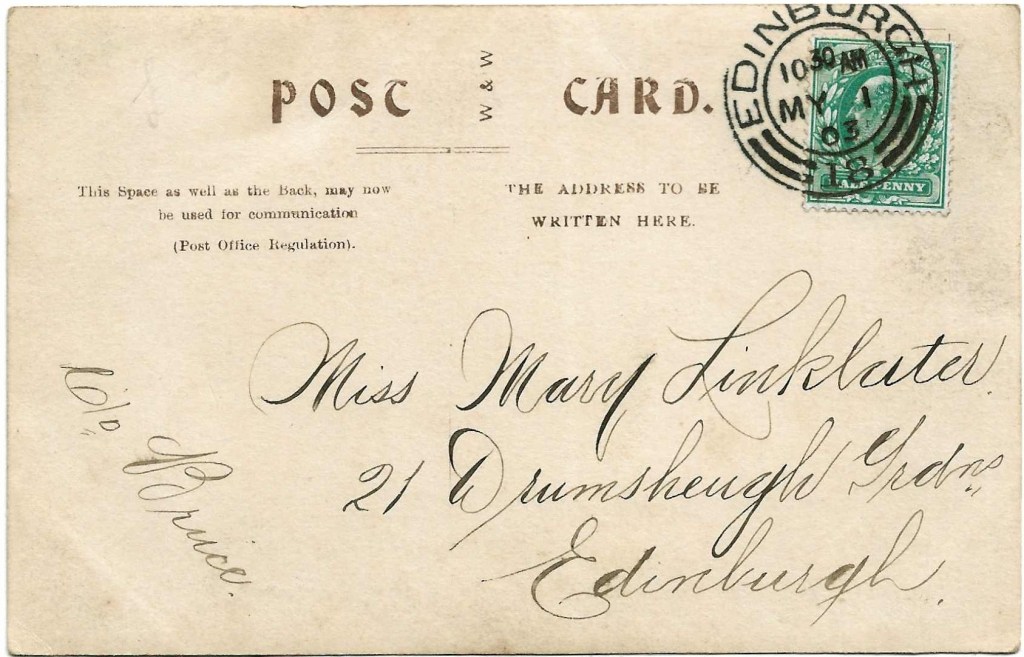
This card was postally used on 1 May 1903. Although, as the back says, it had been possible to share the address side with a message since 1902, divided-back cards from that year are rare indeed. W & W produced cards of photographs of Scotland, North of England and Northern Ireland in the early days of the undivided-back era.
Sources: wikipedia T.Cooke & Sons; Astronomical Society of Edinburgh
8 February 2025 – a family affair
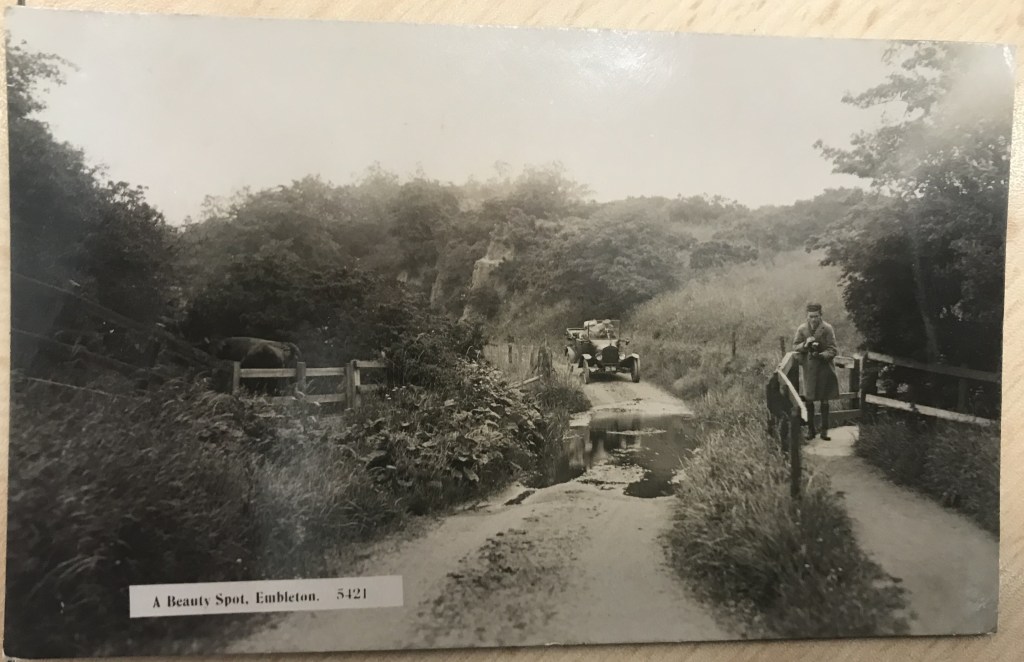
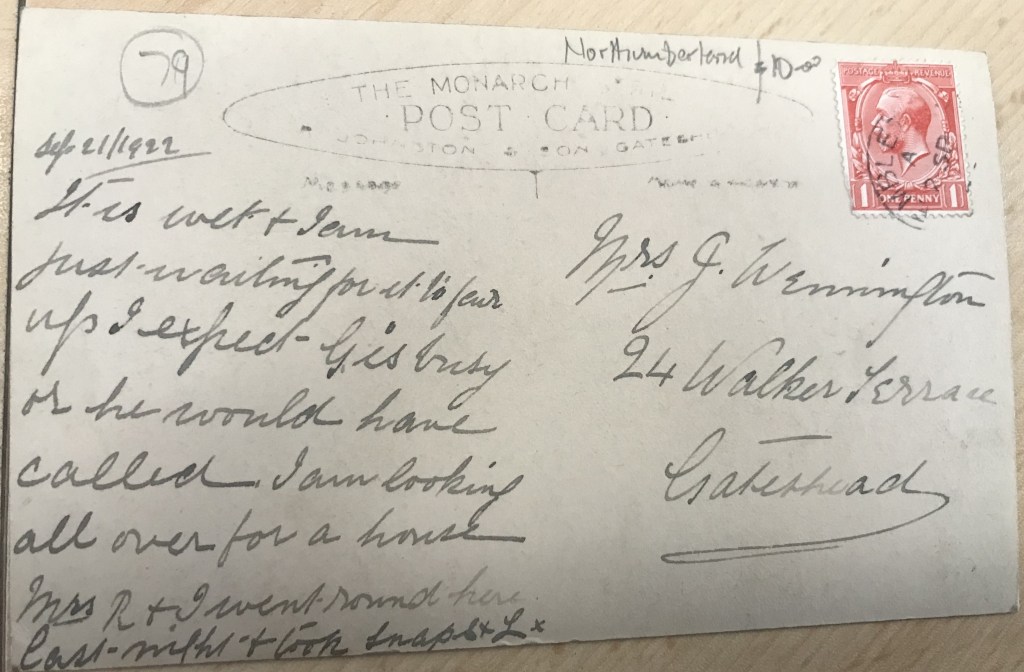
Robert Johnston published his Monarch series of postcards in Gateshead, producing over sixteen thousand topographical views of Northumberland and County Durham as well as a few cards of North Yorkshire, Gretna Green,Kirk Yetholm, Kelso and Jedburgh.
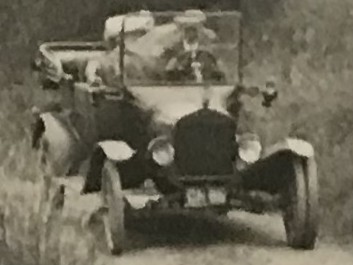
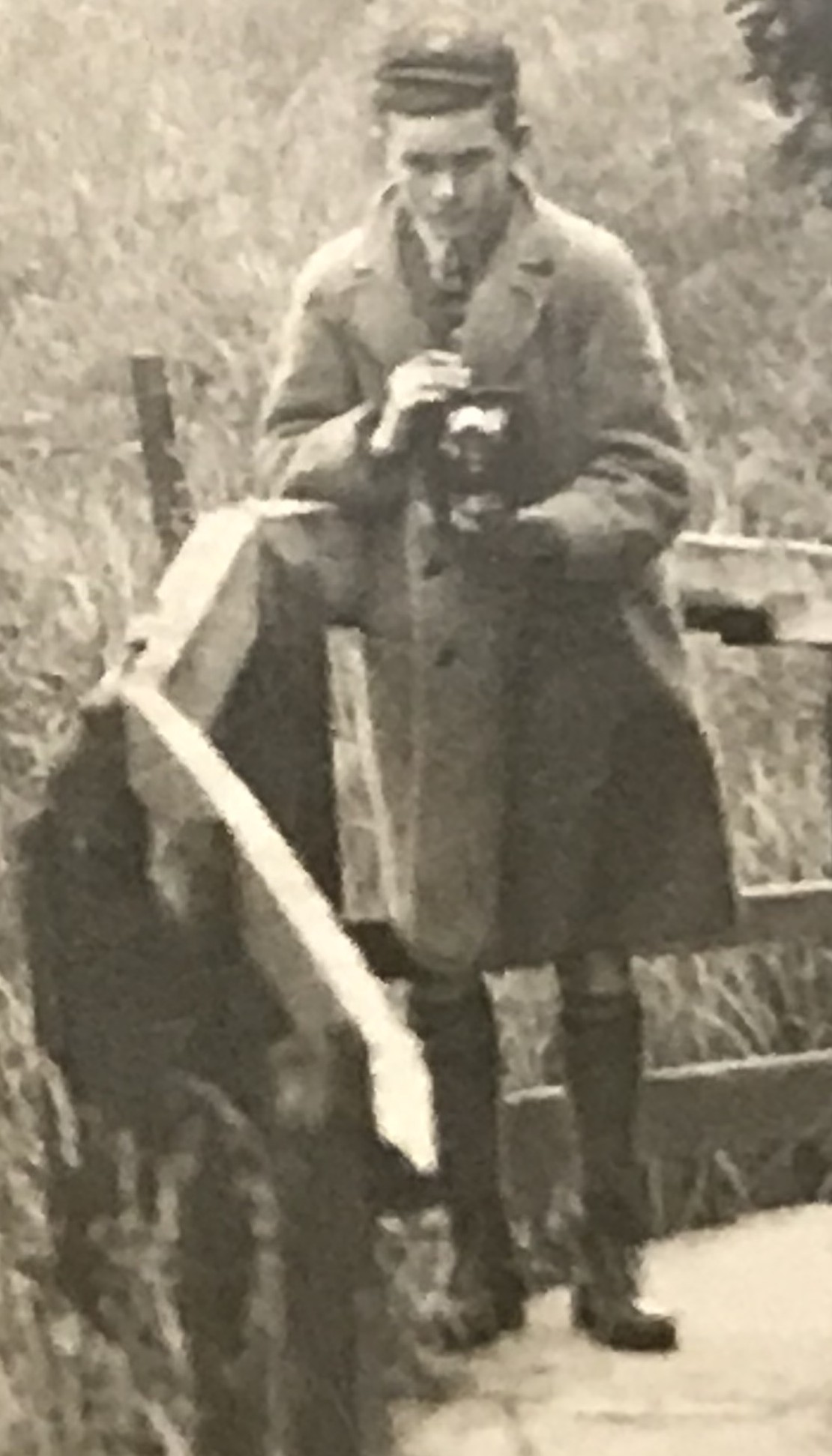
This card, postally used in September 1922, shows Johnston’s family members in his Bull Nose Morris motor car and his grandson taking a picture of the publisher. The “bullnose” Morris Oxford was a series of motor car models produced by British manufacturer W R Morris from 1913 to 1926. It was named by Morris after the city in which he grew up and which his cars were to industrialise.
In January 1946 Shepherd’s department store had a fire which spread into High Street and destroyed Johnston’s shop, stock and records.
23 December 2024 – Choo Choo!
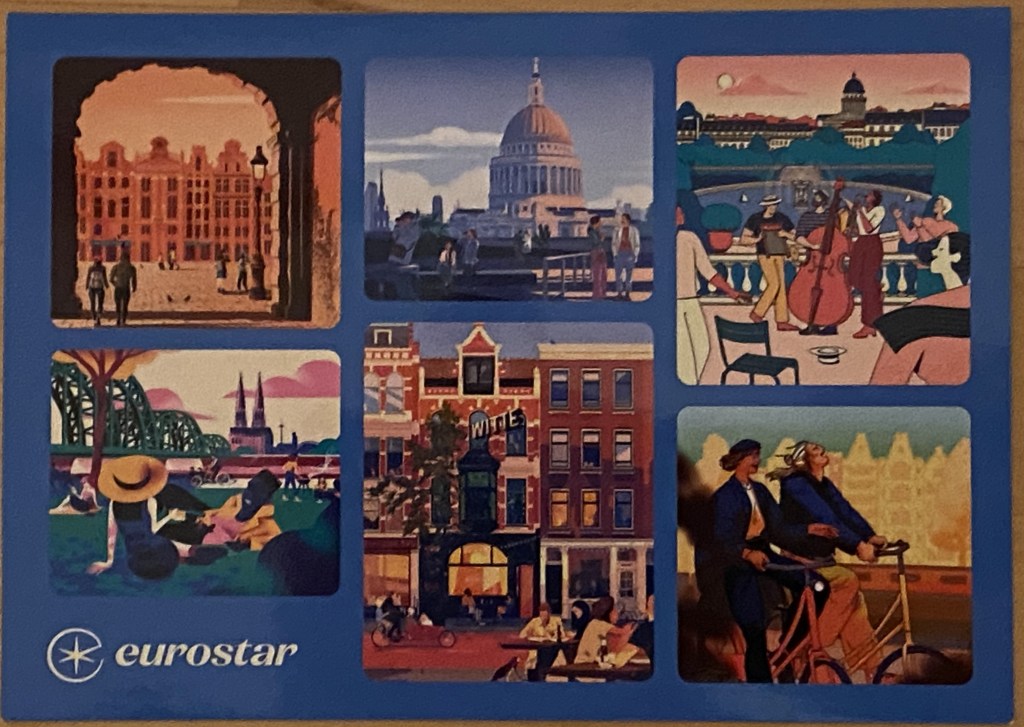
Festive greetings from warmer climes – a card for those heading off during the holiday period. In contrast to many of the cards we feature, this card is entirely uptodate.
This card celebrates thirty years of Eurostar which started service on Thursday 14 November 1994. The tunnel was built by 13,000 workers over eight years and completed in 1993. Queen Elizabeth and Prince Philip attended the inauguration of the Eurostar at Waterloo International station, the original home of the service, in May 1994. The service has since carried millions of passengers across 28 stations.
This card reflects the cities served by the service without emphasising the fact that it only now runs from one overcrowded terminus in the UK – St Pancras International, services from Kent having been withdrawn and the promised service from Scotland never having materialised.
The card was available for free at the service desks in departure lounges in 2024.
16 November 2024 Calton Hill, Edinburgh
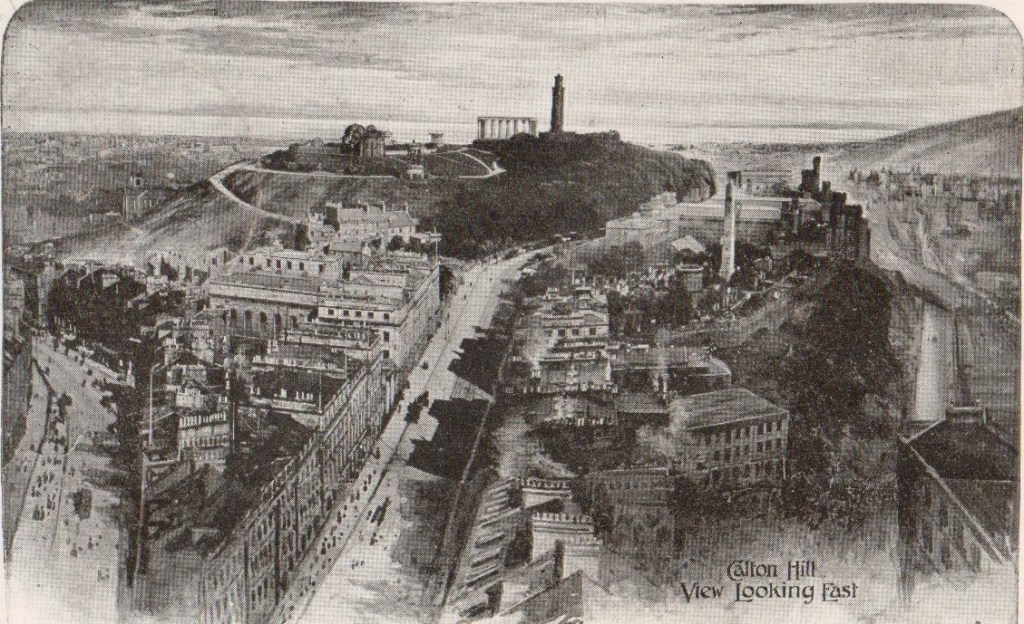
This charming scene of Waterlool Place in Edinburgh throws up an unfamiliar view of a a very familiar city centre location. The street on the bottom left is the top of Leith Walk.
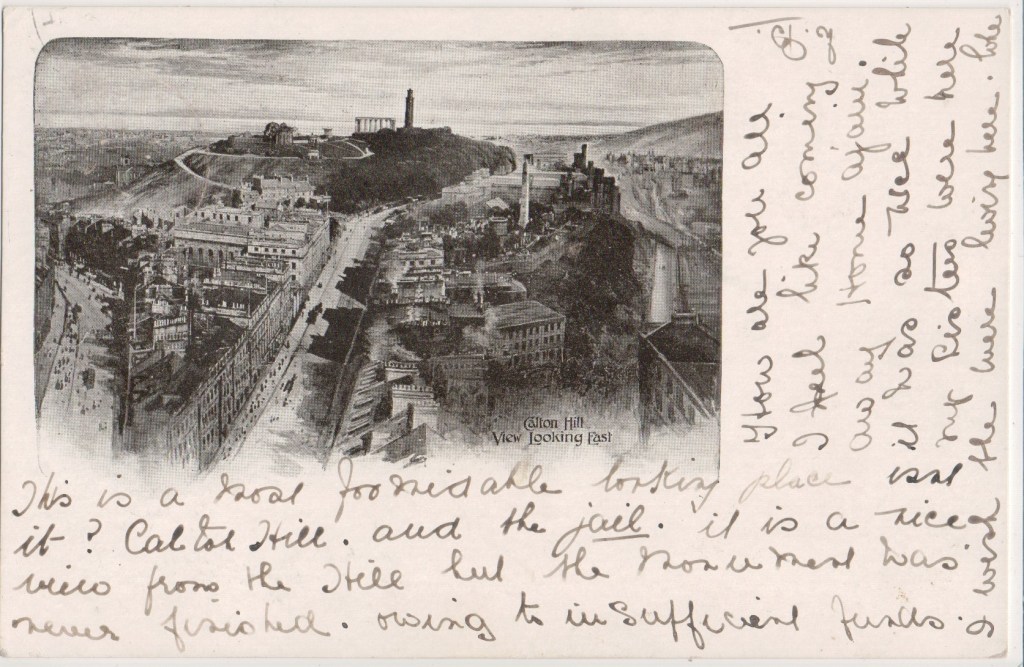
Here is the rest of the card: “This is a most formidable looking place isn’t it? Calton Hill and the Jail. It is a nice view from the Hill but the monument was never finished owing to insufficient funds.I wish we were living here.
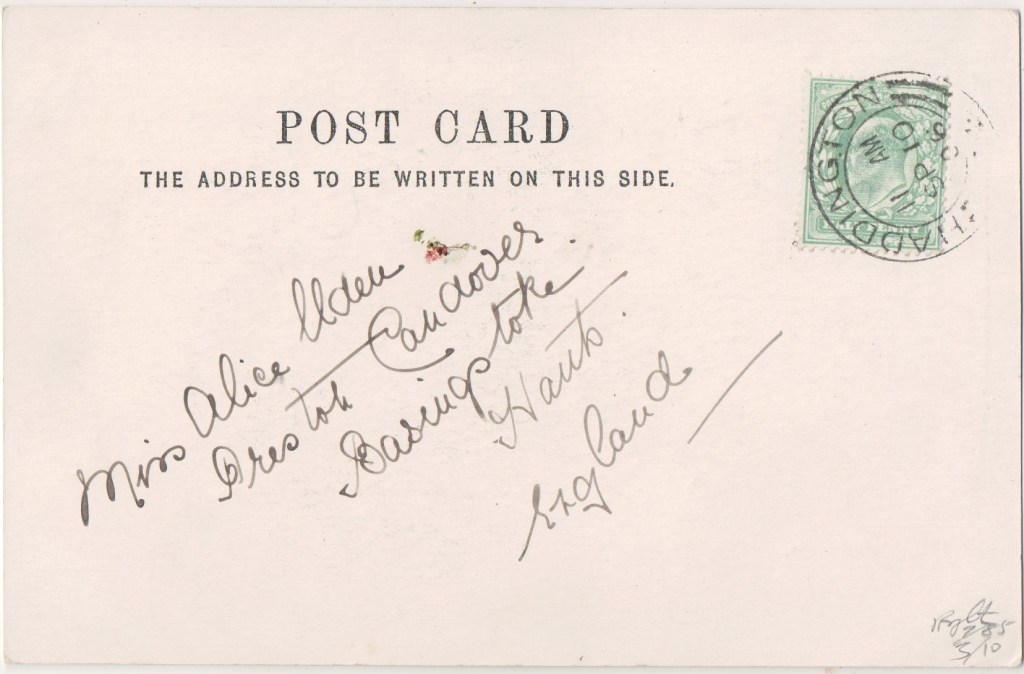
The card was posted in Haddington on 10 September 1906. No clue as to who the publisher is.
16 November 2024
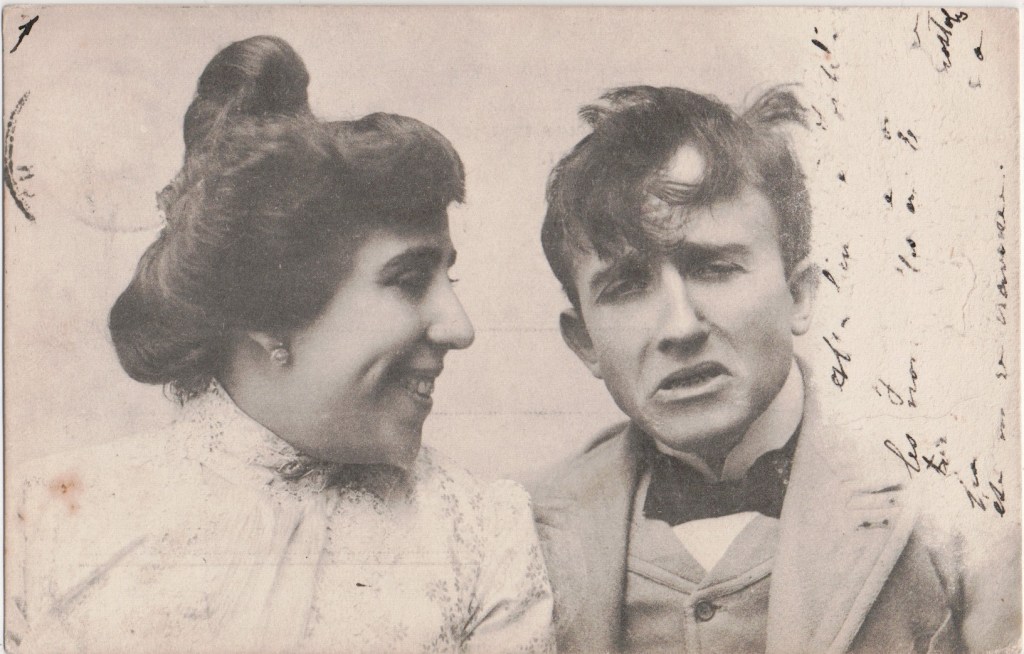
This card was published for the French market by Garzini & Pezzini, printer and postcard-publishing company at 6 Via Vivaio, Milan. The business was founded in 1901 by Giuseppe Garzini, Cesare Pezzini, and Eugenio Colombo. They were award-winning lithographers who reproduced fine graphic art, often museum pieces. How this image fits with that high-end produce is not clear. The next question is what they are saying? The reverse also throws up a number of interesting issues:
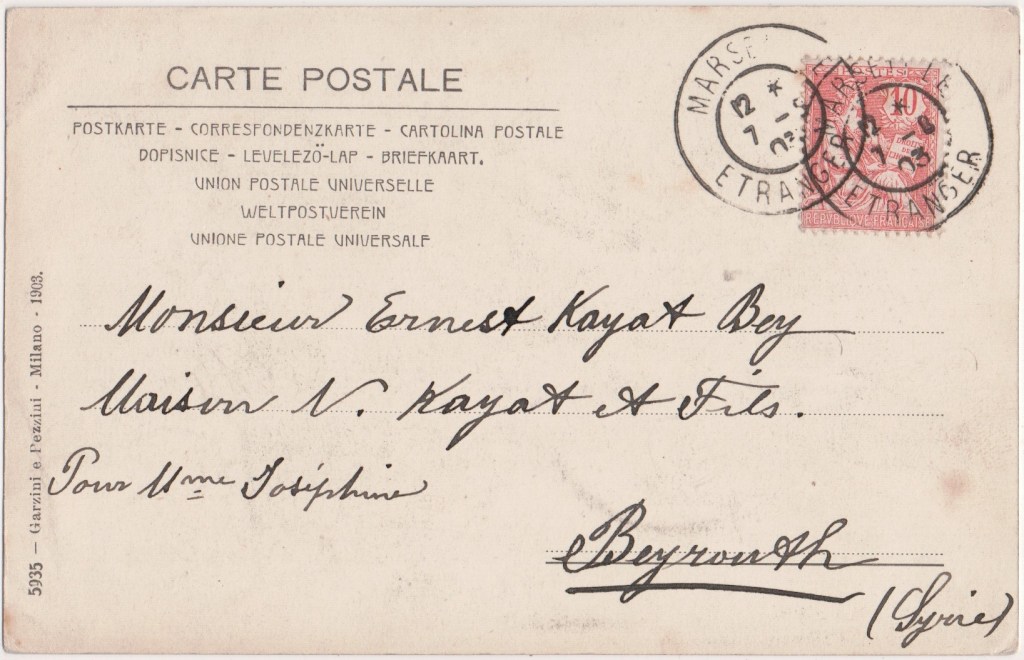
This card was posted on 7 August 1903 in Marseille to Ernest Kayat in Beirut. In 1888, Beirut was made capital of a governorate in Syria. At this time, Beirut had grown into a cosmopolitan city and had close links with Europe and the United States. It also became a centre of missionary activity that spawned educational institutions such as the American University of Beirut. Provided with water from a British company and gas from a French one, silk exports to Europe came to dominate the local economy. After French engineers established a modern harbour in 1894 and a rail link across Lebanon to Damascus and Aleppo in 1907, much of the trade was carried by French ships to Marseille. French influence in the area soon exceeded that of any other European power. .
In 1847 Madden & Company, London published A Voice from Lebanon with the Life and Travels of Assaad Y. Kayat. Assaad Yakoob Kayat (born 1811) was a Christian Arab from Beirut, as well as an ancestor of the well-known Beirut publishing dynasty. He travelled throughout Europe and the Middle East, lecturing on Syria and the “existence and state of Eastern Christians”. He also worked with the Syrian Society, a group that promoted the education of Arab youth. A Voice from Lebanon gives details of Kayat’s early life in Beirut and later travels. This was one of the very few books of the mid-19th century written by a native Arabic speaker in a Western language.
In his book Assaad describes in vivid detail his childhood and upbringing, through epidemics, wars and revolutions. He learns to read and write at the age of four, first in Arabic, his mother tongue, as his father wants to give him a good education (‘from the fear of my growing to manhood in a state of wretchedness and oppression’). Showing great promise and inclination for learning languages (he subsequently learns both ancient and modern Greek, Italian, English and Persian) as well as an astute business sense, Assaad soon progresses from selling rag papers to interpreting for sailors and merchants and is eventually employed as an interpreter by the British consul and representative of the East India Company in Syria – he was British Consular representative at Acre, now in Israel.
In 1843 Kayat enrolled at The medical school of St George’s Hospital which had recently become a constituent college of the University of London . He spelled his name As’ad Yakub Khayyat or Assaad Y. Kayat. At the age of 32 when he began his studies, he would have been considerably older than most of his fellow students. Assaad was also married and had two small children, and had to earn money to cover his studies, so he presumably did not have much time for student activities.
Moreover; his wife Martha struggled to settle in; she had a toddler and a small baby to care for, she was herself sick could not get used to the miserable weather and the London fogs, she didn’t speak English and was largely confined to their small rented rooms instead of their lovely house and garden and the company of her family and friends in Beirut. They struggled for money and Assaad attempted to raise money by giving public lectures on Syria and Christianity and by setting up a small importing and exporting business.The student records show that Assaad studied for three seasons. One of the records notes that he ‘appears not to have paid his fees’, but according to his own account he finished his studies in 1846, obtained his diploma and was admitted as a member of the Royal College of Surgeons, before returning to Beirut. In 1847 he was appointed British Consul in Jaffa and was still listed there in 1865.
Ernest Kayat was living in Paris in November 1924 at the Villa de la Terrace. It’s speculative to link the Francophone Ernest with the deeply British Assaad and his family but these are the byways that postcards can lead you down!
Source: St George’s Library Blog 18 August 2020 Juulia Ahvensalmi.
9 November 2024
Courting couples and those seeking romance would often use the only method of communication available to them. Postcards which could be sent once or twice a day were the ideal medium for flirting or declaring love.
Looking back at these we get tantalising glimpses of past romances.
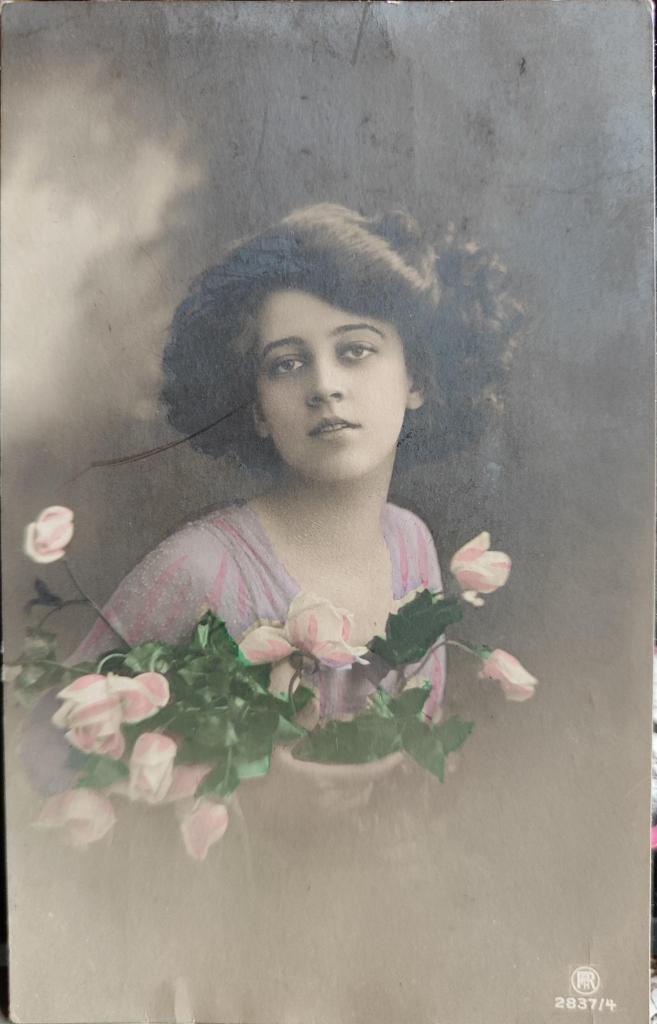
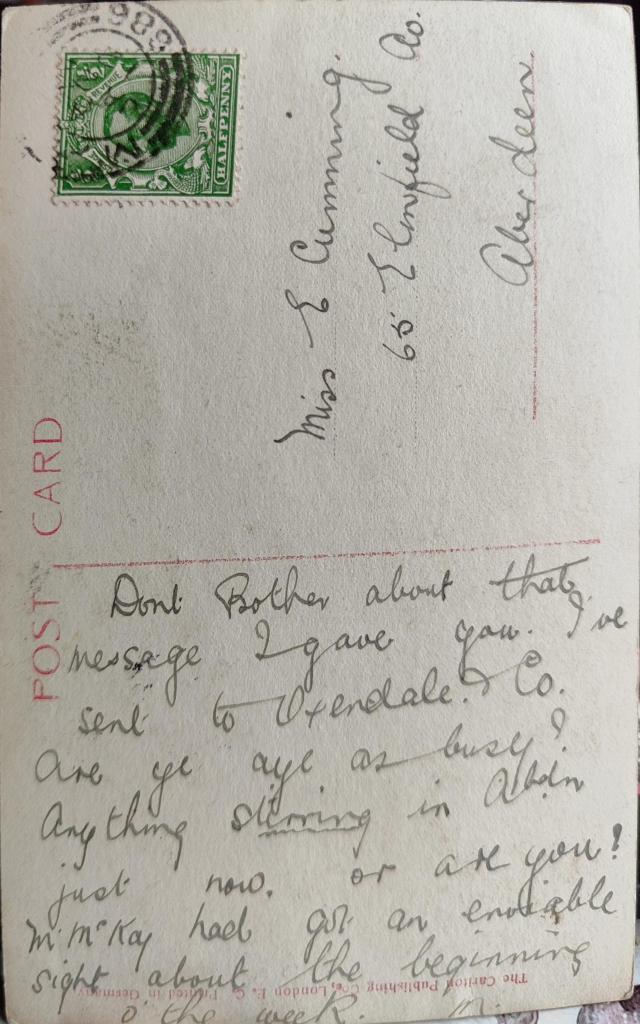
Like this card sent to Miss E Cumming, 60 Elmfield Avenue Aberdeen which says a lot whilst saying very little.
“Don’t bother about that message I gave you. I’ve sent to Endale & Co. Are ye aye as busy? Anything stirring in Aberdeen just now or are you!
M McKay had got an enjoyable site about the beginning o the week. R”
Understandably the senders would not want their messages falling into the wrong hands and would often employ a variety of techniques to keep prying postmen or concerned family members from knowing their contents.
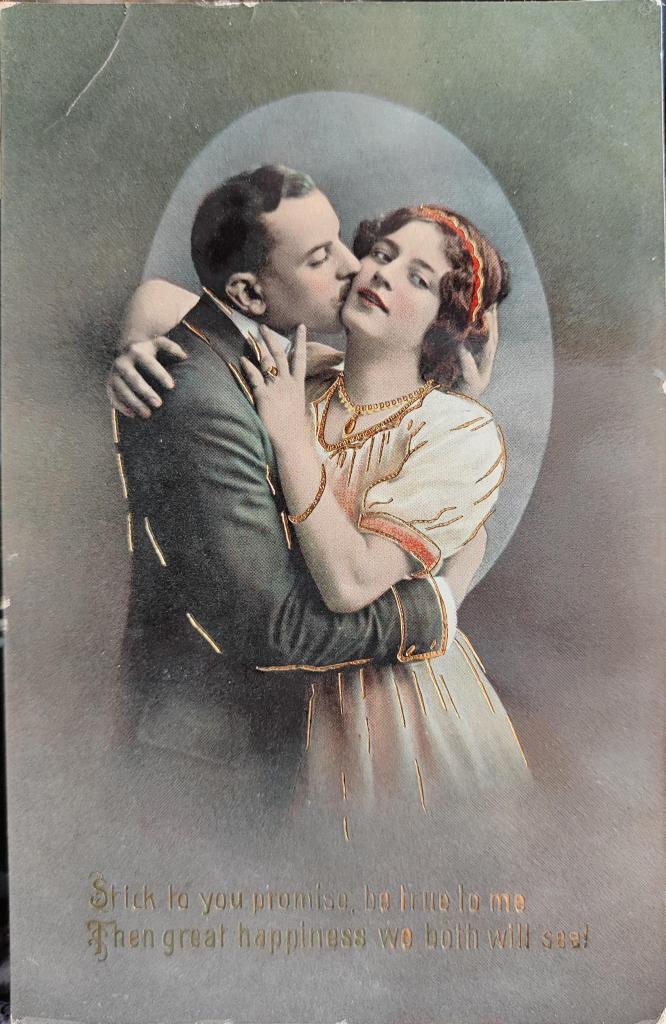
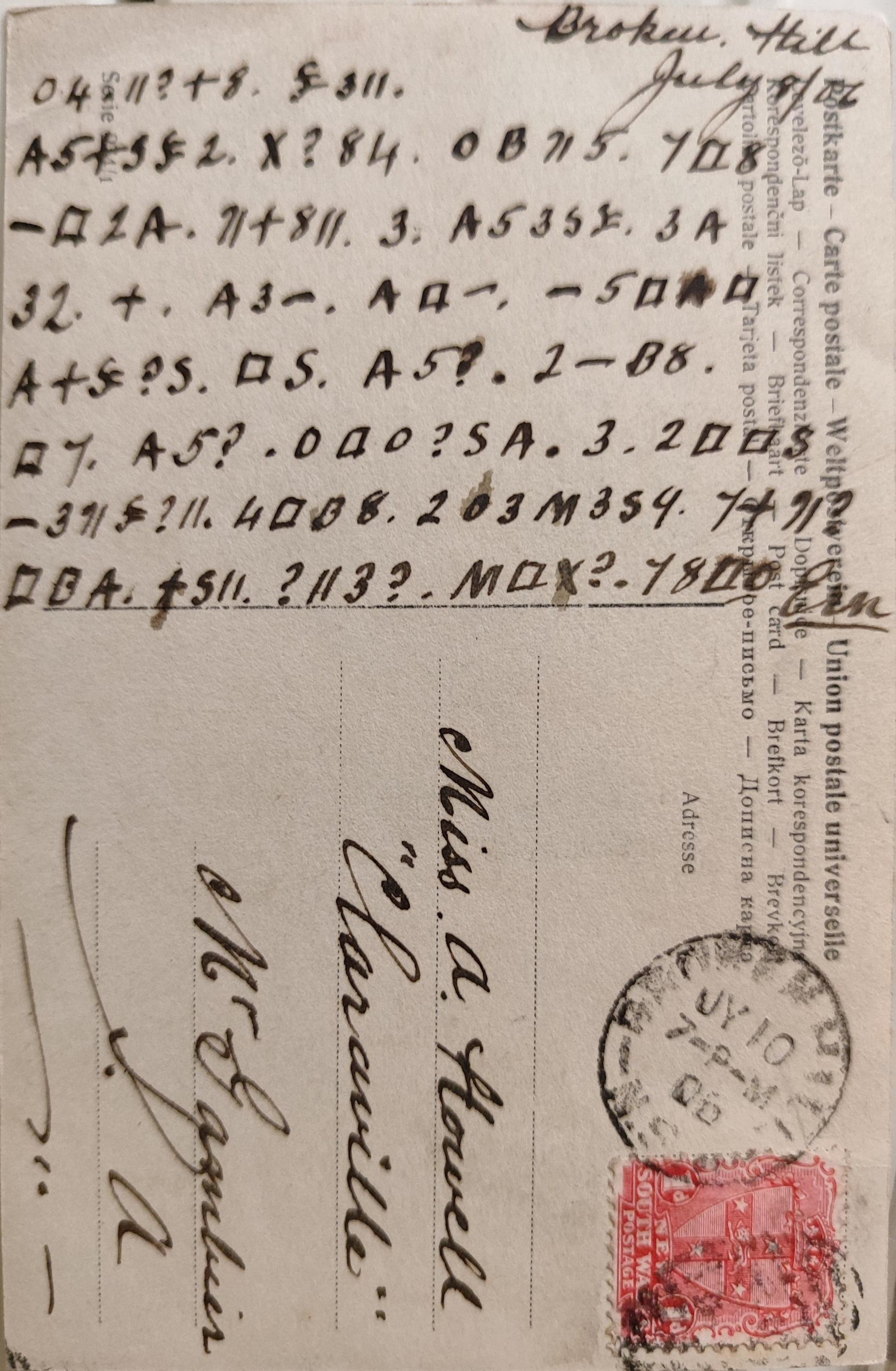
Sometimes these tricks were simple like Bob here who sent a series of cards to Miss W Alexander of 5 Rossie Place Edinburgh.
He writes his messages upside down
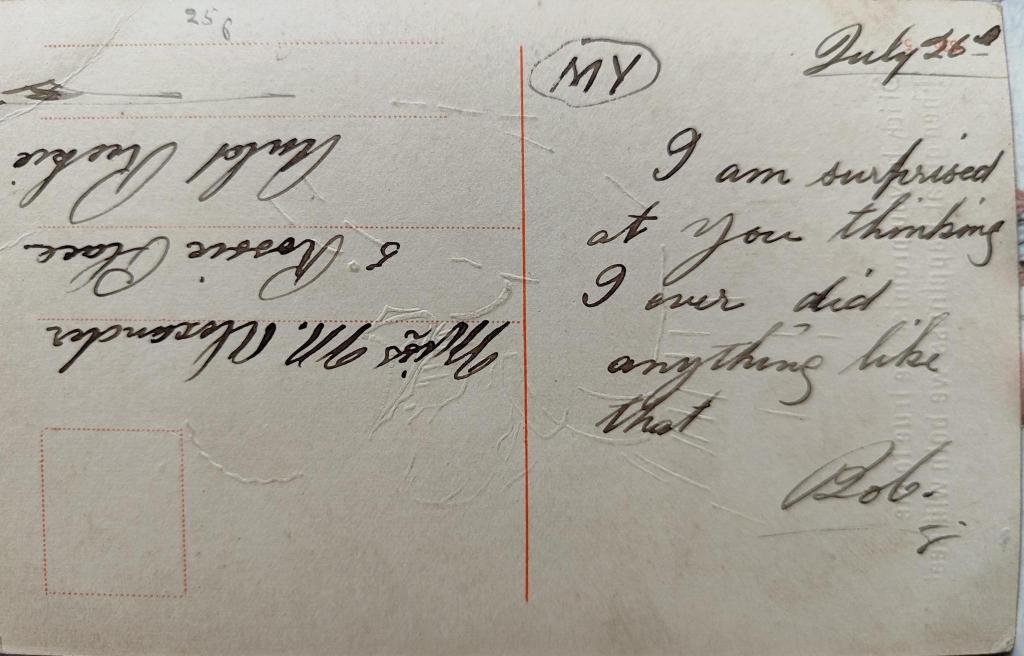
“My I am surprised at you thinking I ever did anything like that”
Or sometimes other techniques included writing backwards here is one to M R McKenzie of North Lodge, Leslie which can be deciphered by reading via a mirror.
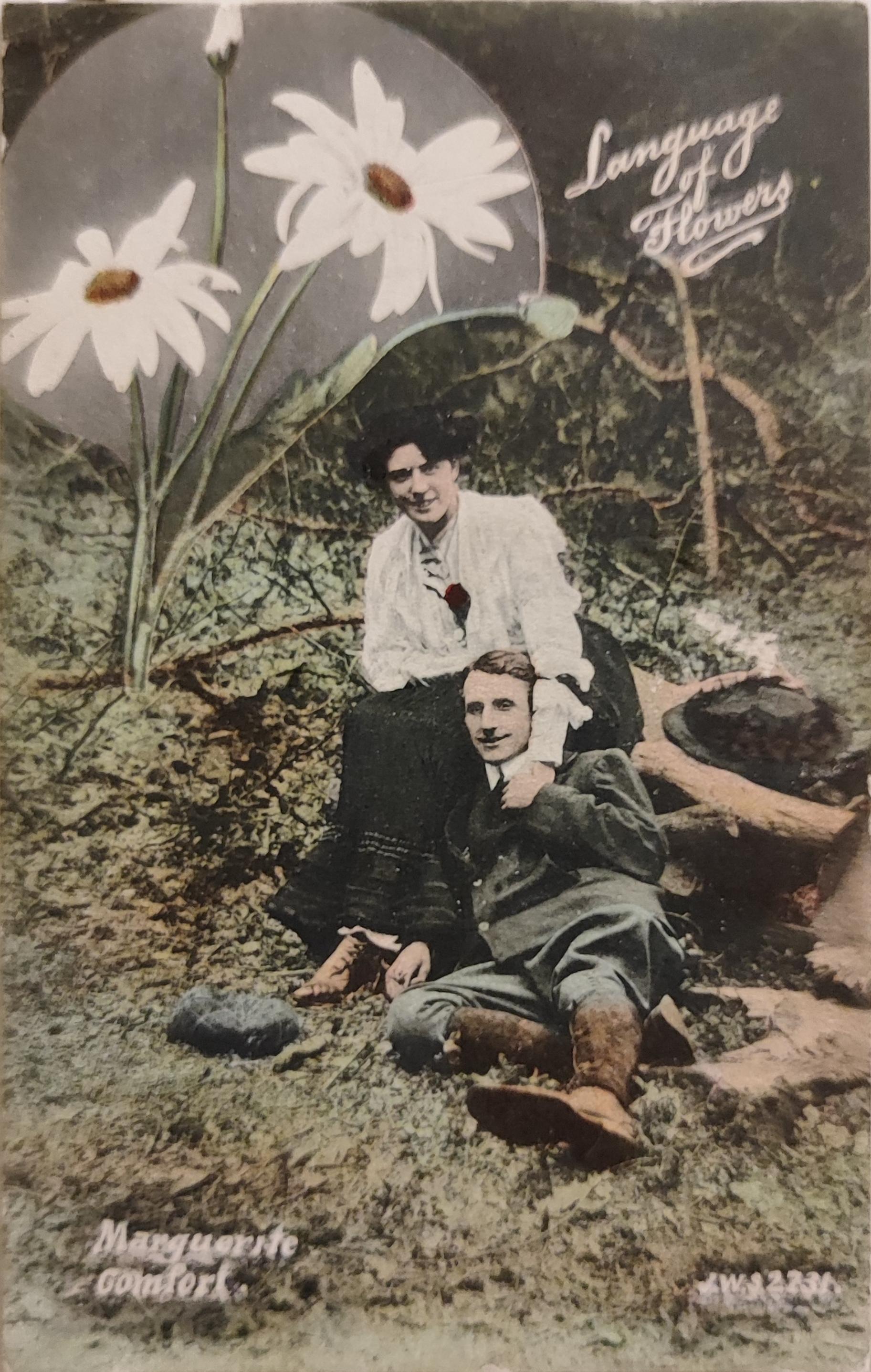
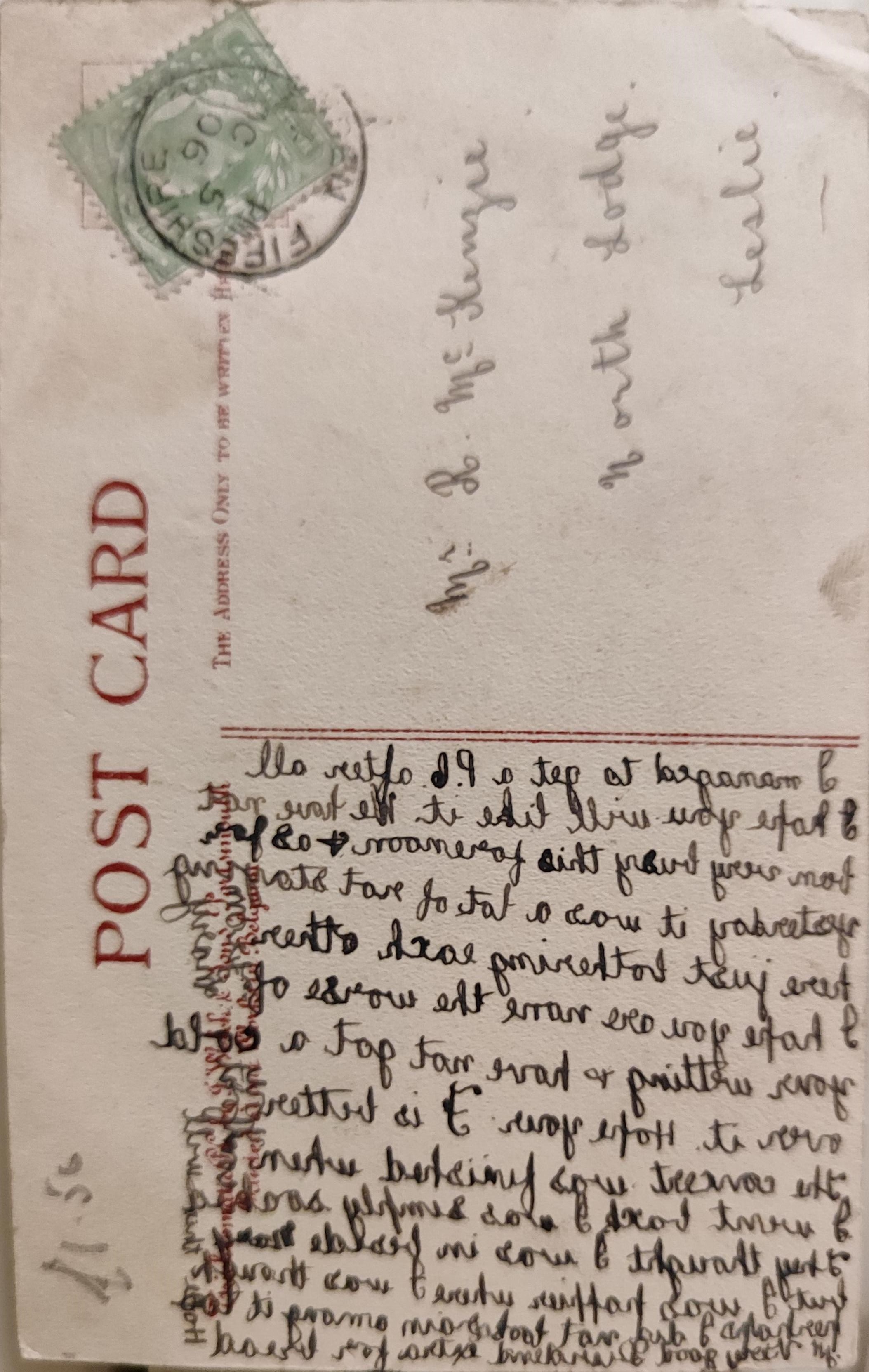
“I Managed to get a P.C. after all. I hope you will like it. We have not been very busy this forenoon & as for yesterday it was a lot of not staying here just bothering each other. I hope you are none the worse of your wetting & have not got a cold over it…”
Others were even more sophisticated employing secret codes or an early form of shorthand like these two examples which I am still hoping to crack!
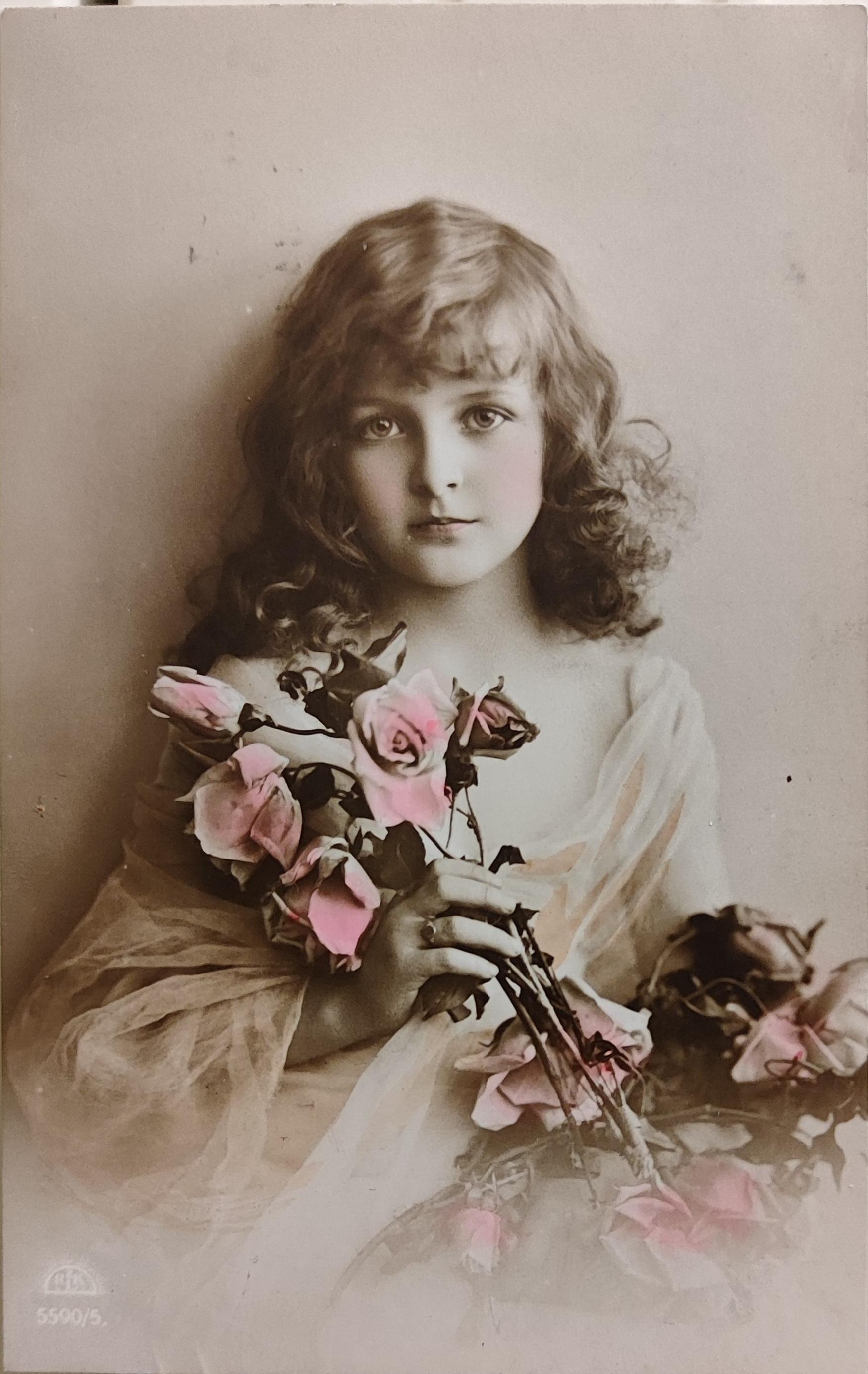
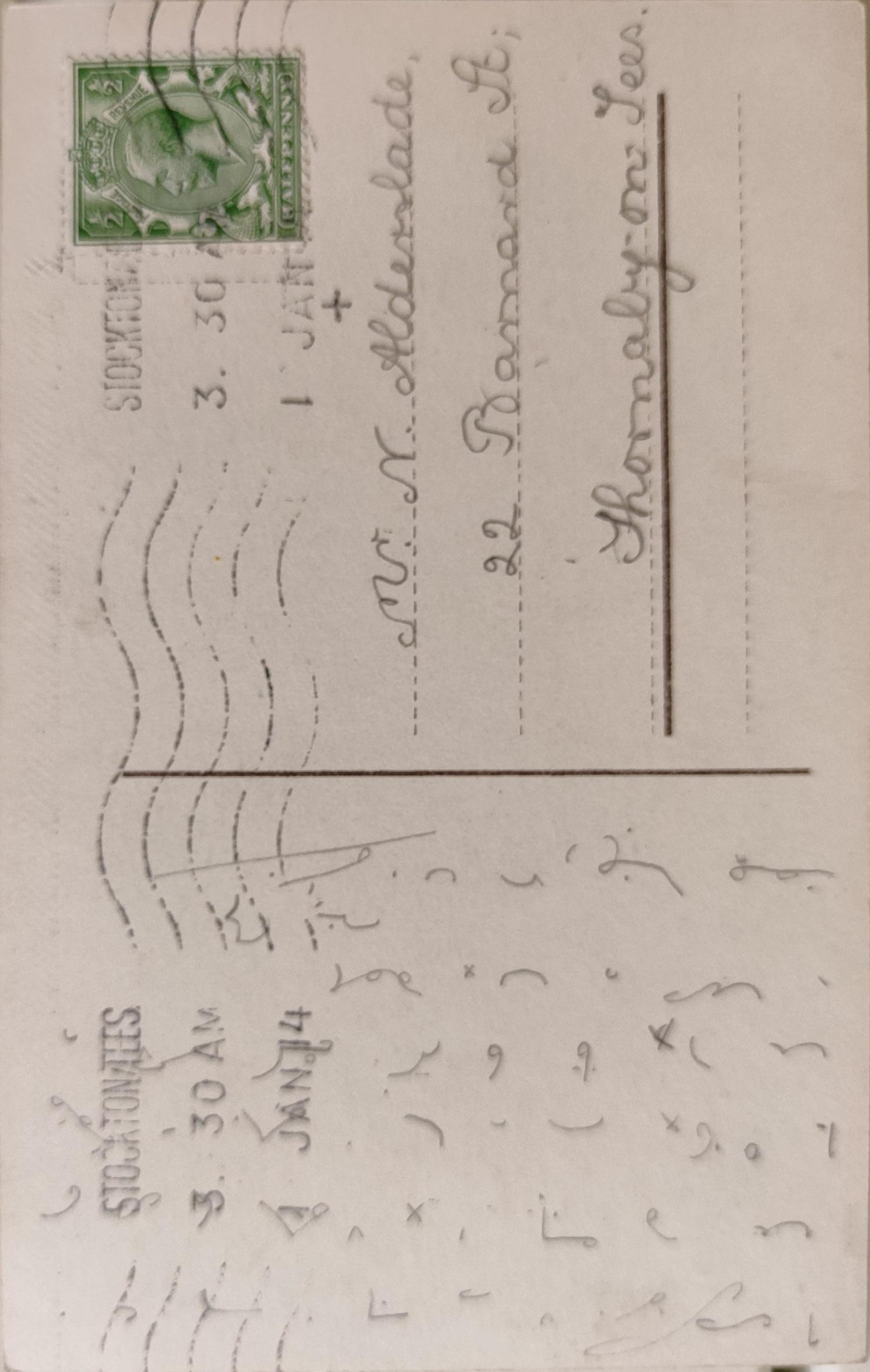
4 November 2024
Song cards are a poignant reminder of the Great War. These were published by Bamforth & Co. and featured lyrics from well-loved songs of the day. Over 600 sets were mass-produced and most convey a sombre mood, portraying families and partners longing for the return of their loved ones. They became particularly popular during WW1, and are now widely collected. This lovely example has been contributed to ‘Postcard of the Week’ by our member Conal Anderson, as our contribution to this season of Remembrance.
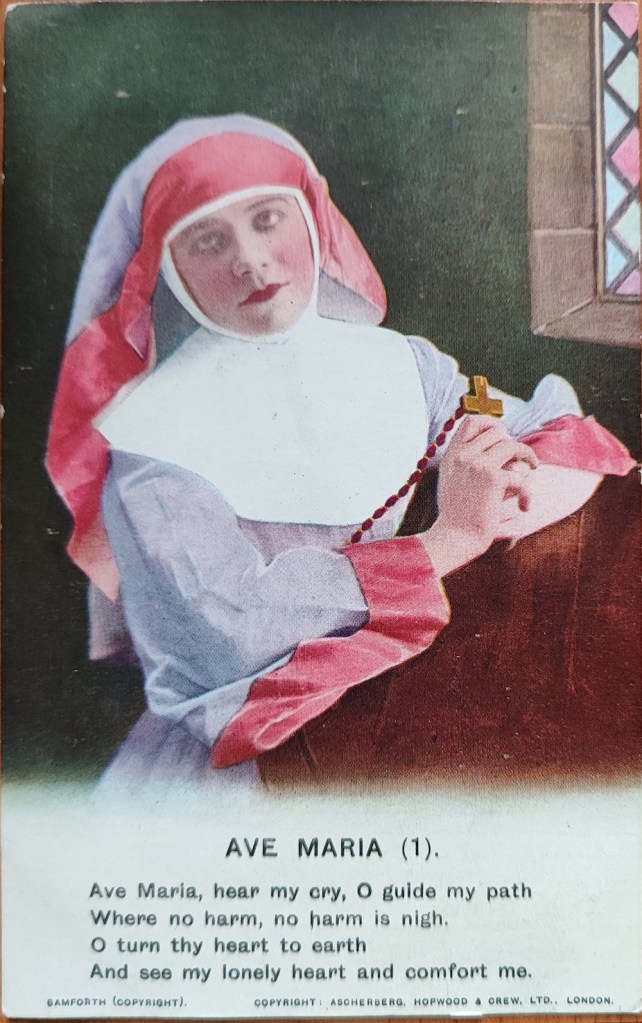
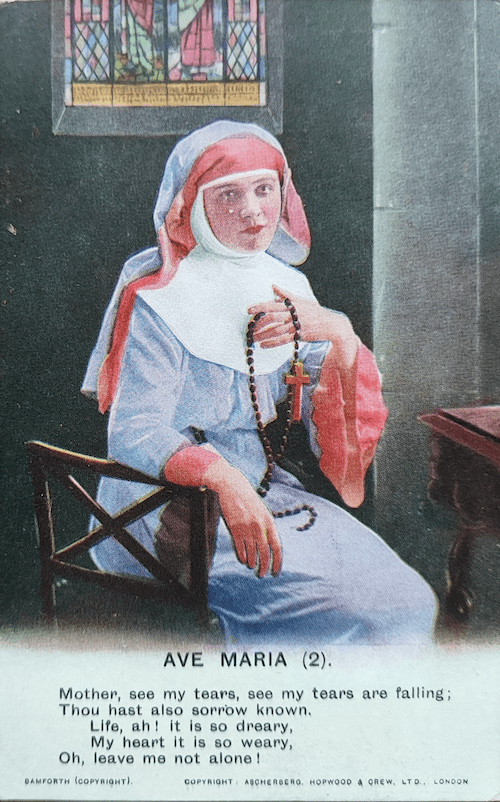
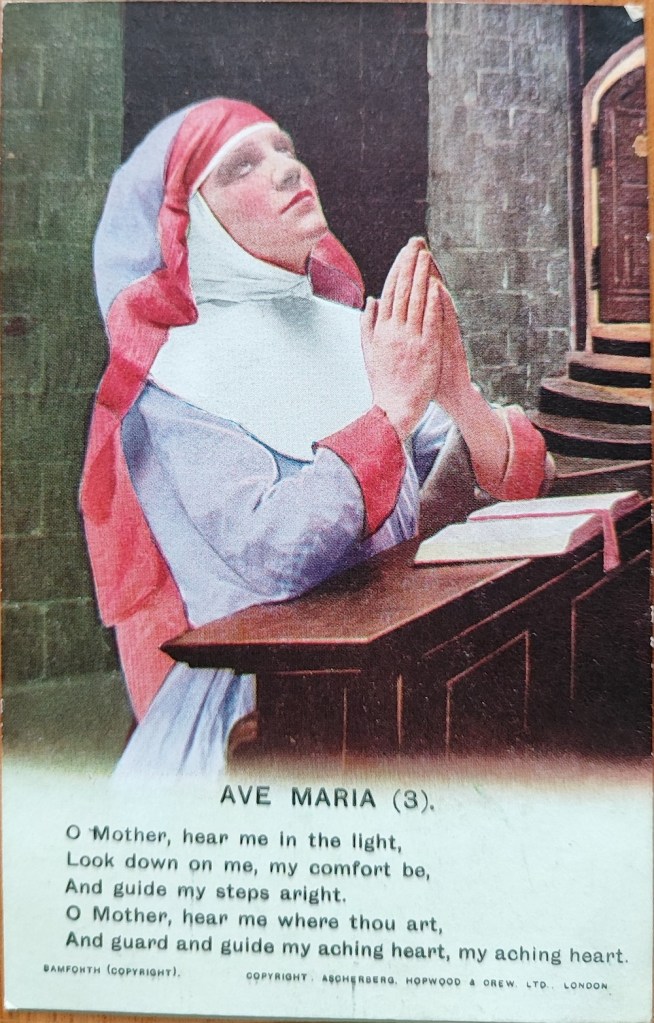
These cards were written and sent from a British Army training camp in Beccles, Suffolk on 12 August 1916 and reads as follows :
“My own darling wifie – I have just wired you the following message – “cannot come home yet. Cheer up”. I saw my Captain this morning & he said he was powerless to do anything for me immediately as it was an order from our Brigade that all leave must be stopped for a month. Brigade orders are far different from Battalion orders – there are 3 battalions in our brigade by the way and we are all cyclists. These are known as the 25th London cyclists, a “set” of Somerset cyclists & a battalion of Scotch cyclists who call themselves the Lovat Scouts”.
“Well lets go on, my captain advised me to write a letter so that he could forward it onto the Brigade & I wrote the following – ‘one of my brothers has recently arrived in England from France having been seriously wounded in the Great Push. As I haven’t seen him this last 13 Months & he is about to undergo an operation I shall feel greatly obliged if you could see your way clear to have 3 or 4 days special leave so that I may proceed to Chichester for the purpose of seeing him. He is also desirous of seeing me. Hoping you will forward and recommend my application…’”
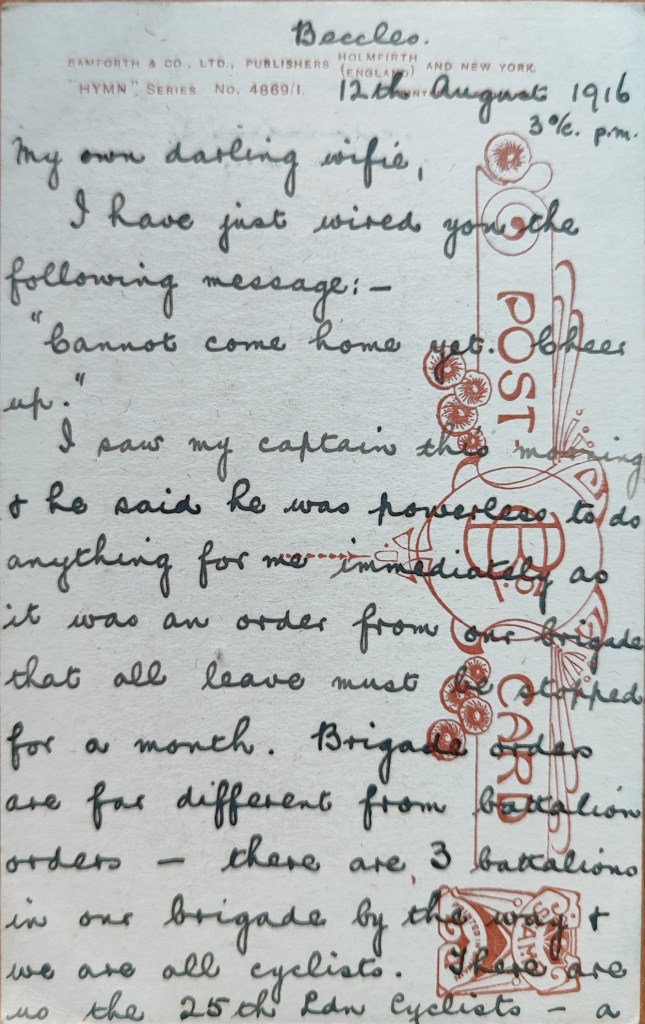
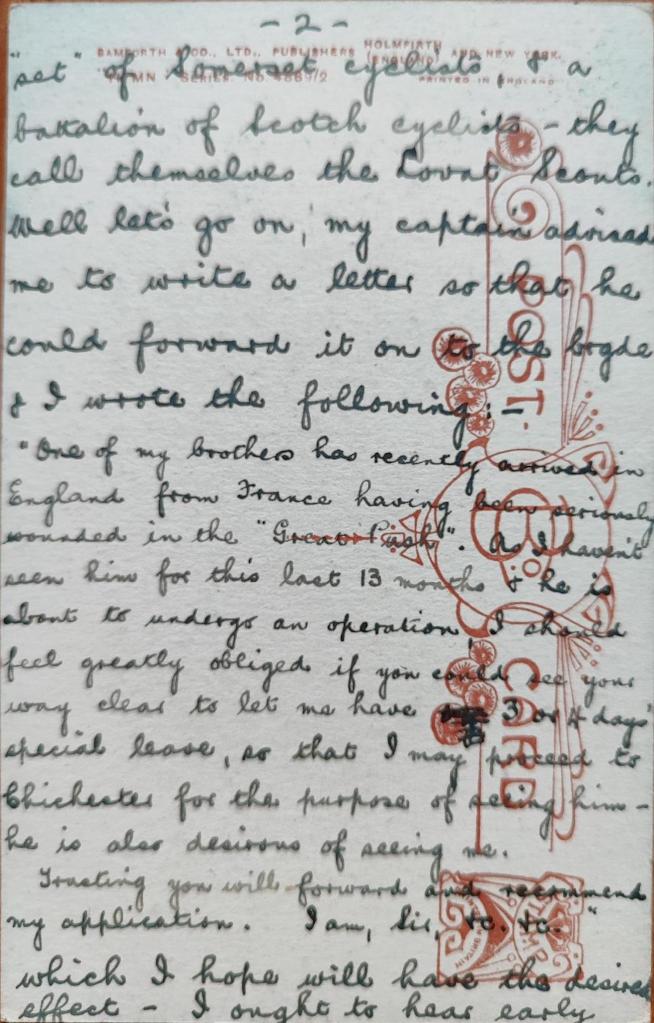
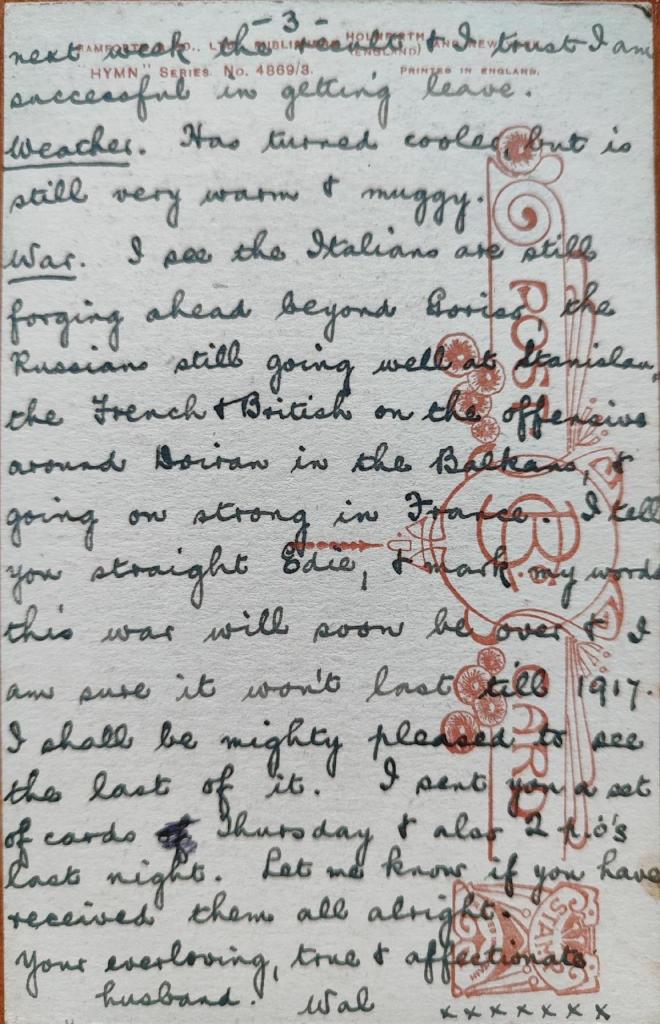
“Which I hope will have the desired effect. I ought to hear next week the results & I trust I am successful in getting leave. Weather – has turned cooler but it is still very warm & muggy. War – I see the Italians are still forging ahead beyond Gorizia and the Russians are still going well at Stanislav, the British & the French on the offensive around Dorian, in the Balkans & going strong in France”.
“I tell you straight Edie & mark my words this war will soon be over & I’m sure it won’t last till 1917. I shall be mighty pleased to see the last of it. I sent you a set of cards Thursday & also 2 photos last night. Let me know if you received them all right. Your everlasting, true & affectionate husband, Walt”
The soldier “Walt” (probably Walter) was serving with the 2/25th (County of London) Cyclist Battalion, The London Regiment, based around Halesworth, Suffolk at this time. Beccles is a few miles north of this (see here for a long account of this unit’s service during the entire war). They were part of the 1st Mounted Division, a home defence unit stationed in East Anglia, and composed of a mix of Territorial cyclist units (see more here). His battalion was part of the 1st Cyclist Brigade, which included the 2/1st Somerset Yeomanry, 2/1st Lovat Scouts and 2/2nd Lovat Scouts. Finally, his reference to “the Great Push”, in which his brother was wounded, almost certainly means the British offensive now known as the Battle of the Somme, which began on 1 July 1916.
Conal has some other cards from Walter to Edie, and if we can find any more about them and Walter’s brother, we will add it here.
28 October 2024
Postcards have often been used as a form of political marketing, both in the UK and elsewhere. So, with the US Presidential Election nearing its conclusion, this week we share some from an earlier era. These relate to the 1908 election, between the Republicans William Taft and James Sherman (respectively Presidential and Vice-Presidential candidates) and the Democrats William Bryan and John Kern (likewise).
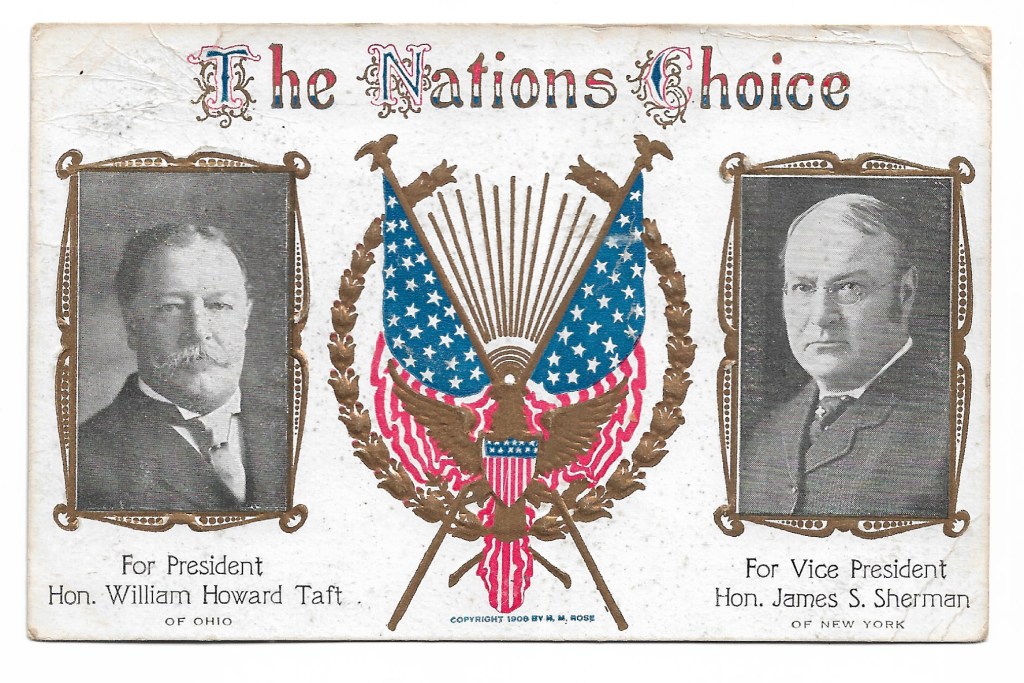
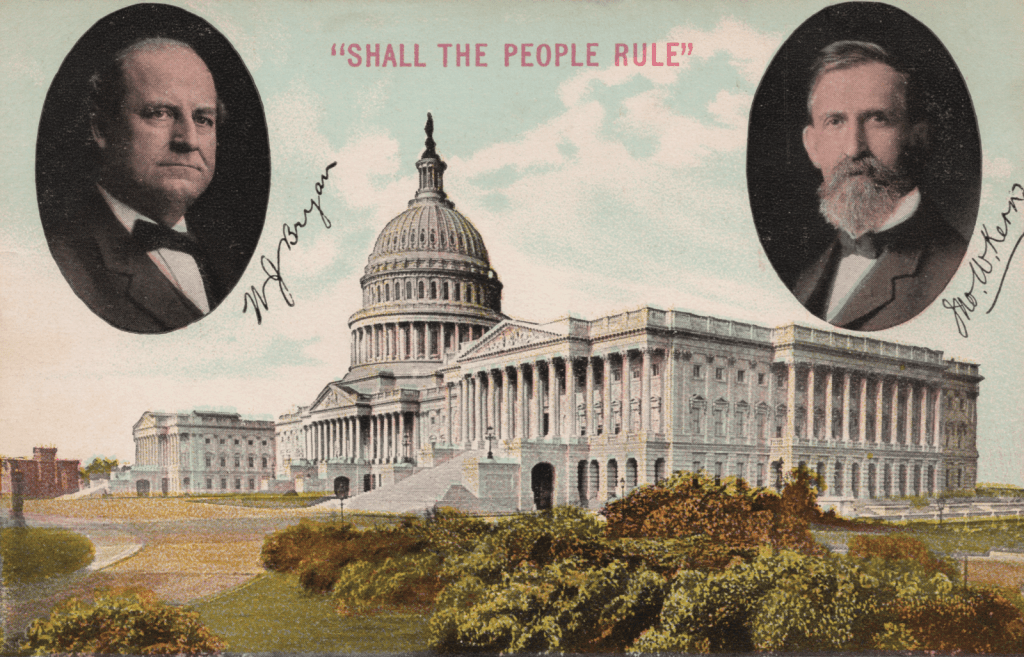
Taft and Sherman won (see more background on Wikipedia here). The left hand card was, however, posted to the UK six days after the vote on 3 November 1908, so was presumably being shared as an interesting postcard rather than influencing any vote. The right hand one comes from the Wikipedia page (right at the bottom), where you will find a few more examples of cards from this particular contest.
The current election is being fought more on the airwaves and online, of course, but a quick rummage on Ebay shows that there are still some postcards being produced. We assume they are being used both to show support for one candidate or the other and to “get the vote out” (such as the lower two exhortations from “Uncle Sam”).


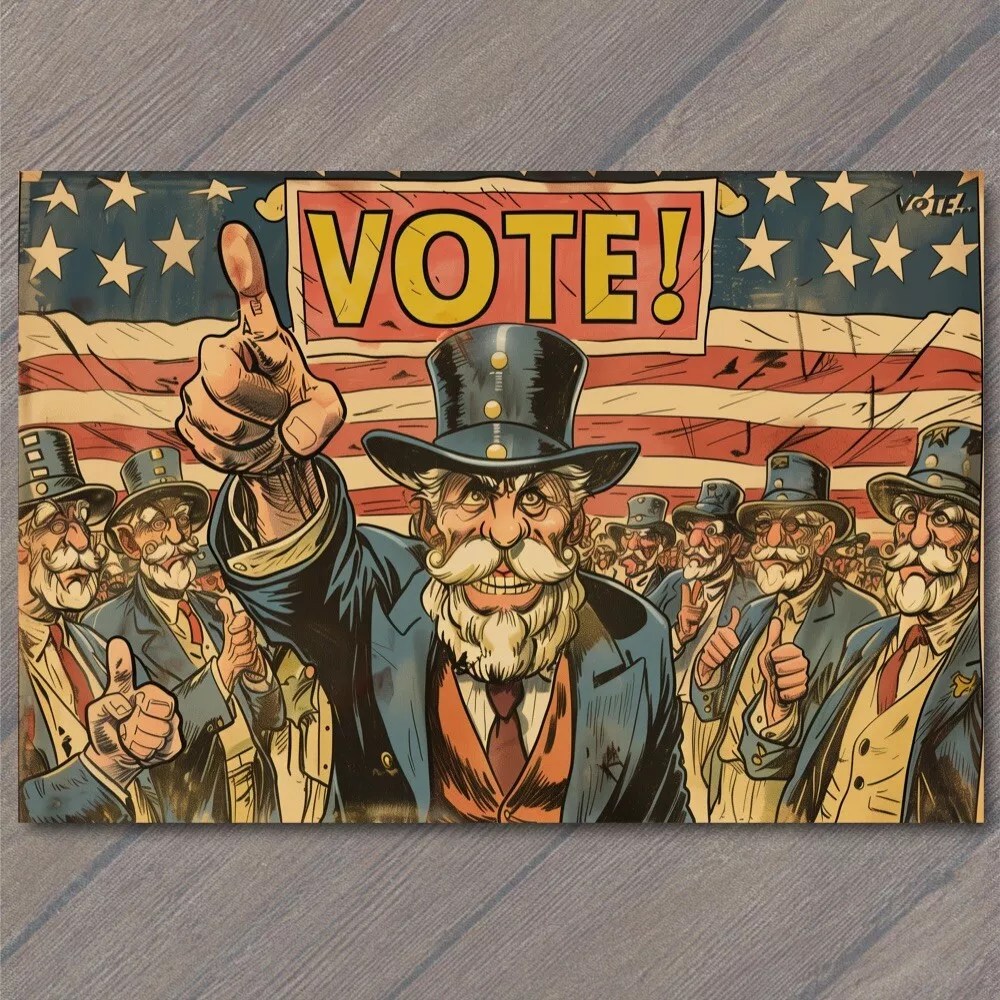
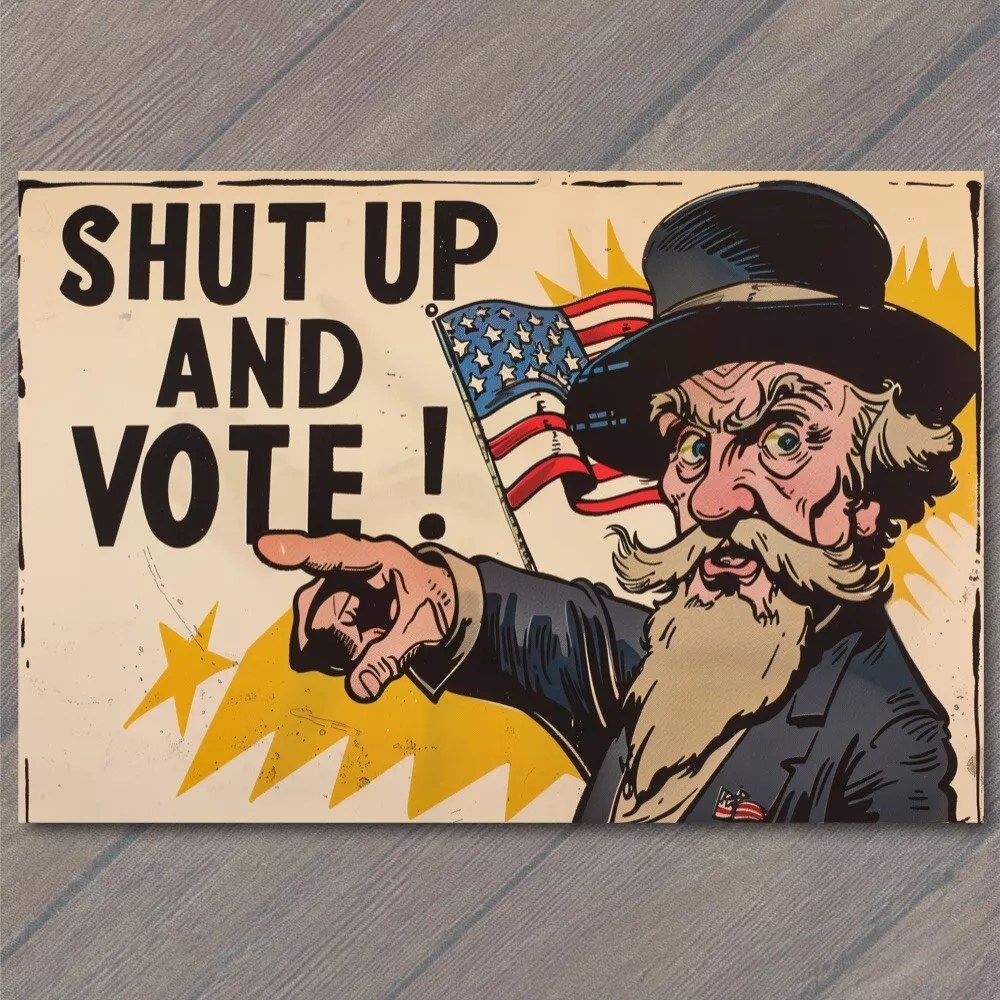
We wish our American collecting friends a democratic and peaceful transition !
21 October 2024
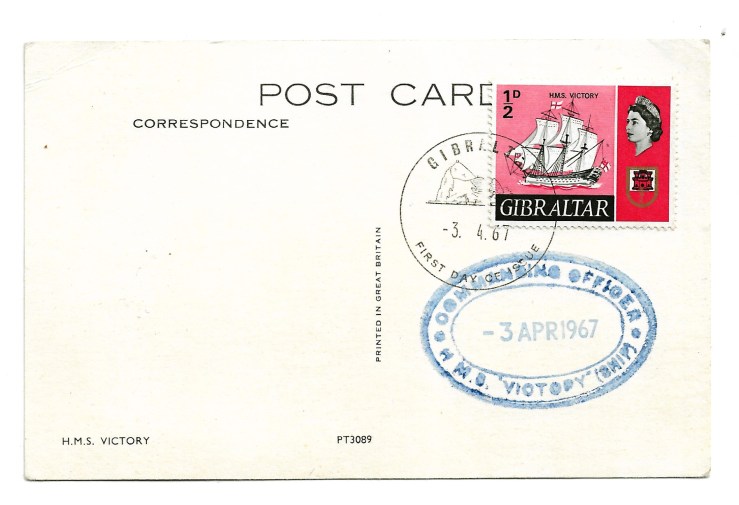
On this particular date, it would be remiss of us to mark it with anything other than a postcard of HMS Victory, Admiral Lord Nelson’s flagship at the Battle of Trafalgar, 21 October 1805 (more background here).
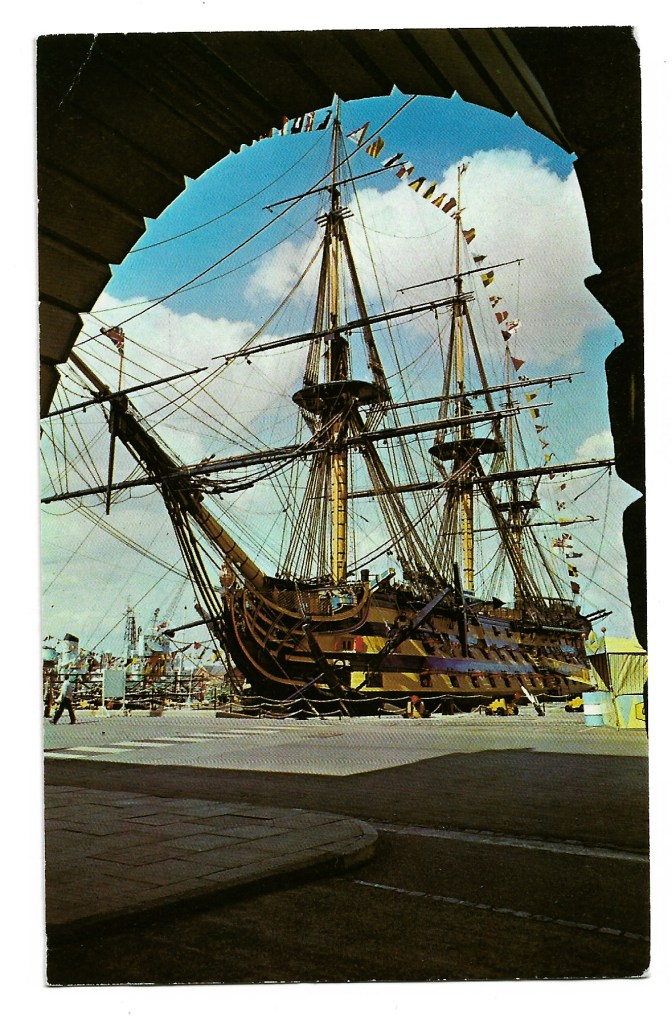
Royal Navy warships have been a popular postcard subject for many decades, and HMS Victory perhaps more than most, as a search on any of the major online sales websites will reveal. She attracts over 350,000 visitors annually as the centrepiece of the Portsmouth Royal Dockyard, and we suspect many of them still buy and send cards showing the distinguished vessel. Many visitors are probably surprised to learn that the ship is still “in commission” with The Royal Navy, and is the official flagship of The First Sea Lord. With 246 years of service, she is the world’s oldest naval vessel still in commission.
HMS Victory is also a popular stamp subject, and this particular card has a 1/2d stamp from Gibraltar with a view of the vessel. It also bears a First Day of Issue postmark from Gibraltar dated 3 April 1967 as well as one from “The Commanding Officer HMS Victory (Ship)” with the same date. We are not sure why the postmark has to say “…(Ship)”, but there is probably a good naval or postal reason !
Digging into the history of HMS Victory, it’s interesting to find that amongst the 820 crew, there were men of at least 22 nationalities. There were many English, Scottish, Welsh and Irish, as you would expect, but also American, Italian, French (yes – four of them !), Swedish, Maltese, Dutch, German, West Indian, Jamaican, Swiss, African, Portuguese, Brazilian, Norwegian, Indian, Danish, Canadian, Manx, and others whose origins are unknown (the full list can be found here).
So today, we send our best wishes to the men and women of The Royal Navy, wherever they may be serving, as they raise a glass to “the immortal memory” in wardroom and messdeck (duty permitting !).
14 October 2024
We have a rather unusual card this week, courtesy of one of our members. It shows views around the Mariannhill Monastery, west of Durban, South Africa, including the church, a local worker with a sewing machine, an ostrich and other flora and fauna.
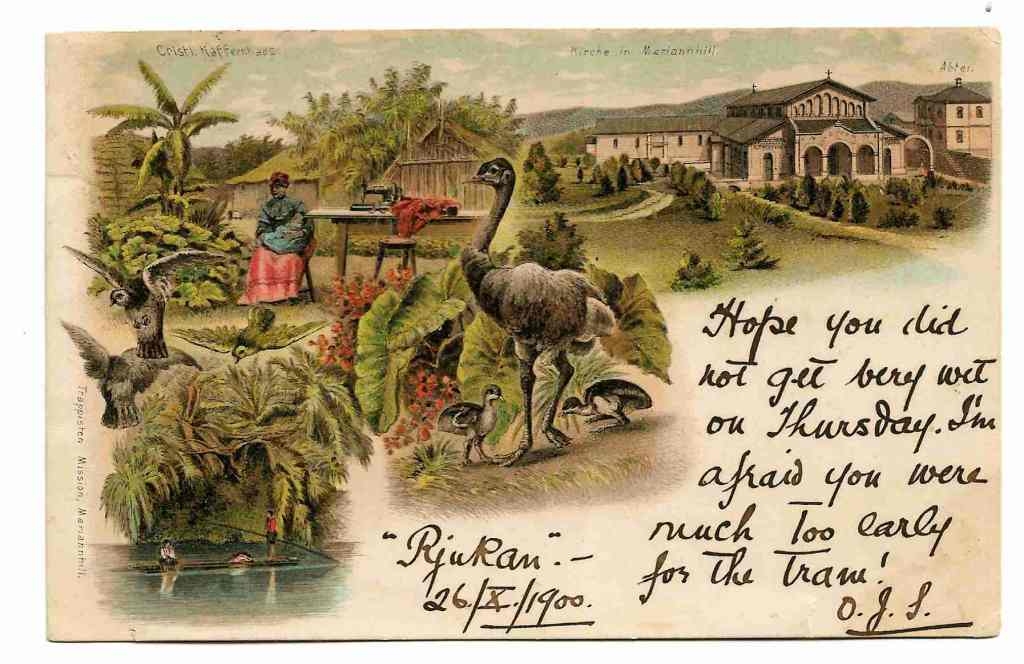
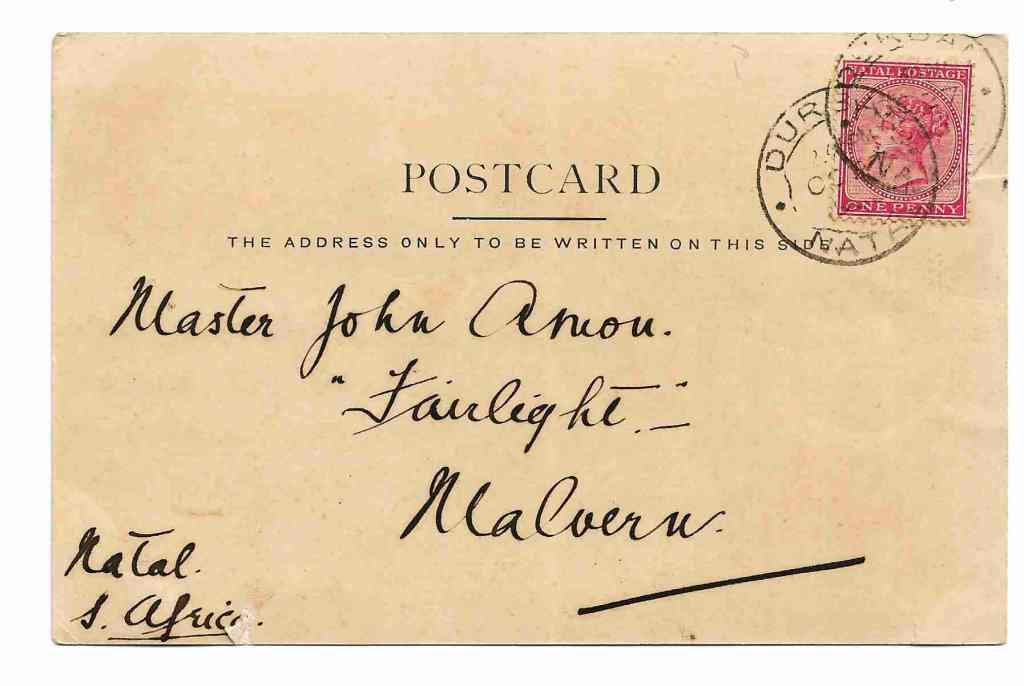
This mission was set up in 1882 by an Austrian Trappist monk called Franz Pfanner (see more background on the monastery on Wikipedia here and a useful blog post here, and on Father Pfanner on Wikipedia here). It is still in operation today (see more here).
The card was posted from Durban in 1900, with a stamp from Natal, then a British imperial possession. It is addressed to a young child in Malvern, although we are not sure if that is the area of the same name in Queensborough, also near Durban, or the town in Worcestershire, UK.
Another possible clue is that the message on the front from the sender, “O.J.S.”, is from “Rjukan”, which might be the name of their house. There is a town of that name in Norway, which may hint at a Norwegian connection.
The card is stylistically similar to the “Gruss aus…” type (meaning “Greetings from…”), which were popular in Germany and other countries of central Europe at this time. We guess, from the text reading “Trappisten Mission, Mariannhill” on the left hand edge, that it was produced at the monastery itself, but we are not certain.
If anyone can shed any further light on this particular card, do please Contact Us.
7 October 2024
One popular reason for collecting postcards is, of course, seeing what your home town looked like in years gone by, or what it looked like when older generations lived there. Such views can also show changes to architecture, shops, transport and other details. Here are a few Scottish examples which recently came across our desk…first, Arbroath High Street (no postmark, but the card has a 3d stamp of the 1967-1970 period), and second, Spean Bridge from the south (unposted, but the caption says “photographed in the mid fifties”).
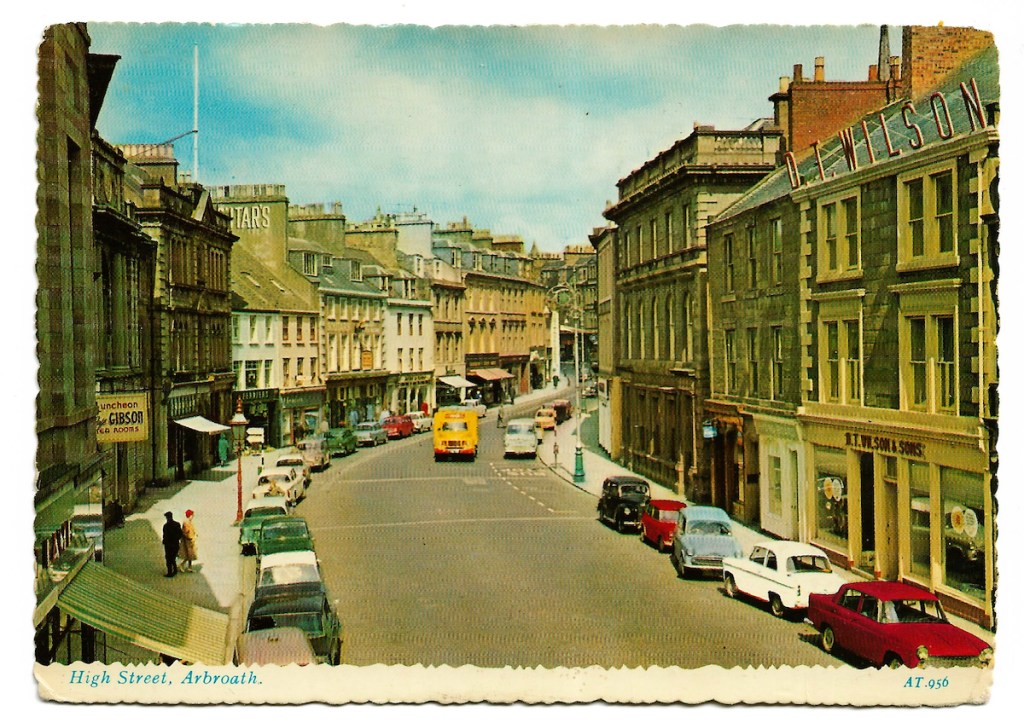
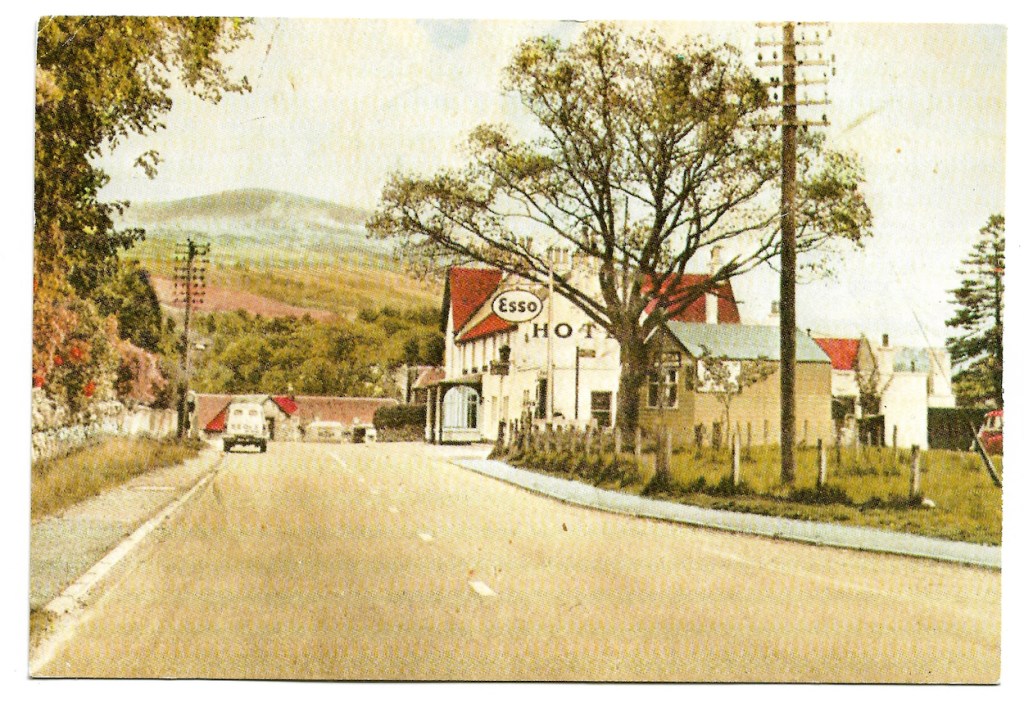
Quite a few shop signs are visible in the Arbroath one, including Gibson’s tea rooms, D.T. Wilson & Sons, Ferriers, and (I think) Soutar’s Hotel. The other one shows (I think) the Spean Bridge Hotel.
And a couple more, first, Aberfoyle (postmarked 1969), and second, the main street in Pitlochry (also postmarked 1969)…
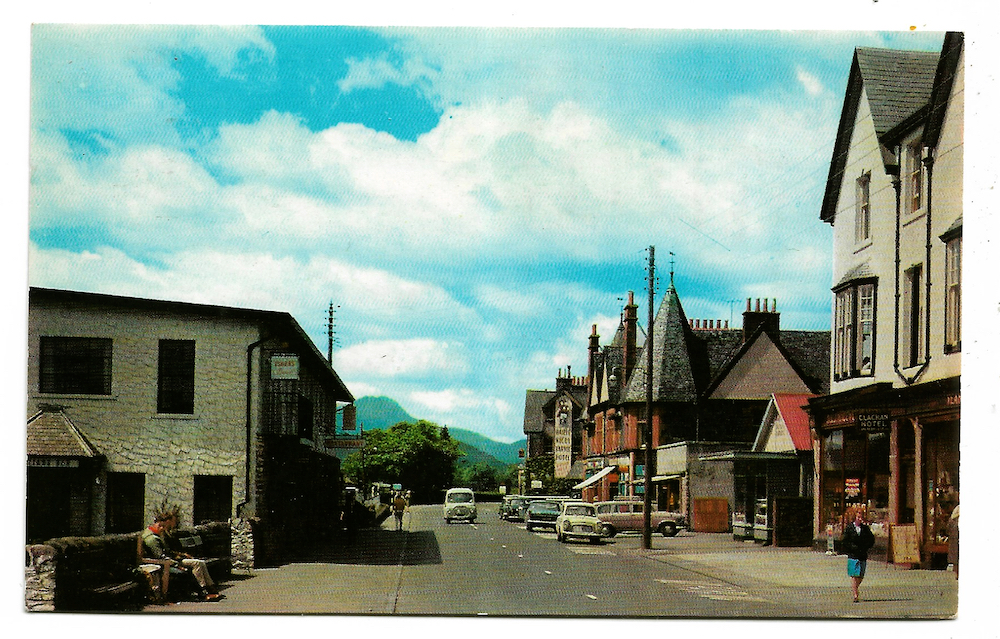
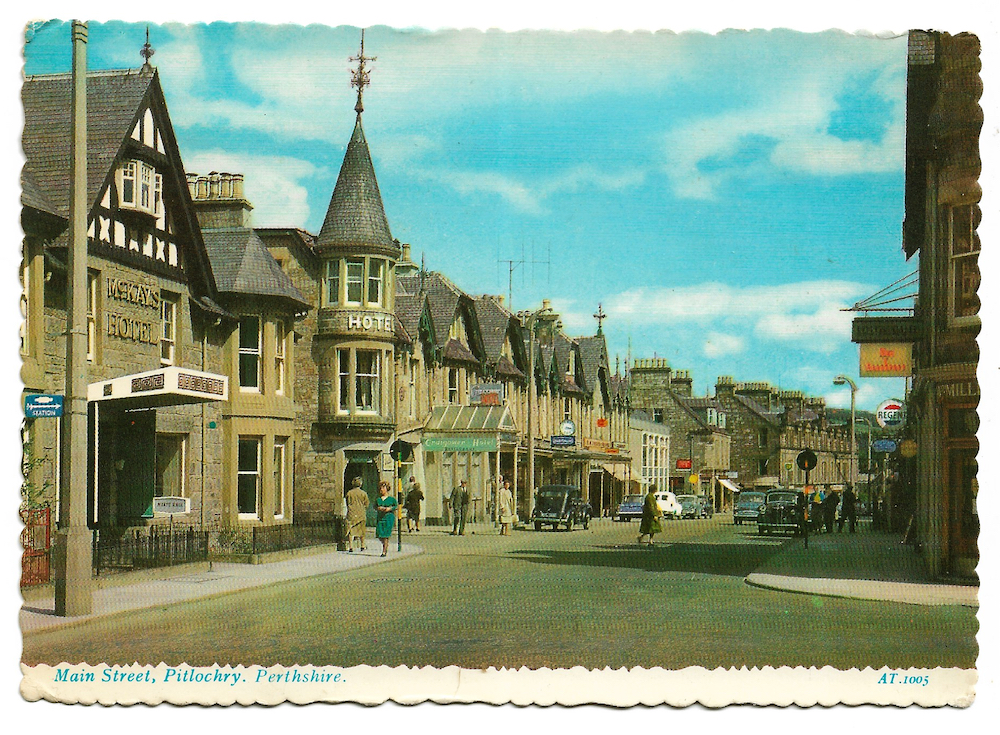
The two hotels shown in the Aberfoyle one appear to be the Clachan Hotel and the Bailie Nicol Jarvie Hotel. Meanwhile, the local bobby might want to have a word with the oncoming van driver about taking up quite a lot of the wrong lane, and and the chap sitting on the bench at far left appears to have spotted the photographer ! Finally, the Pitlochry one shows McKay’s Hotel and Craigower Hotel. All the images also have some nice views of old cars, if that is your thing !
When looking at views like this it is wise to be slightly cautious about dating via the postmark, sender’s comments, or any other obvious near-contemporary marking. Clearly they cannot show a date after these dates, but the image itself might have been taken some years before. More detailed local knowledge, or the memory of an older relative, can sometimes pin it down more exactly. But either way, they can be great inter-generational conversation pieces and starters for deeper research.
30 September 2024
After our short break last week, we’re back with another example of a “novelty” card (see also our previous entry for 5 August). The proper term for this type of card is debated, but perhaps “picture strip” will do for our purposes. The basic card – in this case an image of a Welsh lady wearing the traditional tall black hat – is modified with a flap that lifts up to expose a strip of 12 small black and white images of a particular place. Such cards were often printed with many different place names so that they could be used with different strips of photos of these places (for example, there is one from Conway on sale on Ebay at the moment). This example was published by Valentines, one of the leading British postcard publishers.
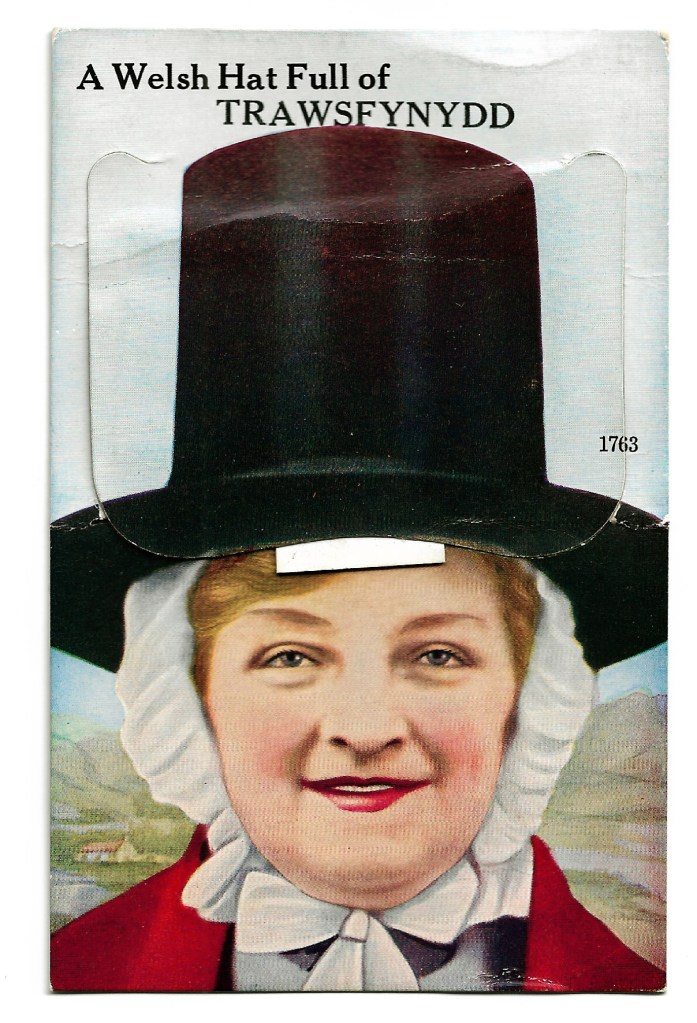
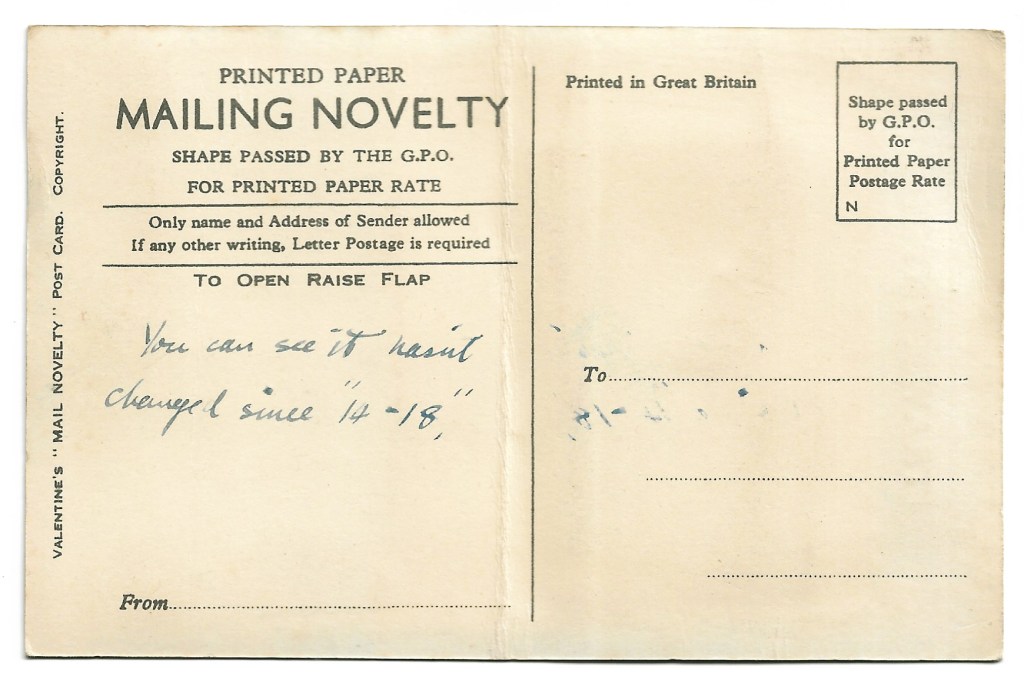
Cards of this kind would cost more than usual to buy, and also to post – the back of this one mentions “printed paper postage rate”, probably 1d rather than 1/2d for a normal postcard. However, it might have been safer enclosing the card in an envelope at this rate, to save damage in the post.
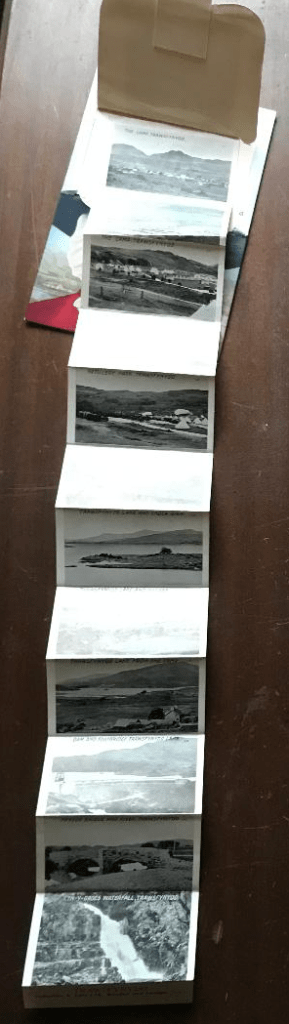
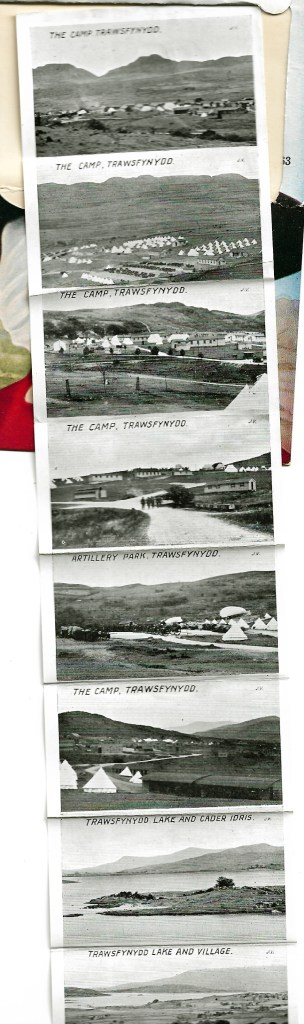
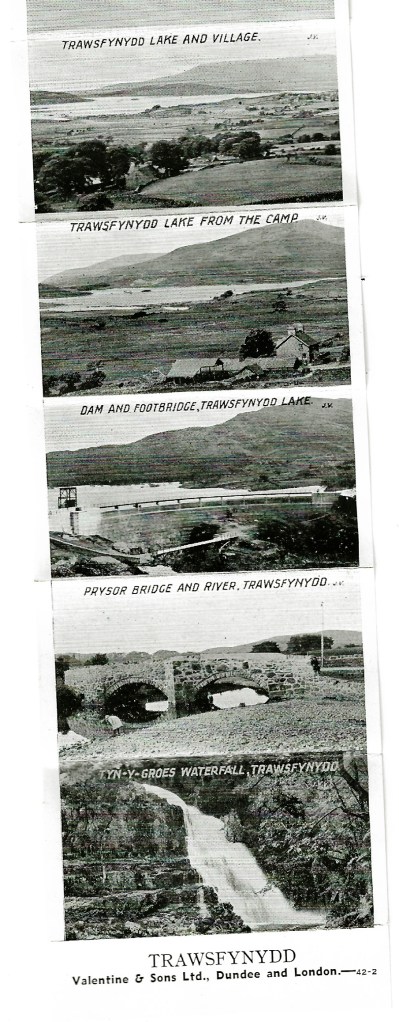
The topic of the strip on this example is also rather interesting, as it shows images of Trawsfynydd army camp (also known as Bronaber Camp), in Merionnydd, Gwynedd, Wales. The War Office bought land in this area in the first decade of the 20th century, which was used mainly for artillery training by regular and territorial soldiers. In WW1, German prisoners of war stayed at the camp while working on local farms. Trawsfynydd was also used to house Italian prisoners of war in WW2 (the history of the site is quite similar to that of Stobs Camp, near Hawick, which was the topic of a fascinating recent talk at the Club – see more here).
The army camp closed in the 1950s and was rebuilt to house more than 1,000 workers engaged in building Trawsfynydd nuclear power station. After the power station opened in 1965, the site was re-used for holiday accommodation, and is now the site of a “holiday village” (see more on Trawsfynydd’s history here and here).
There is a note on the back of this particular card saying, “you can see it hasn’t changed much since ’14-’18”, suggesting the sender and addressee may have served there in the British army during WW1, and probably dating the card to the 1920s.
Novelty cards are a popular collecting topic, and with its additional military and Welsh interest, this one might attract quite a lot of attention if it went on sale.
16 September 2024
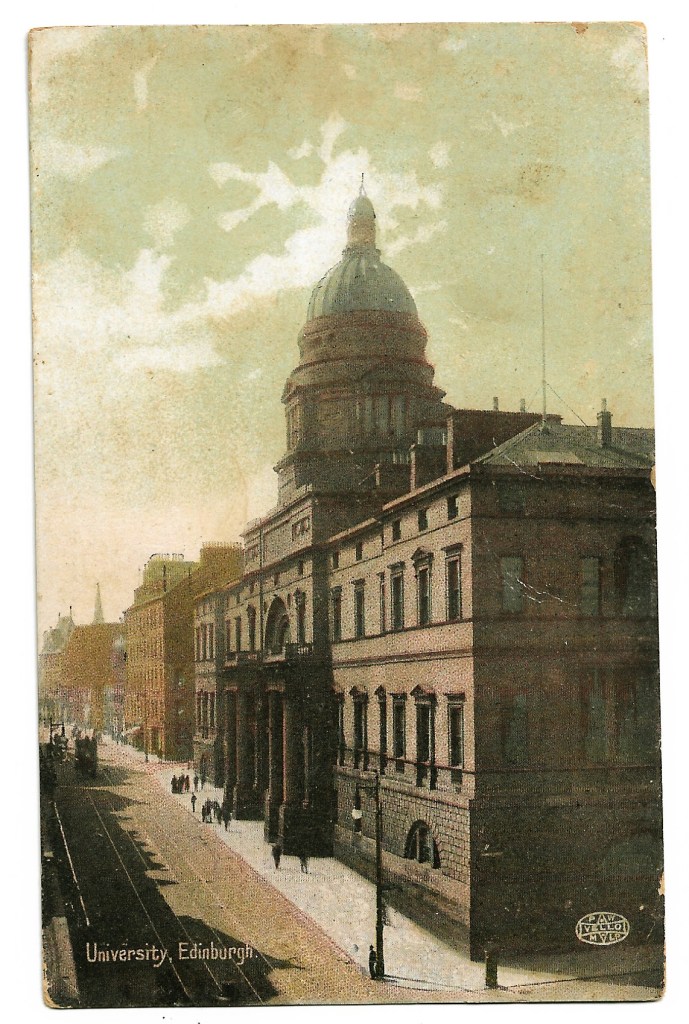
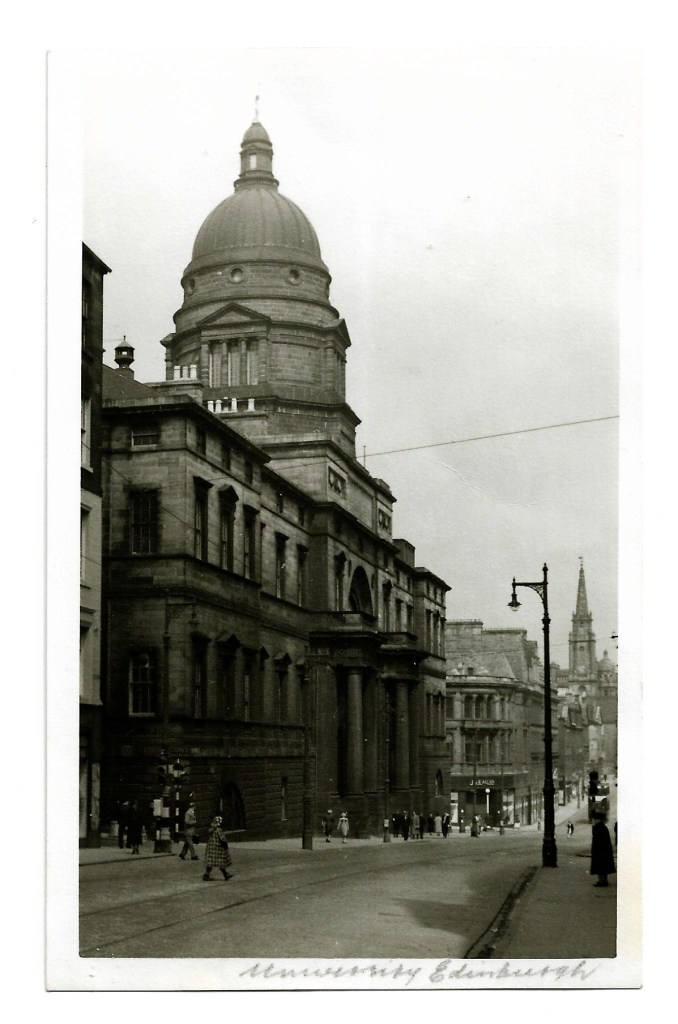
Edinburgh has got a bit busier in the last couple of weeks, as new and returning students arrive in the city’s various universities and colleges for the start of the 2024/2025 session. So we thought it might be appropriate to share a few postcard views of how the University of Edinburgh – whose semester begins today – looked in days gone by. Sadly our webmaster does not have any cards of Heriot Watt, Queen Margaret, Napier or Edinburgh College – maybe next term if he or his colleagues can find some !
Our first two cards are very recognisable images, of Old College on South Bridge. The first is looking south from South Bridge, the other is looking north down the hill from a spot probably outside Surgeon’s Hall. The first was posted in 1908. The second card is not dated, but there are still tram lines, so it is before the closure of the old Edinburgh Corporation system in November 1956. Judging by the pedestrians’ clothing, it’s maybe from the 1940s/1950s. In the distance you can also see the old department store J. & R. Allan, on the corner of Chambers Street now occupied by the Biblos bar.
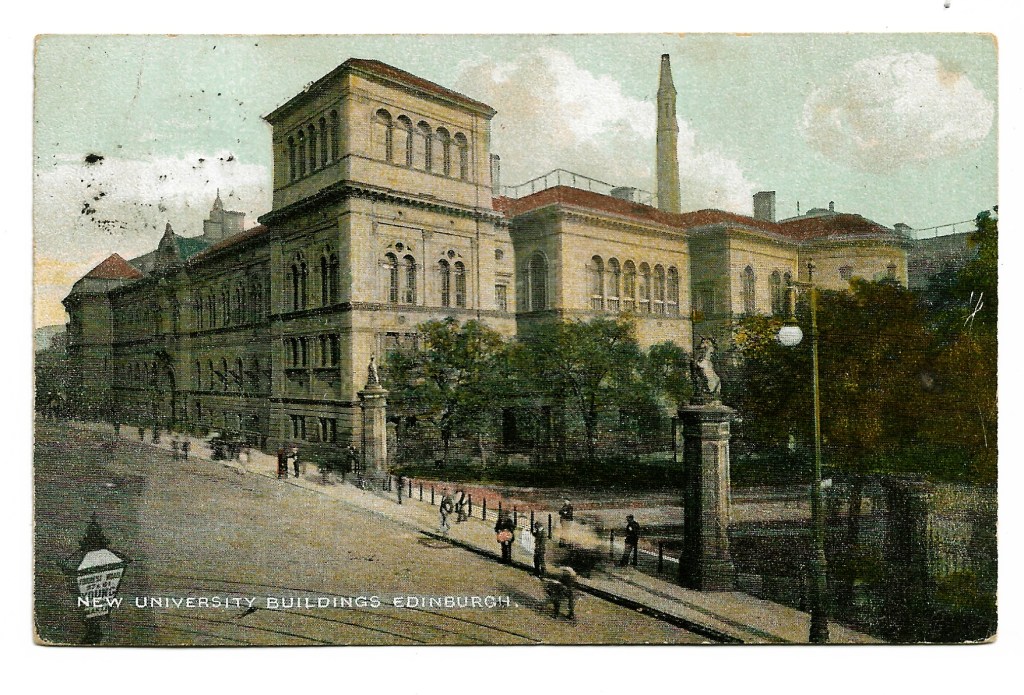
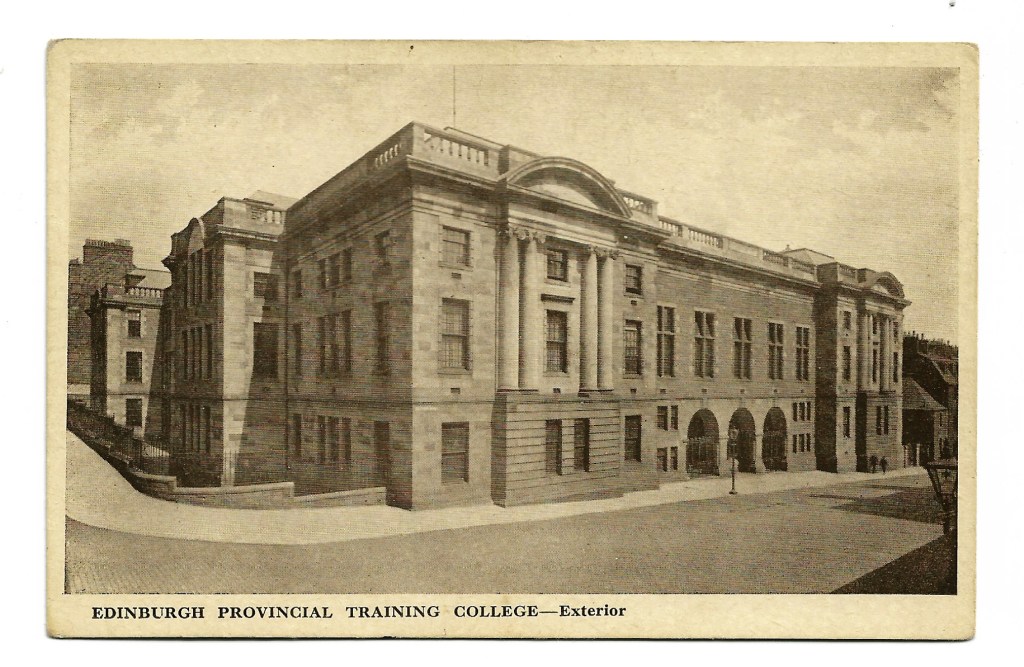
The next two cards are also well-known views. First, the “new University Buildings”, the former Medical School on Lauriston Place, opened in 1884, and now home to the School of Classics, History and Archaeology. And second, the “Edinburgh Provincial Training College”, opened in 1907 as a central teacher training site, later known as the Moray House College (or Institute) of Edinburgh, and now part of the University as the Moray House School of Education and Sport.
Finally, a site where many new residents will be settling in right now – Pollock Halls, seen in a card published in the 1960s.
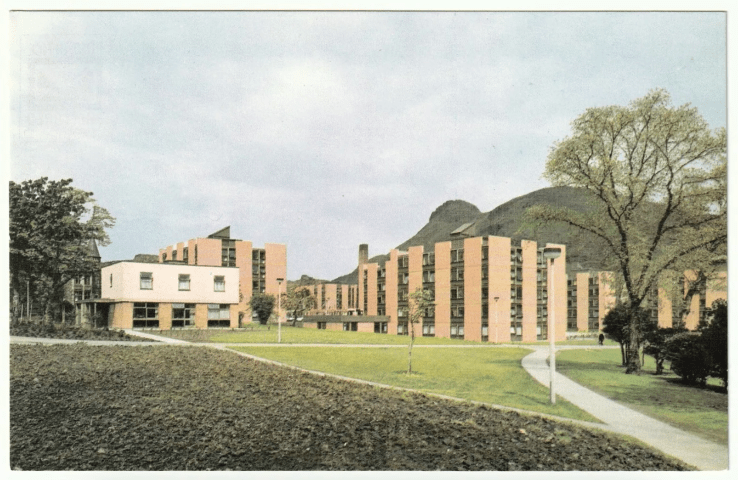
We hope that all our students, wherever they are studying, will have a successful year and that they will enjoy exploring Auld Reekie ! Maybe some will begin to collect postcards of the city…
9 September 2024
Some people find some postcards dull, such as this one, used from Harriston, Ontario, Canada in 1981. The sender is fairly unimpressed, saying, “sorry couldn’t find a prettier card to send you – not being a tourist district there seems to be a ‘dirth’ of same hereabouts”.
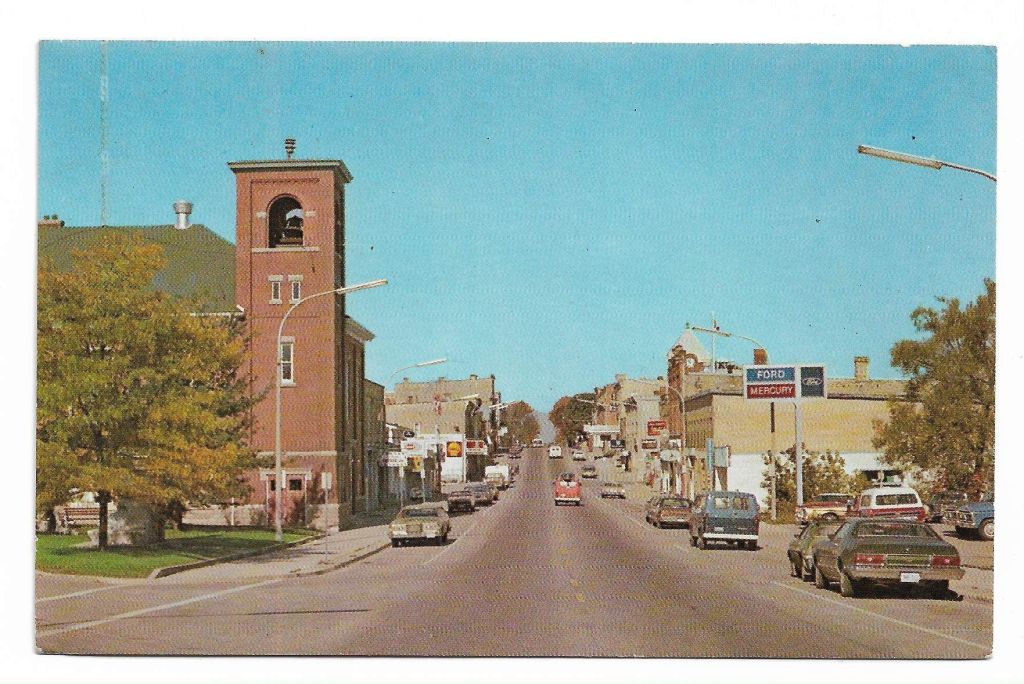
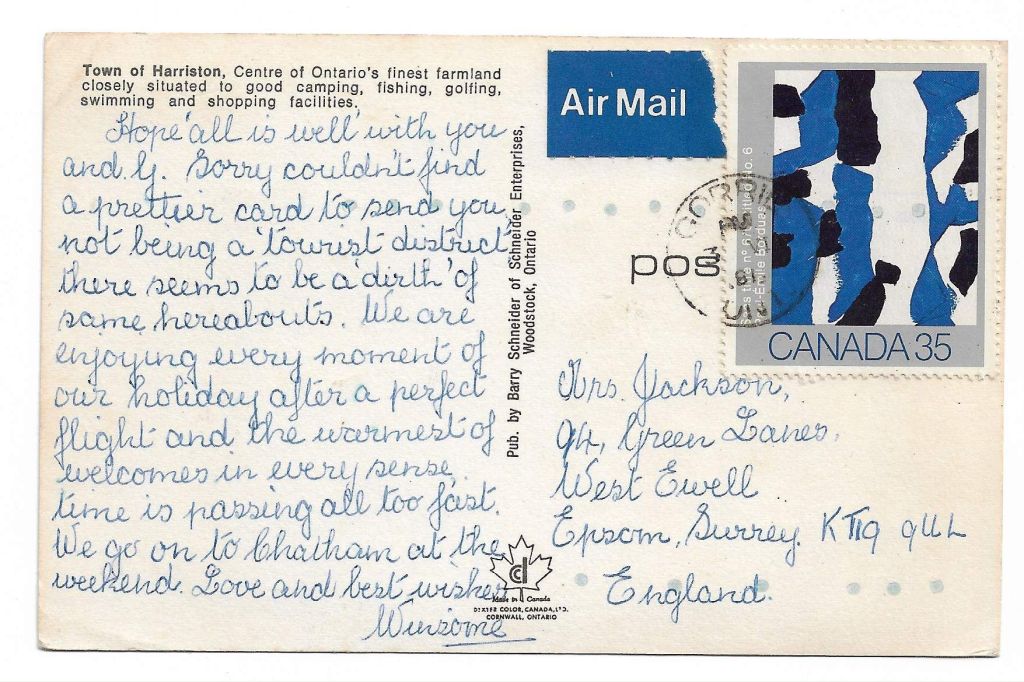
However, a local collector in the town might be very interested indeed in this view of Elora Street South. It can be compared with earlier or more recent views of the same spot, like those below from 1961 (from the local Wellington County Museum website) or this year from Google Street View. With the town hall on the left and the two storey commercial building on the right – and indeed the car sales lot – it’s quite simple to match the spot.
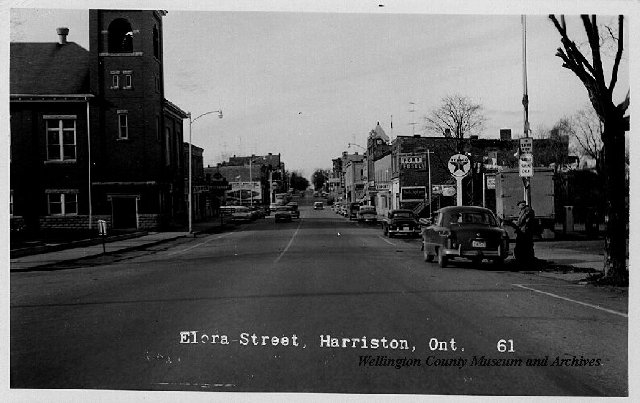
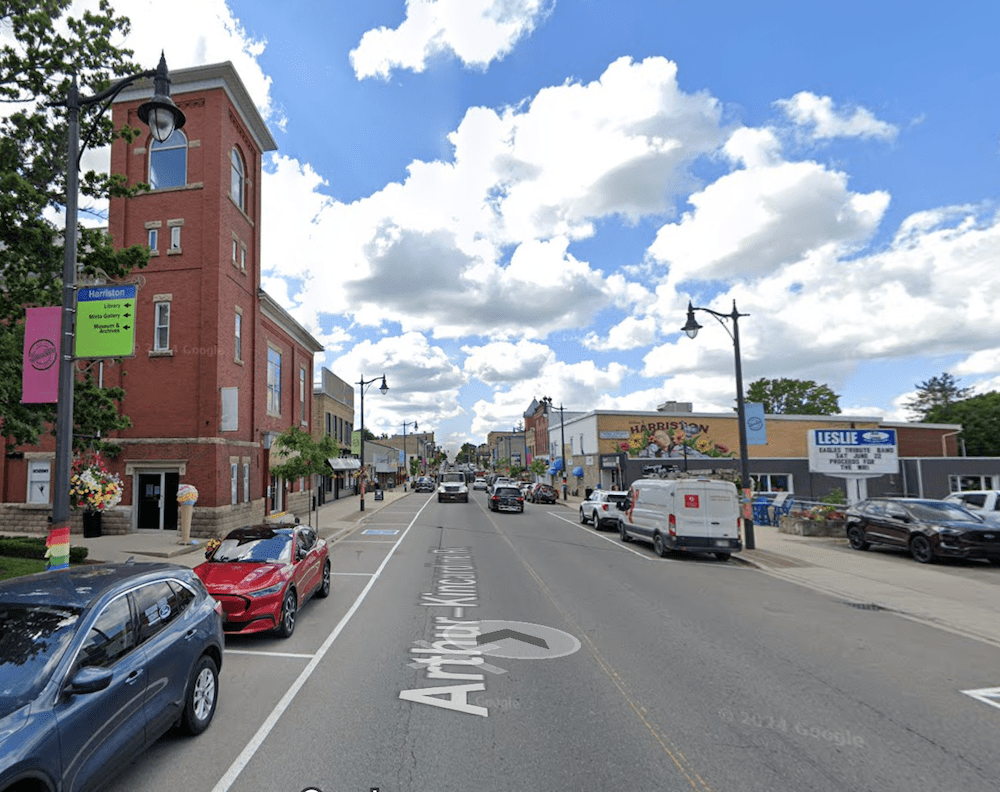
One annotation on the modern Google view also catches a Scottish eye, “Arthur-Kincardine Road”. This street in Harriston is part of Ontario Highway 9, originally known as the “Arthur-Kincardine Road”. This runs between the towns of Kincardine (named, we assume, after the town in Fife) on the shores of Lake Huron, and Arthur, just west of Toronto.
There are many place names in Ontario with a Scottish origin, evidence of the significant Scottish emigration to this area in the early 19th century. Harriston is actually part of the town of Minto, and some of the street names near Elora Street South sound familiar to us as well – Jessie Street, Lorne Street, Robertson Street, and Maitland Street, amongst others.
And in this area of Ontario you’ll find Paisley, Greenock, Kinloss, Holyrood, Lochalsh, McIntosh, Calderwood, and Hampden. There is even a small hamlet, about 40 miles east of Harriston and just south of Lochalsh, called Lothian !
2 September 2024
Earlier this year, we had a display from Rod Seville, one of our members, entitled ‘Artwork on Japanese vignette shipping postcards to the 1930s’. This week’s postcards are two examples from this impressive display.
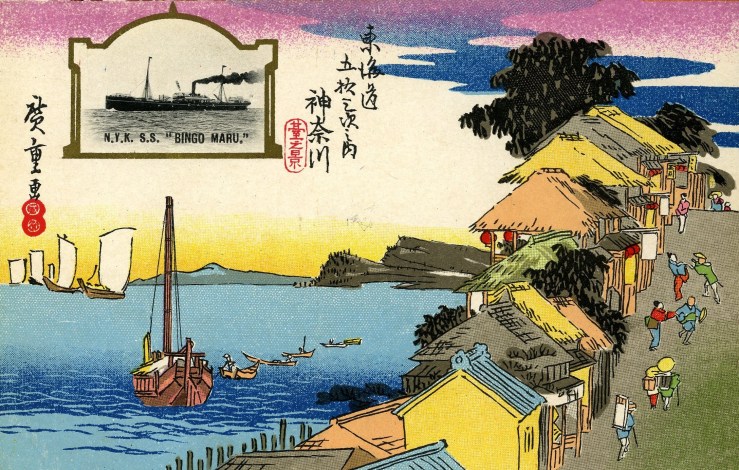
Each card was illustrated by highly decorative and colourful images in the Japanese artistic style, with a small black & white photo inset of a merchant ship of the period. Some of the images were by well-known Japanese artists, such as these examples, which are taken from wood-block prints by Utagawa Hiroshige (see more on his work here). Many others are believed to have been drawn by unknown illustrators in response to commissions by one of the two shipping lines represented in Rod’s collection, NYK and OSK.
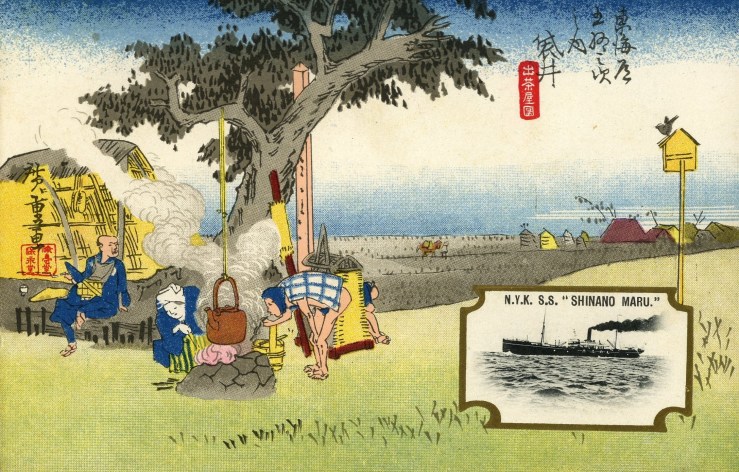
The two cards shown here were published by NYK, and are amongst many that use images from Hiroshige’s famous work, ‘The Fifty-three Stations of the Tōkaidō’. This is a series of wood-cut prints created by the artist after his first journey along the Tōkaidō road in 1832 (see more here). The Tōkaidō road, linking the shogun’s capital, Edo, to the imperial one, Kyoto, was the main travel and transport artery of old Japan, and was one of the five major roads of Japan created or developed during the Edo period to further strengthen the control of the central shogunate administration over the whole country. The ‘stations’ along the road were rest areas and government posts for checking travelling permits (see more here).
The two stations illustrated on these postcards are no. 3, Kanagawa, on the SS Bingo Maru card, and no. 27, Fukuori, on the SS Shinano Maru card.
Both the ships illustrated were built on the Clyde, and by the same builder, D. & W. Henderson, of Meadowside yard, Glasgow (see more via these links on SS Bingo Maru and on SS Shinano Maru). SS Bingo Maru served with NYK from 1897 until 1934, while SS Shinano Maru served with NYK from 1900 until 1923, and with various other lines until 1951.
SS Shinano Maru had a particularly eventful career (described here on Wikipedia). As well as her normal merchant shipping work, the vessel was used during the 1904-05 Russo-Japanese war as a troop transport to Korea and an armed merchantman. The ship had the distinction of discovering the Imperial Russian fleet in the Tsushima Strait on the eve of the Battle of Tsushima, in which Japan comprehensively defeated the Russians. During WW2, the SS Shinano Maru was torpedoed in January 1944, mined in June 1945, and hit by an airstrike in July 1945. After the Japanese surrender, she was used to repatriate Japanese prisoners of war from Russia and later by the US Navy during the Korean War.
SS Bingo Maru – or at least her name – gained unusual fictional fame long after the original vessel was broken up in 1934. Fans of Godzilla (another important example of Japanese art !) will know that a ship of this name featured briefly in the 1954 film that launched the famous monster (see more here). It was sent out on a rescue mission after receiving word from the Japanese Coast Guard about the sinking of another vessel, the SS Eiko Maru. Both vessels were attacked by the giant sea creature known as Godzilla (or Gojira in Japanese), who set the ships aflame with a gust of “atomic breath”. You really can end up down some unusual rabbit holes when researching postcards !
26 August 2024
One collecting topic that is always popular is humorous cards, poking fun at many aspects of life. Relations between men and women can often be a rich source of amusement, and one classic example is shown below.
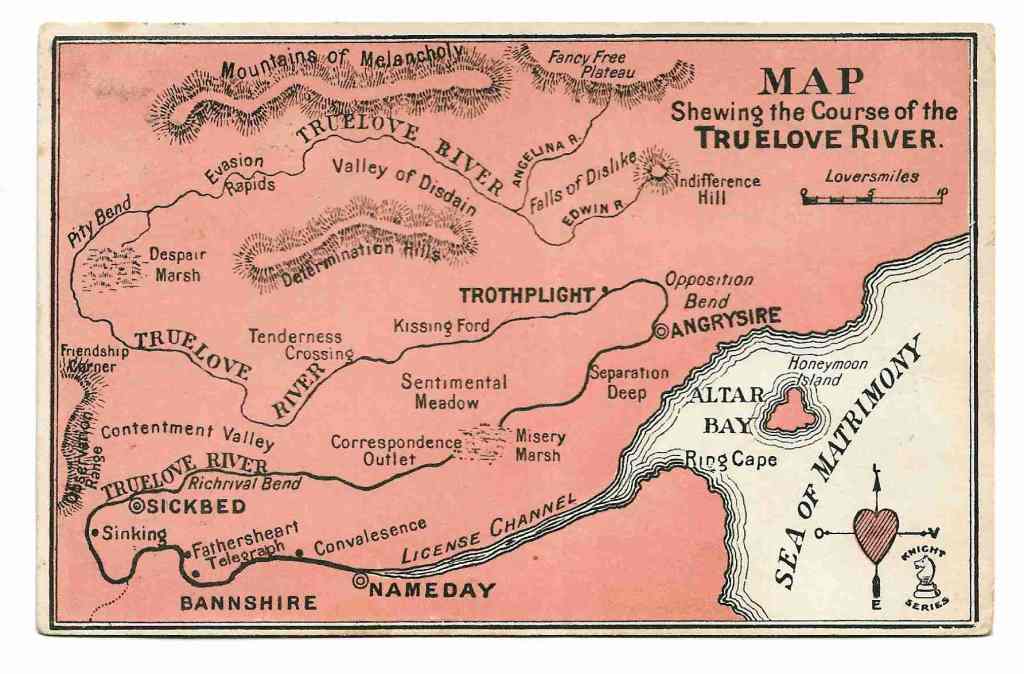
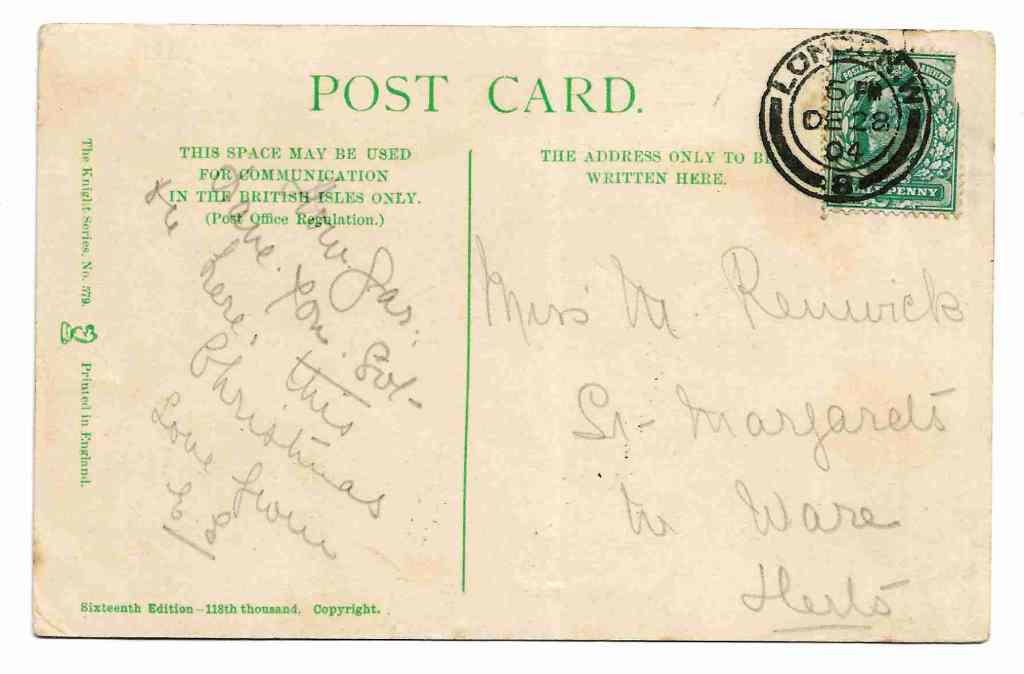
The card entitled ‘Map showing the course of Truelove River’ was published by Knight Brothers Ltd of London in the first decade of the 20th century. The illustration suggests many of the potential stages in the path from the first meeting of two lovers to their final destination, the “Sea of Matrimony”. Their journey may include such peaks and troughs as “friendship corner”, “kissing ford”, “misery marsh”, “sickbed”, “fathersheart telegraph” and “ring cape”. One hopes it is not deflected into “evasion rapids”, “valley of disdain”, “Angryshire” or “indifference hill” !
The card was immensely popular, and it is said that nearly 250,000 copies were sold. This example has text on the back, at bottom left, saying “Sixteenth Edition – 116th thousand”, the sort of comment more usually seen on the publisher’s pages of books rather than postcards.
Knight Brothers followed up this success with another similar card, called “Chart of Betrothal Bay, showing the male route to Church Door”, seen below. This featured such highlights as “flowers bill”, “moon light”, and “sofa corner”, as well as hazards such as “the snub” and “jilt rocks”, strewn with “wrecks”. It is not known how many of this example were sold.
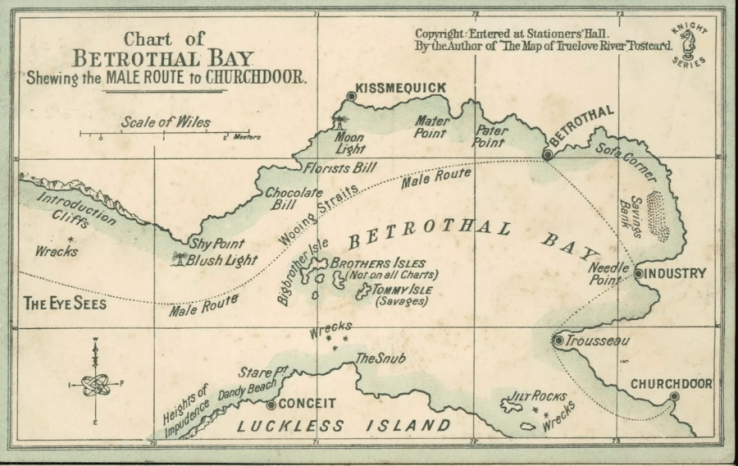
Although the text on both cards is very much “of its time”, we hope they might raise a smile if you found a copy and presented it as a gift to your “intended” even now !
19 August 2024
We’re back to Edinburgh this week, with a couple of apparently identical views of Princes Street looking west, taken from the Scott Monument. But – do you notice anything strange ?
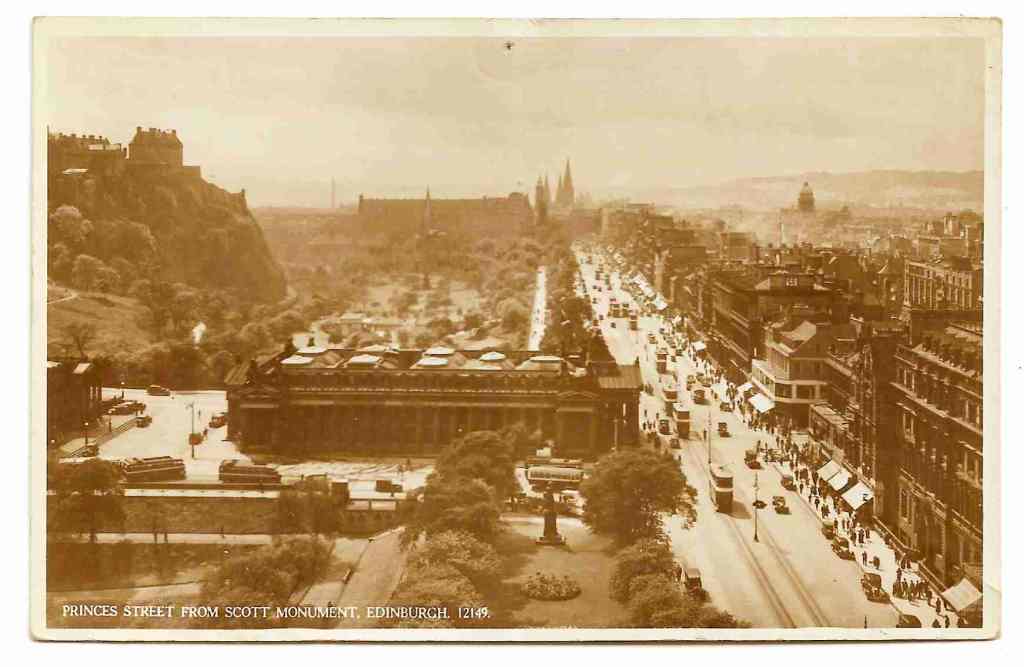
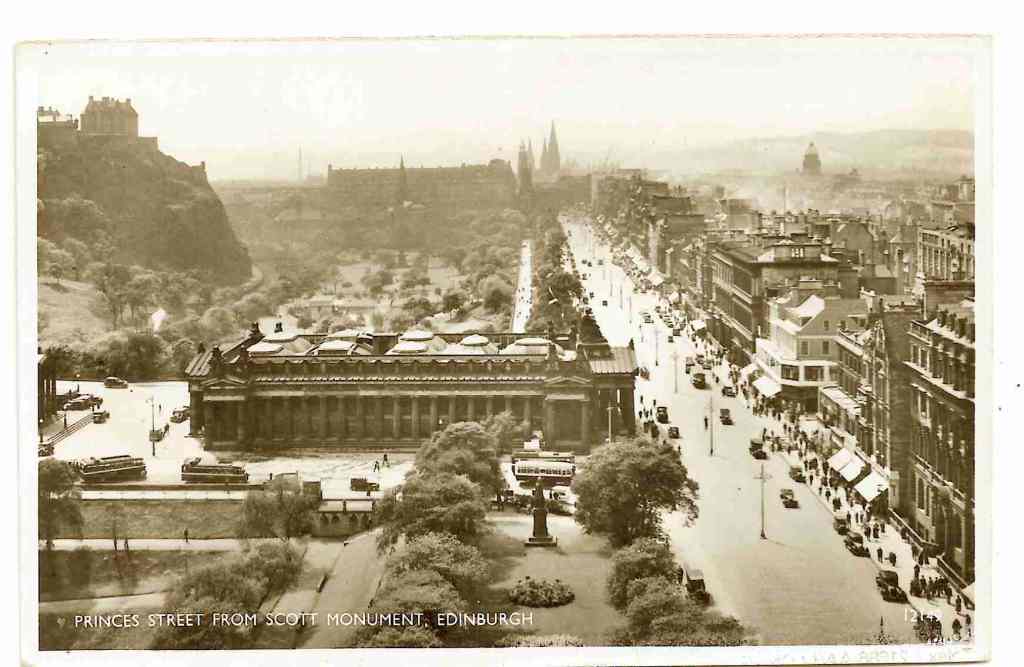
If you look closely, you will find that while the basic image is identical on both cards, with every car and pedestrian in the same place (and check the buses around the National Gallery), the second card is missing the trams.
It is not clear exactly what has happened here, but we can maybe make a guess. Both cards are by the same publisher, J. Salmon of Sevenoaks, Kent. They were a major producer, beginning in 1900 and continuing until the business was closed in 2017. The first card is clearly older from its quality and “feel”, and has a postmark dated 1936 on the back. The second is later, with a more modern design of back.
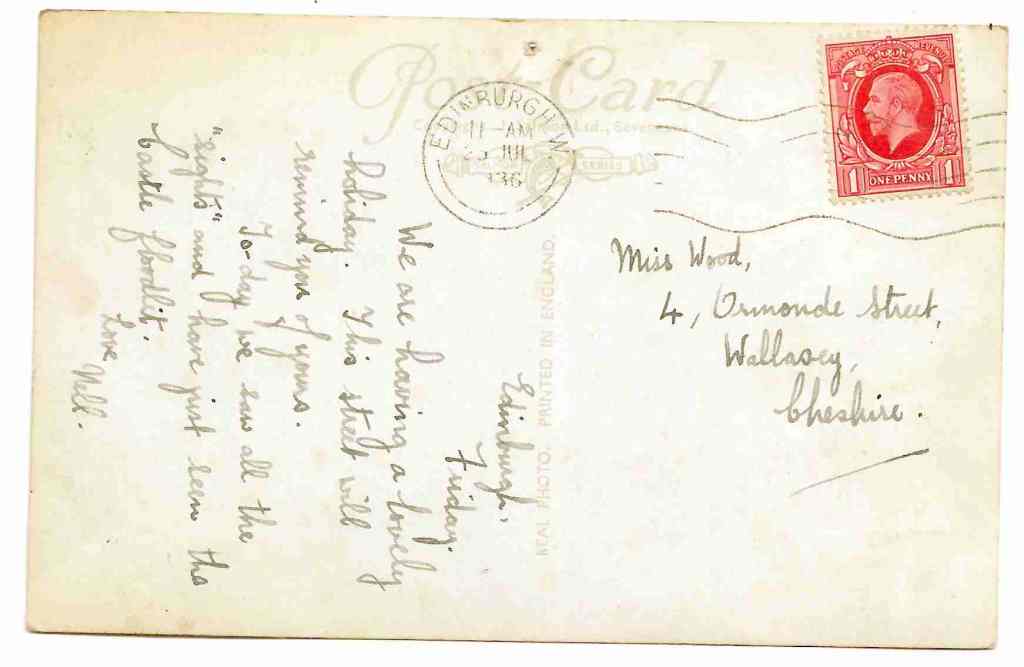
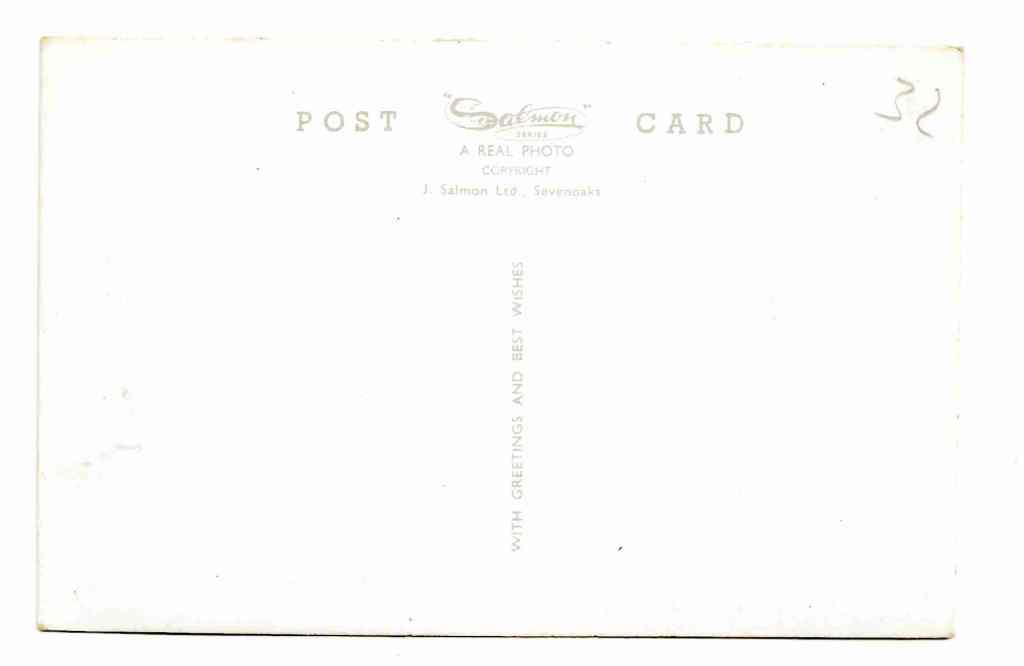
It seems likely that Salmon (who clearly have the copyright) “removed” the trams and tramlines after the old Edinburgh Corporation system was withdrawn in 1956, so they could continue using the same image for some years beyond that.
This phenomenon is not uncommon, in fact, where a publisher re-uses the same image but (more usually) adds in extra people or vehicles to make it appear different. This also means that a postmarked date is not necessarily a simple guide to the rough age of the image. In this case, the design of the cars etc would probably also give a clue that something was amiss.
So, it’s sometimes worth not skipping past a card you already have when searching online or working through a dealer’s box – it might not be as identical as you think !
12 August 2024
This week, we show a few examples of a different kind of postcard category, namely those known as “multiviews”. This type of card, rather than having simply one image on the front, have several – most commonly maybe four or five, but sometimes fewer and sometimes more. Collectors of UK postcards will be very familiar with them, often produced for sale in seaside towns and other regular tourist haunts, from the early days of postcard production right up to the present day. But such multiviews have often been produced overseas as well.
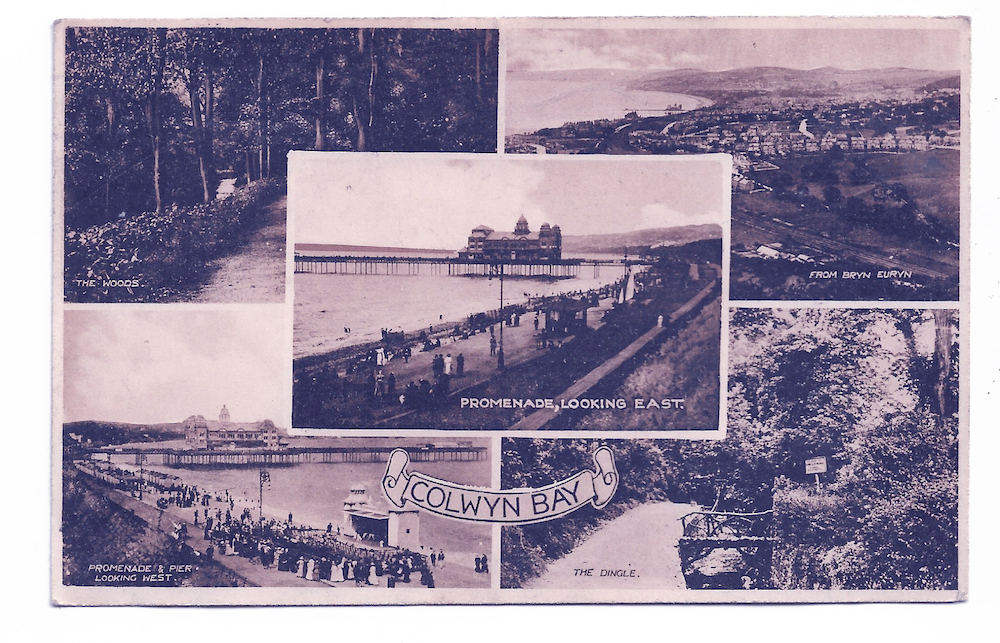
Here are a few examples – one from “our patch”, as it were, showing views of South Queensferry and the Forth Rail Bridge (dating from 1909) ; one from Colywn Bay in Wales (dating from maybe 1920s/1930s) ; one from Durham city in England (dating from around 1908) ; one Hong Kong (dating from c. 1910 ?) ; one from Australia (again from 1908) ; and finally one from Canada, produced to encourage emigration to the country (dating from 1914).
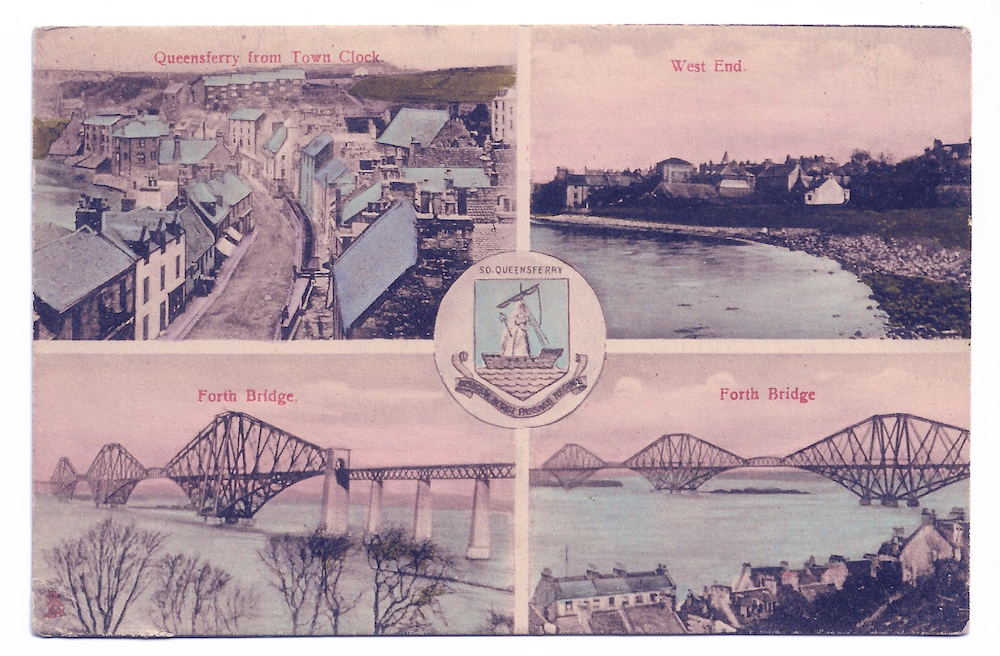
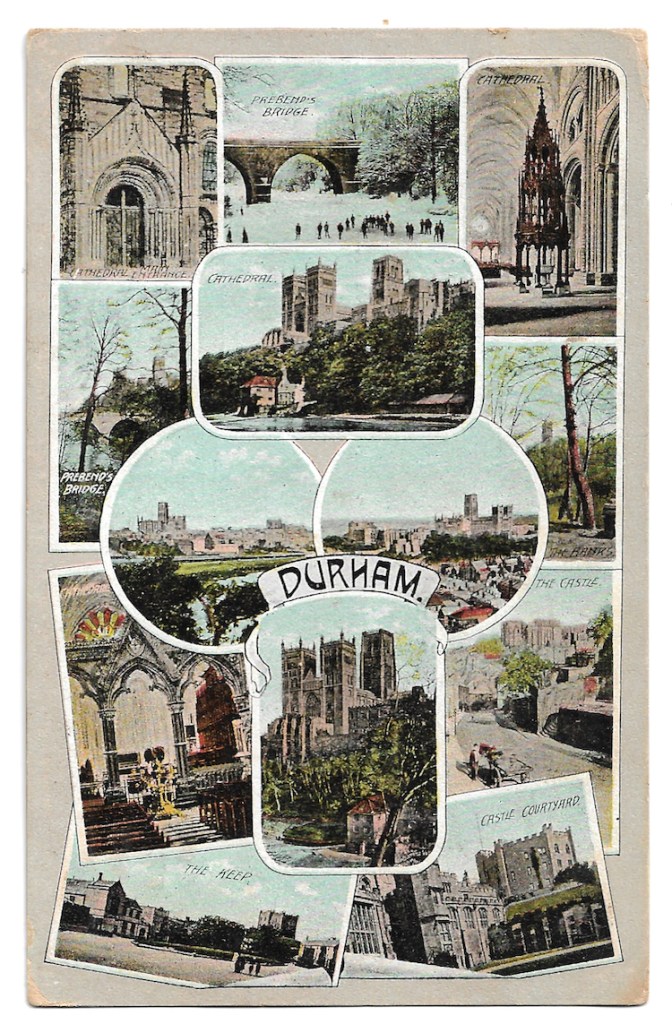
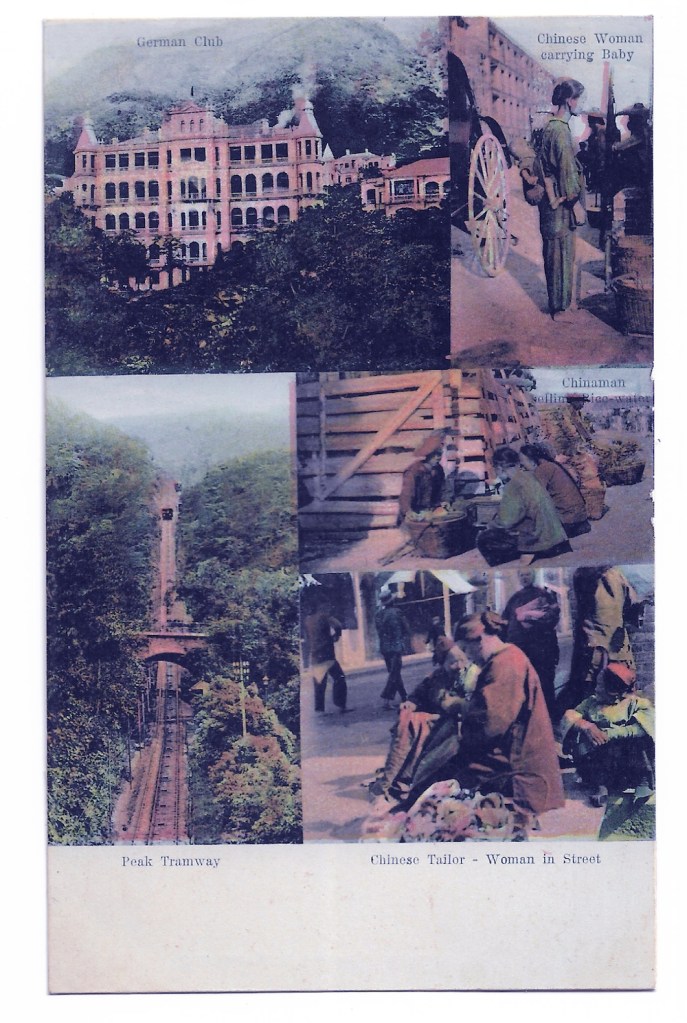
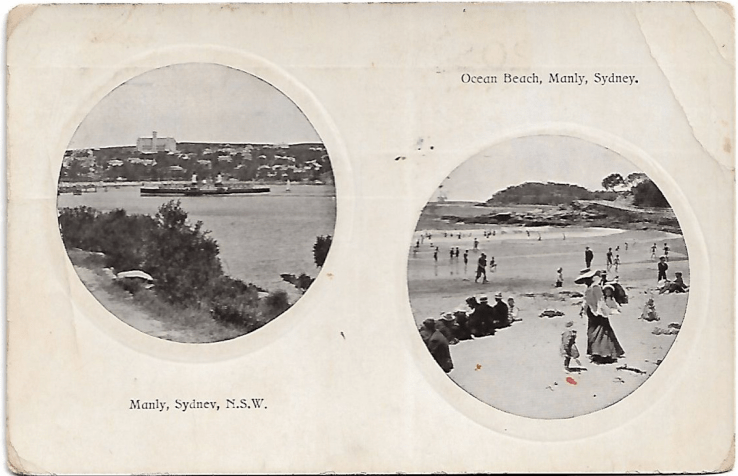
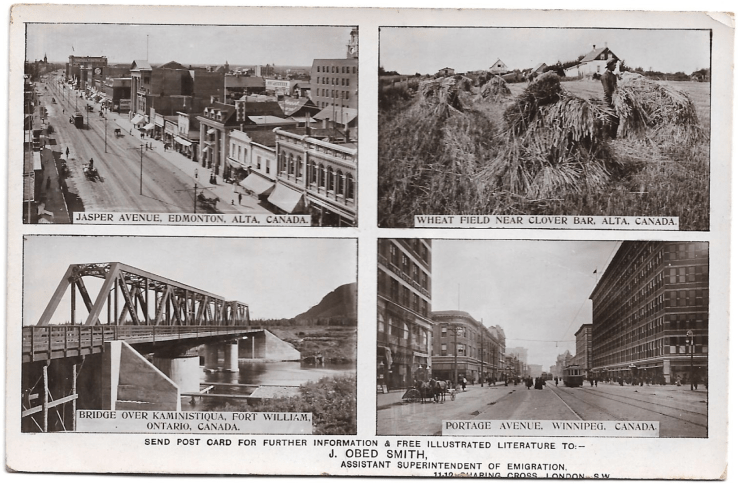
The South Queensferry card is one from a large set, produced by noted publisher Raphael Tuck and D. Lister & Co. in the town – see more details here. This lists 17 different examples, each with four images, and our one is in fact not listed there, so there are at least 18 and maybe more. That would be a great set to collect, but it might be quite challenging !
The Durham one is by Hartmanns of London, in their “Miniature Series”, which includes many English towns and counties, with up to 12 images per card. The Colwyn Bay card, meanwhile, is by a local printers and stationers, and is typical of the “seaside” variety of such cards.
Publishers who produced such cards sometimes used images that they also published as a single view in the more traditional format. This leads some collectors to start with a multiview and try to find the related single view cards with the same images.
It is fair to say multiviews are not universally popular with collectors, some of whom find the small size of the images, or the often complex designs, rather off-putting. On the other hand, this can mean they are more modestly priced. And if it is a multiview of a place or topic you collect, and there are no easily found examples of the images used, at a fair price, it is possibly worth acquiring. “You pays your money and you takes the choice”, as the old saying goes !
5 August 2024
One popular category of collecting is “novelty cards”. These might be cards which do something unusual, or have something stuck to them, or are made of some unusual materials. As our first example, this is a so-called “Hold-To-The-Light” card (often called an HTL), showing a common view of Edinburgh looking west from Calton Hill along Princes Street.
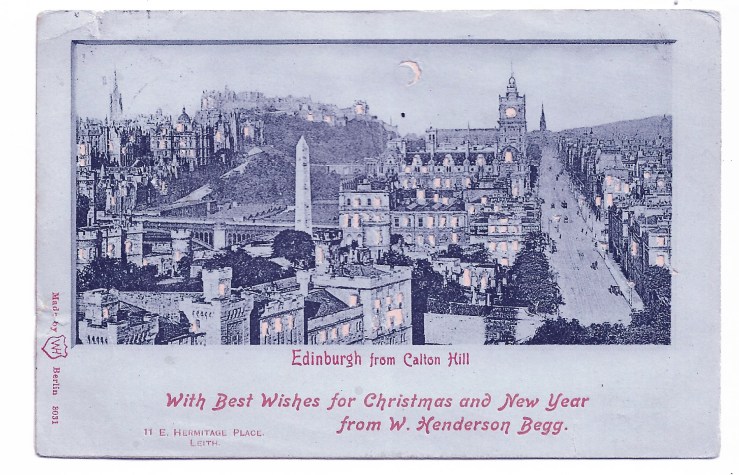
These cards are described in an excellent 1970s postcard reference book, Picture Postcards of the Golden Age (see the book list on our Useful Links page for more details of this volume), as follows :
“One type is a blue tinted picture side with little creamy yellow patches and a creamy yellow back. On holding the card to light one discovers that the yellow patches are usually windows, moons, lanterns etc, that have been cut out of the blue layer and give a most realistic impression of being lit up…”
We can (rather crudely !) show you this effect by holding the card against a photographic light box, as below…hopefully you get the idea !
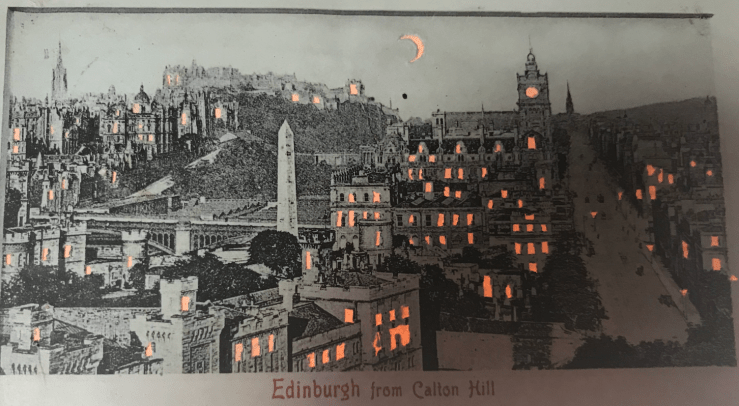
The book adds, “…most HTLs seem to have been made in Berlin for export to this country as they show typical British views…they were made by a firm with the initials W.H. and…were being sent through the post In 1903”. The W.H. mark can be seen on the left hand side of the front of the card. Another handy reference, The Dictionary of Picture Postcards in Britain 1894-1939 (see also our Useful Links page), and other sources, identify W.H. as the German firm of Wolff Hagelberg, with a manufacturing and printing works at 19-21 Marien-Strasse, Berlin. They also operated from Bunhill Row, London.
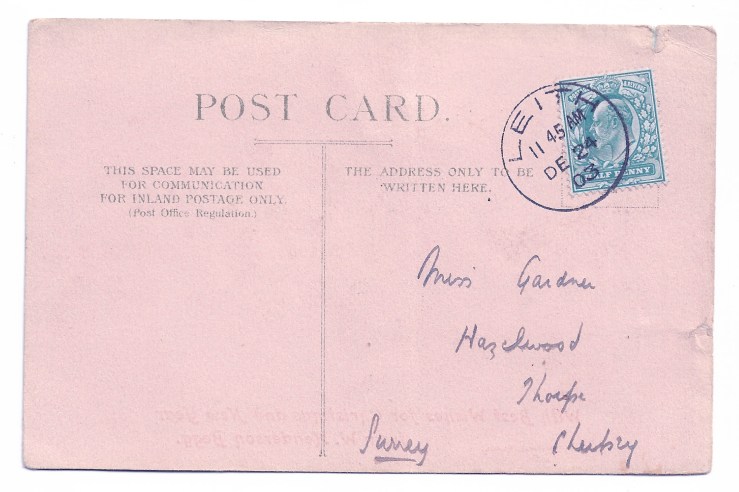
You’ll see this example was sent from Leith on 24 December 1903 to an address in Surrey, and bears a Christmas greeting (and probably arrived on Christmas Day, too !). The sender was W. Henderson Begg – various online references suggest he was a Minister in the Scottish Episcopal Church. He has clearly had these specially personalised.
We hope to show you some more examples of novelty cards in future offerings from “Postcard of the Week” (see 30 September 2024 for our next one).
29 July 2024
One very big difference between the 1924 Olympics and those currently being held in Paris is the participation of female athletes. One hundred years ago, women were only allowed to take part in tennis, fencing, horse riding and swimming (competitions in golf and archery in previous Games seem not to have taken place in 1924). Now, of course, women compete pretty much across the board (for more on the history of women’s participation over the years, see this Wikipedia page).
So our second Olympian postcard shows Helen Wills, an American tennis player who won gold for both the women’s singles and women’s doubles (partnered by Hazel Wightman). Again, this was published by Armand Noyer and comes from the collection of our late Club member Frederick Fisher.
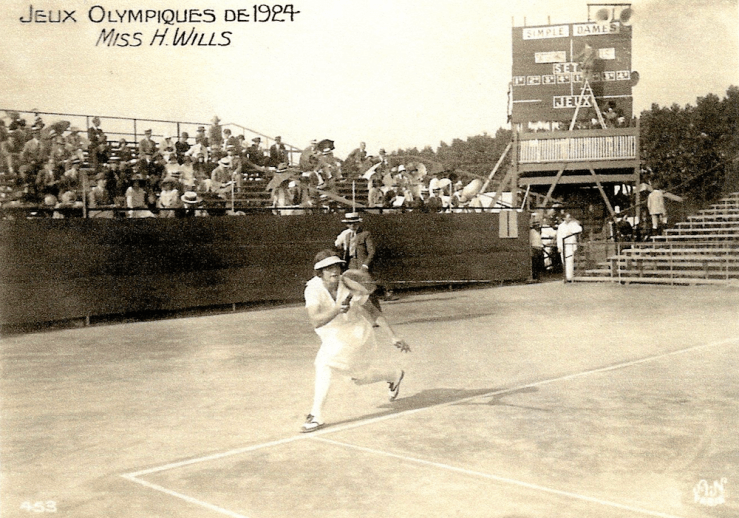
Miss Wills was a major sports celebrity of the 1920s and 1930s, winning 31 Grand Slam titles, and is sometimes known as “the greatest female player in history”. In 1924, ahead of Paris, she was defeated in the Wimbledon women’s singles final by Kitty McKane, her only such defeat at the British event in her career. She also won the women’s doubles here, also partnered with Hazel Wightman. And tennis was not her only special skill – as an accomplished artist, she also took part as a painter in the 1932 Olympics Arts Competition, and was noted for her poetry and illustrated books (see more on her long and active life here).
22 July 2024
The Paris Olympics begin this week, and it is also just over 100 years since a famous Scottish athlete won gold and bronze medals at the last Paris Olympics in 1924 – runner Eric Liddell, often known as “the flying Scotsman”. Our most recent Lothian Postcard Club Newsletter contains an article on some of the postcards published at the time of the 1924 Games (from the collection of our late Club member Frederick Fisher), so it seems appropriate to mark these events with an image of Liddell.
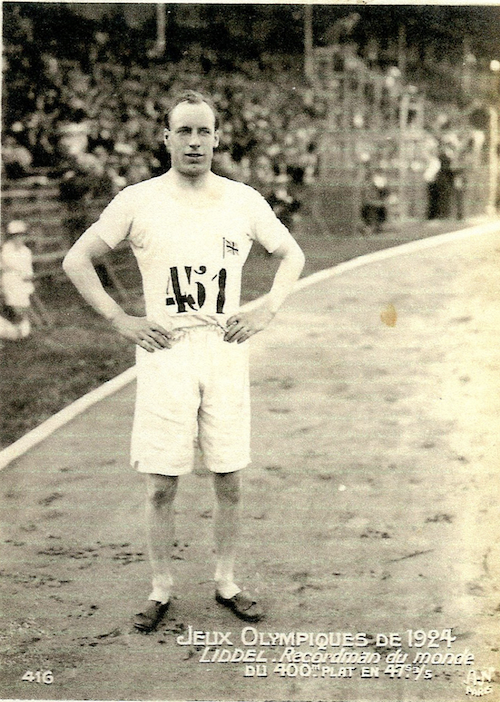
The card, and many others, were produced by the French photographer Armand Noyer. From the early years of the 19th century until after the Second World War, Noyer was the proprietor of a large photo studio and postcard publisher, at 22 Rue Ravignan, Paris. His output included art illustrations, “Boudoir” cards, First World War pictures, film stars, and sports celebrities, so it was not surprising that he received one of the photo concessions for the 1924 Games.
Liddell’s participation in the event was of course immortalised in the 1981 film ‘Chariots of Fire’ (which has conveniently just appeared on BBC iPlayer !). Famously, as a devout Christian, he refused to compete in the 100m race as it was being held on a Sunday. Although the film suggests this was only discovered a few days before – presumably for dramatic effect – in fact the date had been known weeks before and Liddell had never intended to run in the 100m. Instead, he ran in the 400m, winning gold with a world record time, and also in the 200m, winning bronze.
Liddell’s achievements as a sportsman and Christian missionary in China are commemorated by the Eric Liddell Community Centre in Morningside, Edinburgh. They are running a special exhibition at the Scottish Parliament (see more here) to mark his life, as well as other events.
He is also remembered as a hero in China, too, as the country’s first Olympic gold medallist (see this BBC article from 2012). Liddell was born in Tianjin (then Tientsin) to missionary parents, and returned to China to work for the London Missionary Society in 1925. After the Japanese invasion of the country in 1937, Liddell carried on his work even when it became dangerous to do so, and died in 1945 in a Japanese internment camp at Weifang (then Weihsien), Shandong province.
Check back next week for another card from the 1924 Paris Olympics !
15 July 2024
We are back in home territory this week – anyone live in Thirlestane Road, in Marchmont, Edinburgh ? If so, here is a view of the street in around 1924, with the Google Street View equivalent for June 2023, looking east from the junction with Whitehouse Loan – so, almost exactly 100 years.
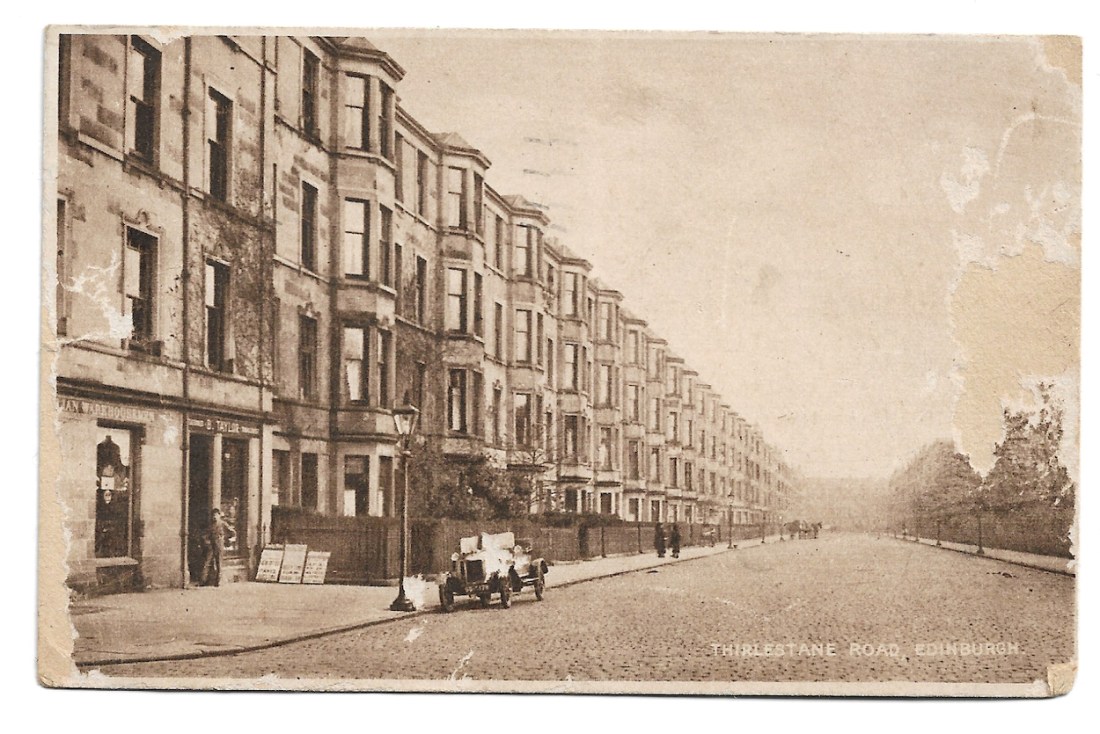
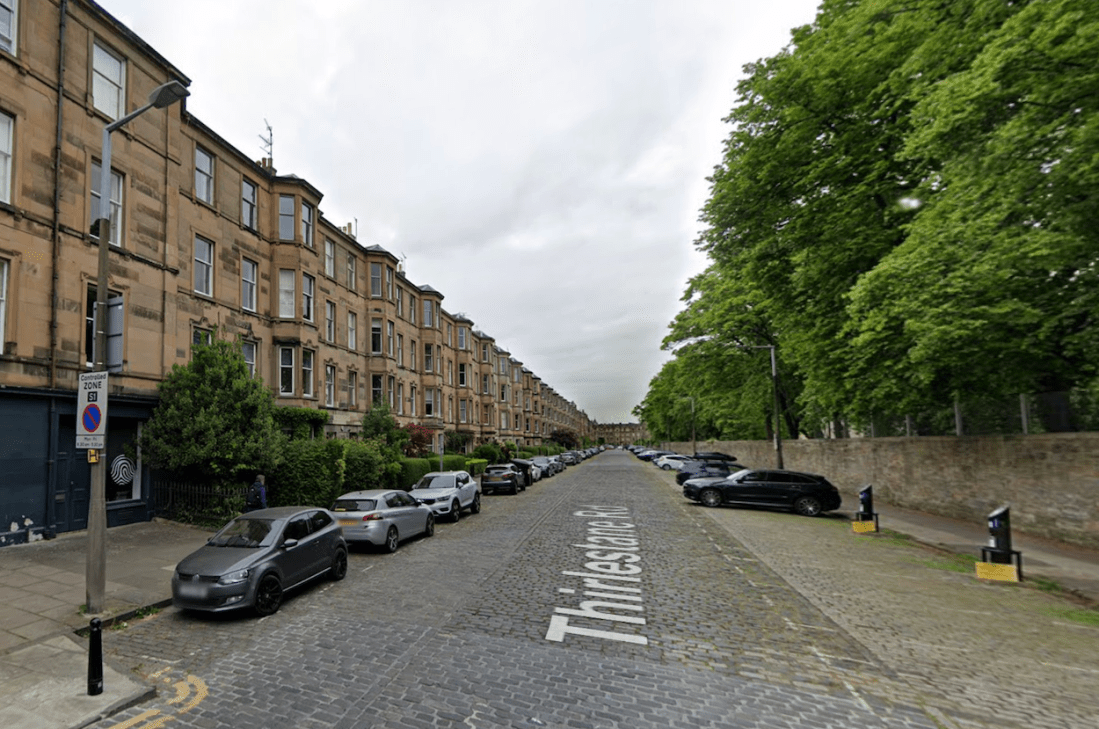
The bulk of the earlier architecture is still there, although in the left foreground Taylors the newsagent and “…ian Warehousemen” are now part of a printing business. Lothian Warehousemen perhaps ? And just one car – rather more now ! And the trees on the south side of the road are rather taller.
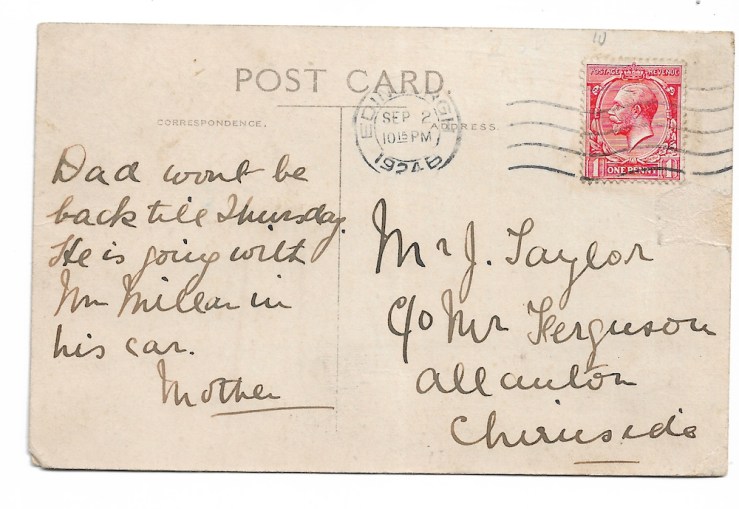
The card was sent in September 1924 from Edinburgh to an address in Chirnside, Berwickshire. It’s interesting to note the message refers to the use of a car, which was probably not that common at this time.
There is no publisher’s name on the card. It’s possible it might have been produced by a local photographer or other business to sell to the people living on the street – which could be quite a few in a long road of Edinburgh tenements ! Images of this kind can be found for many Edinburgh streets.
The card has suffered somewhat over the years, with loss to the image around the edges and a little damage on the back. Purists might grumble about that, but perhaps unfairly given its age. Anyhow, it’s a useful card for any Edinburgh collector, and even better if your home is on the road or nearby.
8 July 2024
We hope this finds you enjoying some summer sunshine, either here in the UK or in more exotic climes. Sending postcards has been part of the holiday routine for many decades, and part of that routine is exploring the well-trodden tourist routes to find some cards to send. Like this place, for example – the Via Cattedrale in the southern Swiss city of Lugano, in the Italian-speaking canton of Ticino…
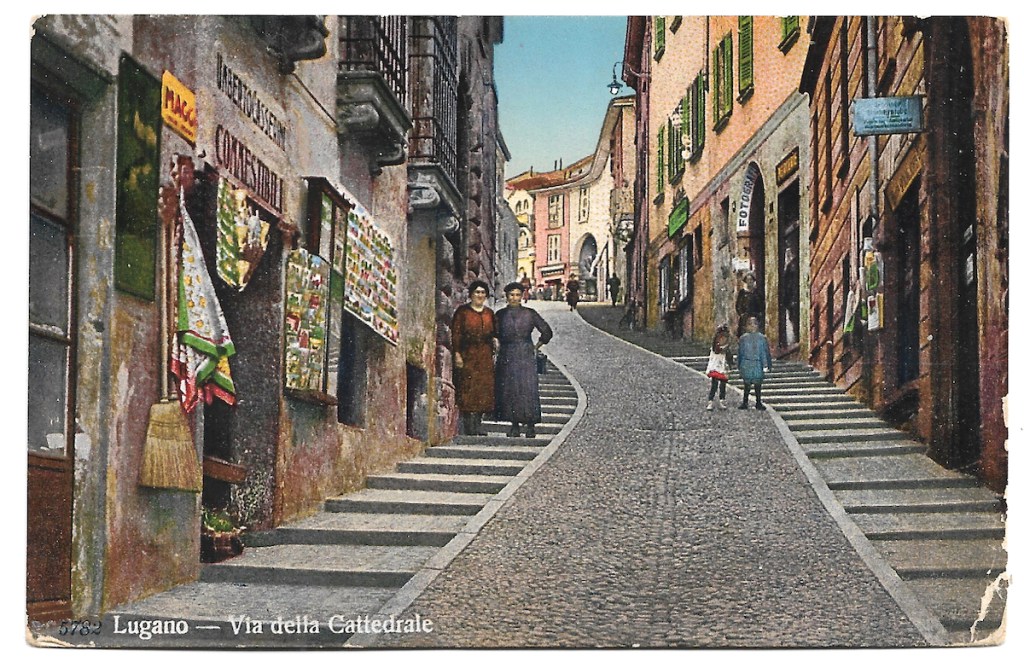
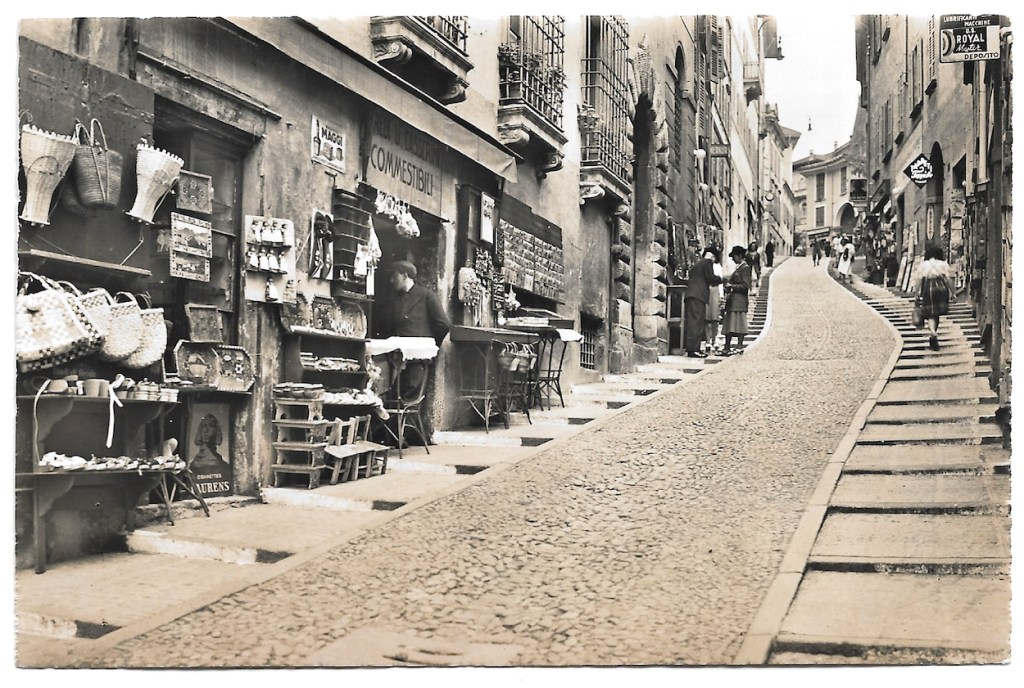
As a modern tourist guide puts it, “along this pleasant walk, you’ll find many small boutiques, craftsmen’s jewellery shops, art galleries, antique shops, giftshops and many picturesque corners…” It doesn’t seem much has changed since these cards were produced – the left hand one was posted in 1930 (the sender calls it “a funny old street”), the right hand one dates from perhaps some years later.
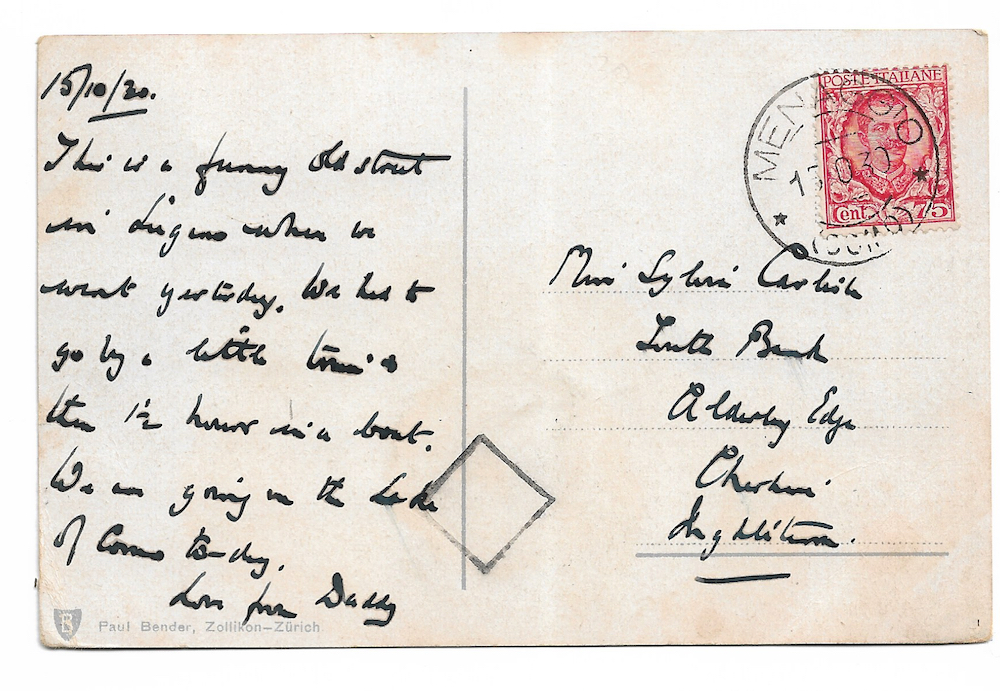
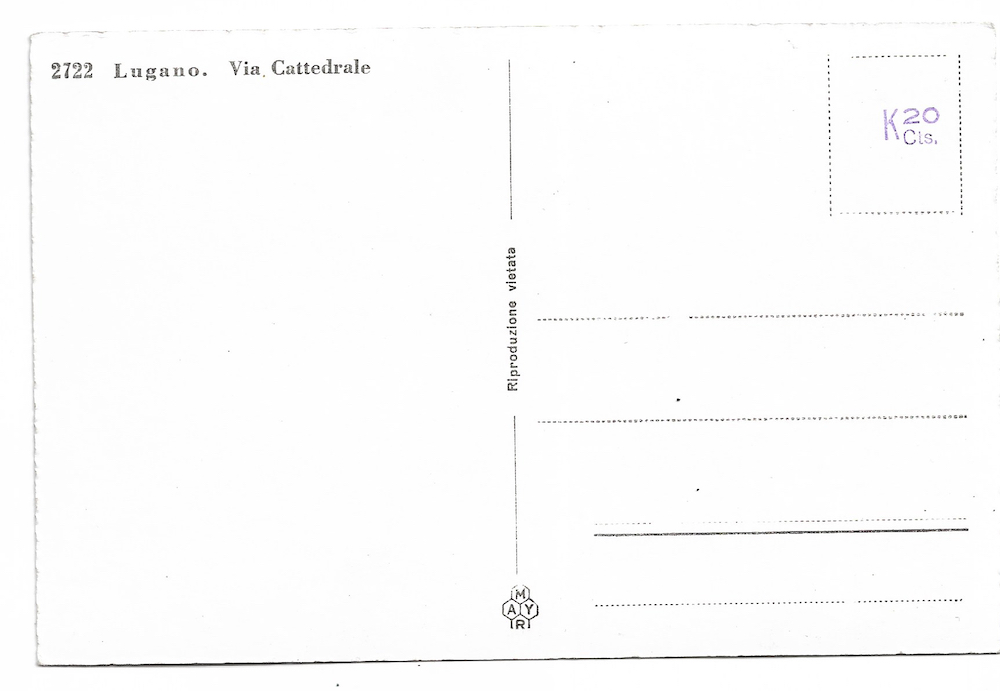
The images have been taken from almost the same spot, and both show a general store on the left. The sign above the door says “Alberto Lasserin – Commestibili”, the latter word meaning “edibles”, so presumably mainly food. However, the shopkeeper is clearly taking advantage of the passing tourist trade by offering other items, including what looks like a fairly impressive display of postcards to the right of the shop door. Perhaps these cards were even bought from this shop – we will never know.
Experienced collectors will immediately note that the images, although basically the same spot, have been produced differently. The coloured card is been made by the conventional lithographic (or offset) printing process, with the fine pattern of different coloured dots visible with a magnifying glass (as we still see on newspaper photos). The definition of the image is therefore not always very clear.
On the other hand, the black and white card is what is known as a “real photo” postcard (sometimes RPPC). These are photographs that were reproduced by actually developing them onto photographic paper the size and weight of postcards, with a postcard back. The image is therefore generally much crisper and more detail can usually be seen, as is the case here. A “real photo” card of a place will often command a higher price in today’s market than a litho, all other things being equal, although it is rarely that simple. For a common tourist view such as this, neither would be that expensive anyway.
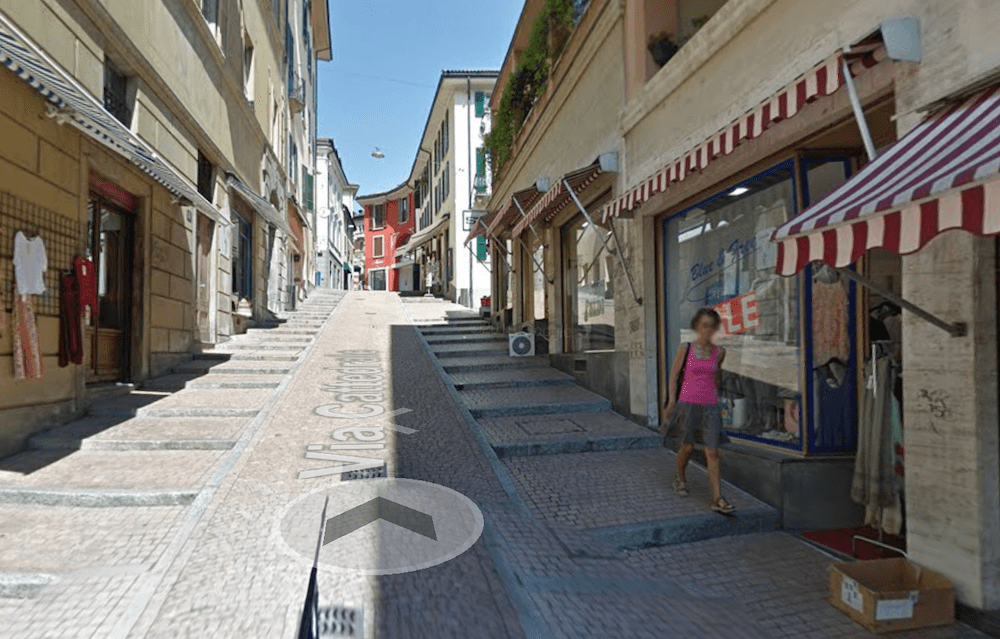
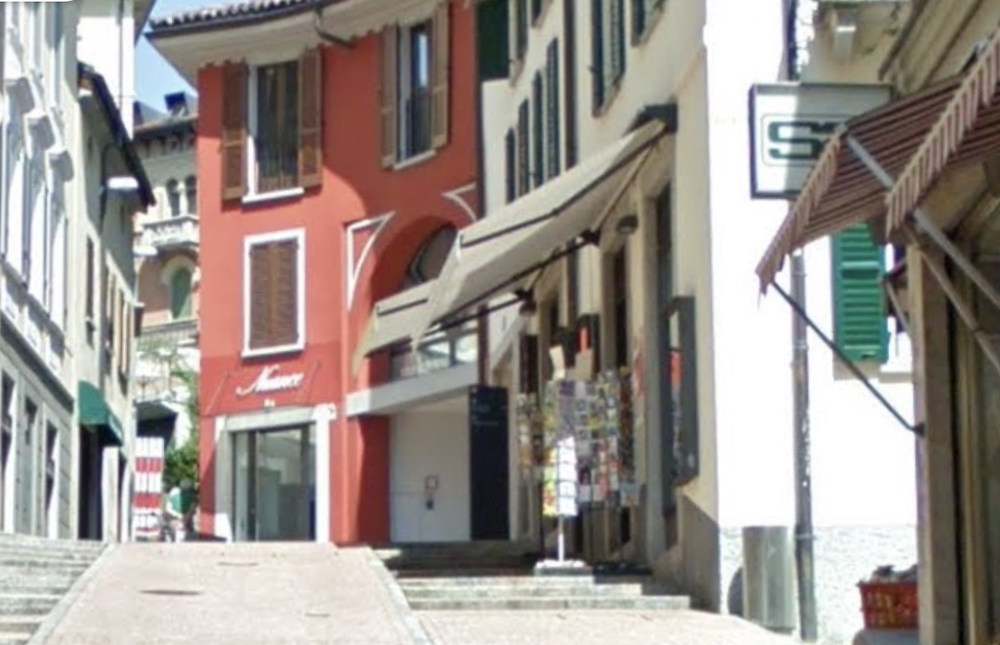
It’s also interesting to compare the view to that on Google Street View (albeit only from 2013, here). The arched entranceway can still be made out (we think), just left of the two ladies on the coloured card and the group of three people on the other. Clearly there has been a lot of change to the shops, and the bend in the upper part of the street seems to have been straightened. But it is also good to see (right hand image above) that, a little further up the street, there was still a shop with (we think) postcard racks outside !
1 July 2024
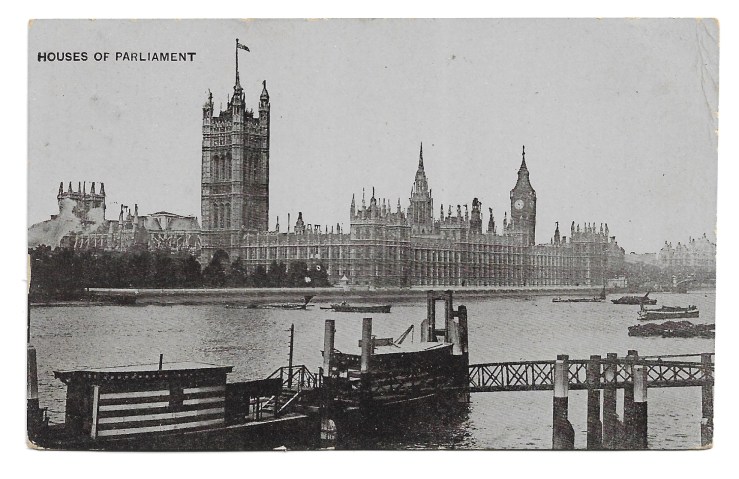
We hesitate to touch on this subject, as everyone has probably heard enough about politics recently – but it is maybe appropriate for the week of a UK General Election ! And although the card’s front is a rather boring view of the Houses of Parliament, the message on the back is, like last week’s, rather more intriguing.
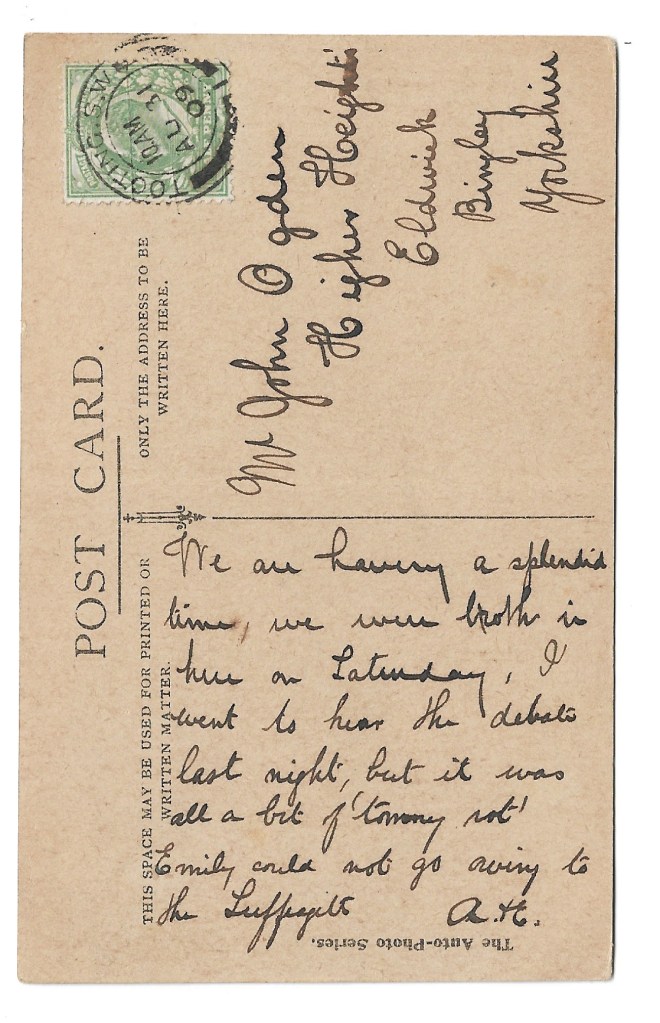
The sender explains, “we are having a splendid time, we were both in here on Saturday. I went to hear the debate last night, but it was all a bit of ‘tommy rot’. Emily could not go owing to the Suffragettes. A.H.”
The card was posted from London on Tuesday 31 August 1909, so I assume “in here” means A.H. and Emily visited the Houses of Parliament on Saturday 28 August 1909. The debate mentioned is presumably that in the Commons on Monday 30 August 1909 (the business on this date can be found in the historical account from Hansard here). The only lengthy substantive debate that day appears to have been on the Housing, Town Planning Etc Bill, which eventually went into law as the Housing, Town Planning Etc Act 1909 (see more here). This prevented the building of “back to back houses”, required homes to be built to certain legal standards, and made local authorities introduce systems of “town planning”.
However, while the purpose of the Bill seems sensible enough, clearly A.H. was unimpressed with the quality of discussion. Their term “tommy rot” is defined by one online dictionary as “pretentious or silly talk”, with suitable synonyms being “baloney, bilge-water, boloney, bosh, drool, humbug, taradiddle, tarradiddle, tosh, twaddle, bunk, hokum, meaninglessness, nonsense, nonsensicality”. We make no comment on whether anything has changed !
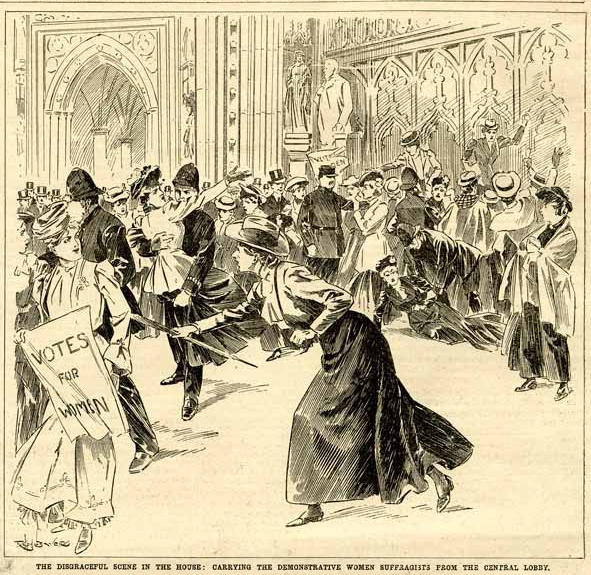
The reference to Emily being unable to attend the debate “owing to the Suffragettes” was, we assume, because of restrictions introduced in 1907 to ban unescorted ladies from the Central Lobby of Parliament during sittings of the House. This followed earlier protests like that illustrated above from 1906 (this is all explained here). Remarkably, these restrictions were not lifted until 1918, the same year some (but not all) ladies were finally allowed to vote (more here). Full equality was not achieved until 1928.
Presumably Emily did manage to go into the building on the Saturday because she would have been accompanied by A.H., if they were a gentleman, or maybe simply because the House would not have been sitting at the weekend. But whatever the background, finding such gems of social history is one of the many delights of postcard collecting.
24 June 2024
A different kind of card this week, one where the back is of rather more interest than the front.
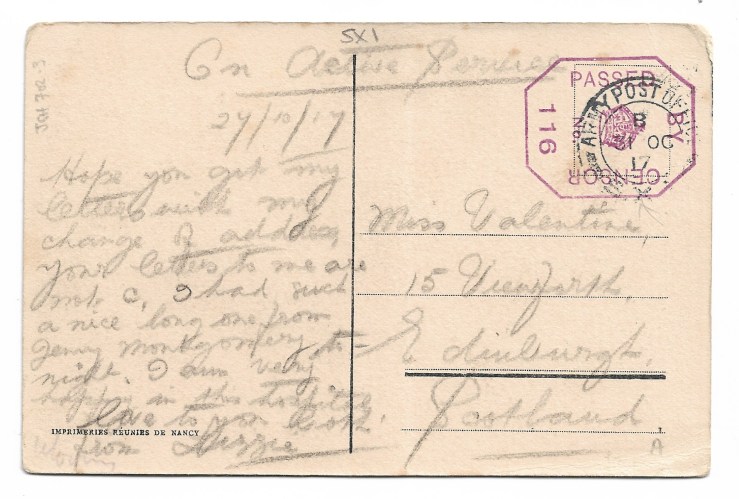
It is addressed to a “Miss Valentine, 15 Viewforth, Edinburgh, Scotland”, marked “On Active Service”, and is dated 27 October 1917. It has no stamp, but a WW1 period British ‘Army Post Office’ postmark, and a censor mark. The message is signed, “Lizzie”.
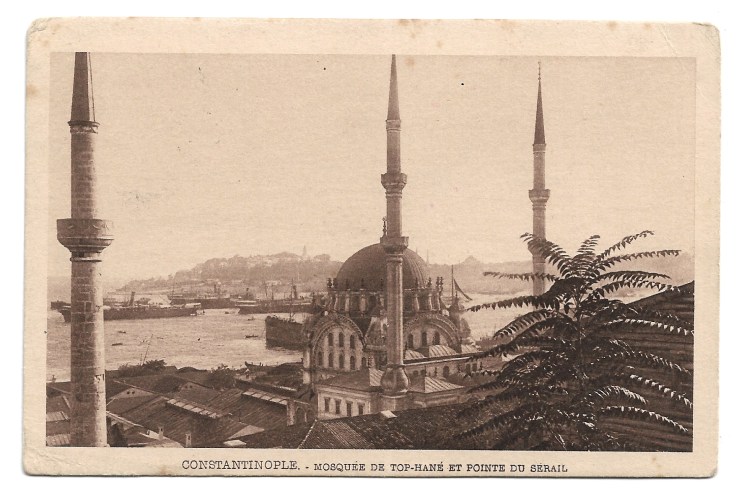
The front, meanwhile, has a view of the Mosquée de Top Hané (now the Nusretiye Mosque), Constantinople (now Istanbul), Turkey.
So, from a lady, perhaps serving with the British forces somewhere in the Middle East during WW1 ? A nurse, maybe ? Indeed she is…
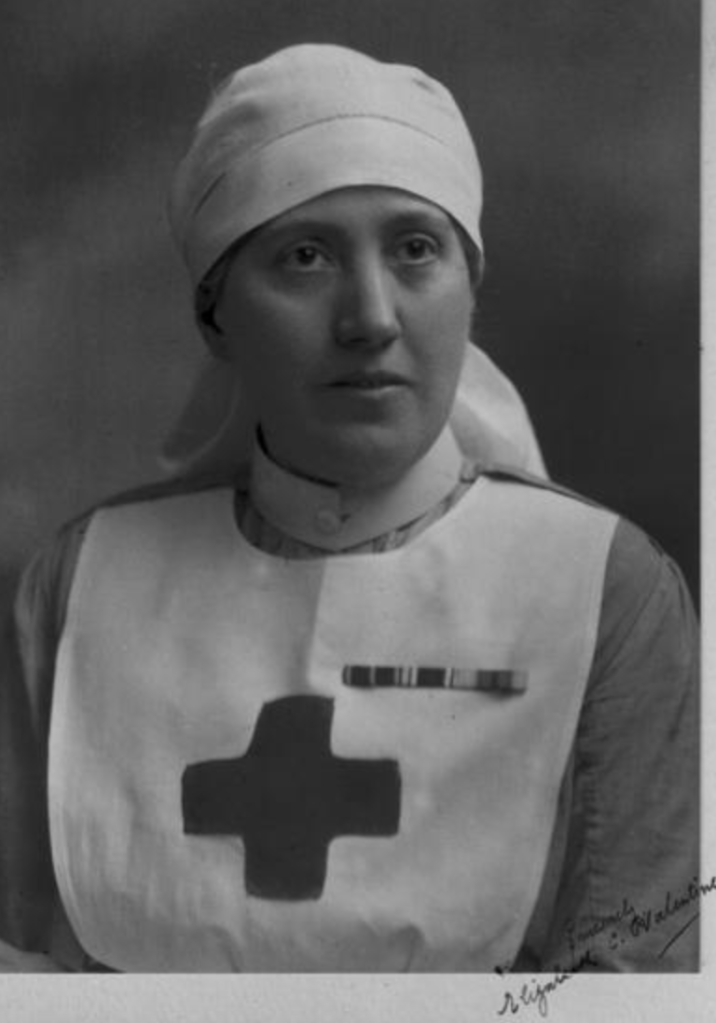
The sender was Elizabeth Valentine, a nurse serving with a Voluntary Aid Detachment of the Queen Alexandra’s Imperial Military Nursing Service, in Salonica (now Thessaloniki), Greece. This was during the fighting between British, French, Serbian and other Allied forces against Bulgaria, Austria-Hungary and Germany (see more about this campaign here).
On this occasion, simple Googling revealed a useful early hit (probably via the address), as luckily someone else had already done some excellent research. There is very helpful detail on the Lives of the First World War website, set up by the Imperial War Museum during the 100th anniversary commemorations. From this and other information available via Findmypast and The National Archives, we discover that :
- she was born in 1882, and was 35 when she “joined up” on 19 August 1917
- 15 Viewforth was her permanent address
- she served in the 28th General Hospital at Salonica between August 1917 and March 1918
- she was awarded the British War Medal and the Victory Medal
We have not yet found any more information about her family, or her life before or after this wartime service. Who was the Miss Valentine who received the card ? And was Elizabeth a nurse in Edinburgh before the war ? But from one postcard, this is a very good start !
WW1 postcards can, in fact, often be a very rich source of wider family history information, as well as the military service of the sender and/or addressee. It can sometimes take a little more digging than this example, but that’s all part of the fun ! So if you have any postcards to or from relatives involved in this conflict, it’s well worth checking where they might take you in your family history journey.
17 June 2024
Our second ‘Postcard of the Week’ may bring back memories for some Edinburgh shoppers “of a certain age” – Patrick Thomson’s department store on North Bridge – or “PT’s” as it was usually affectionately known.
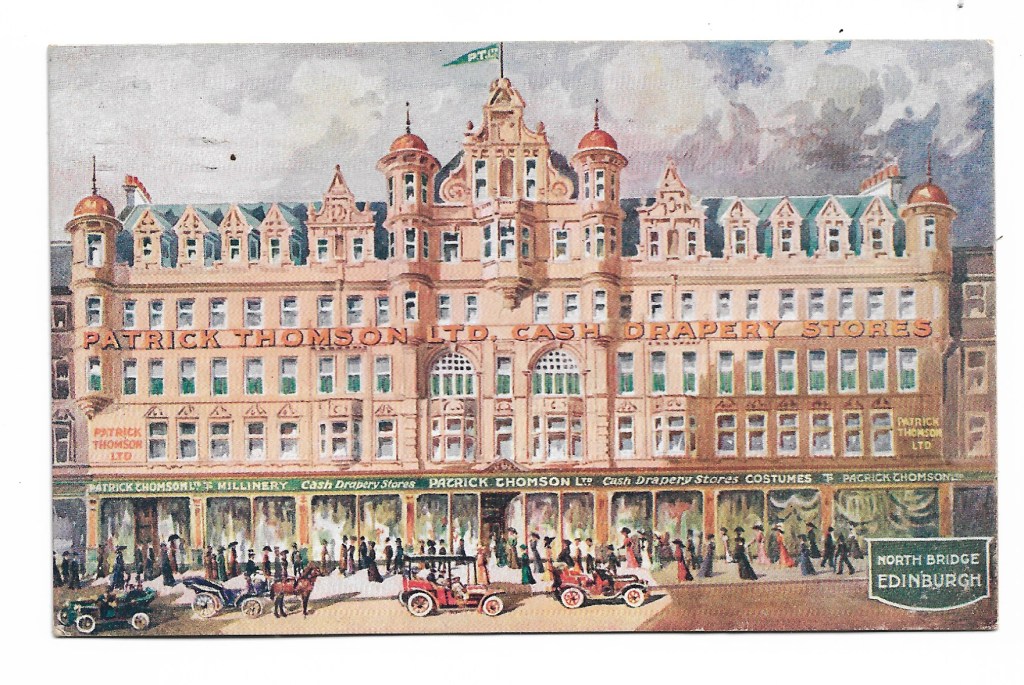
This particular card was sent in December 1915, if we are reading the postmark correctly. The sender says to their friend in Forres, “I am down here having a look at the Xmas foods. I am writing this in the Cactus Room…” We would guess this was a cafe or a restaurant in the shop, perhaps related to the ‘Palm Court’ mentioned in some online commentary.
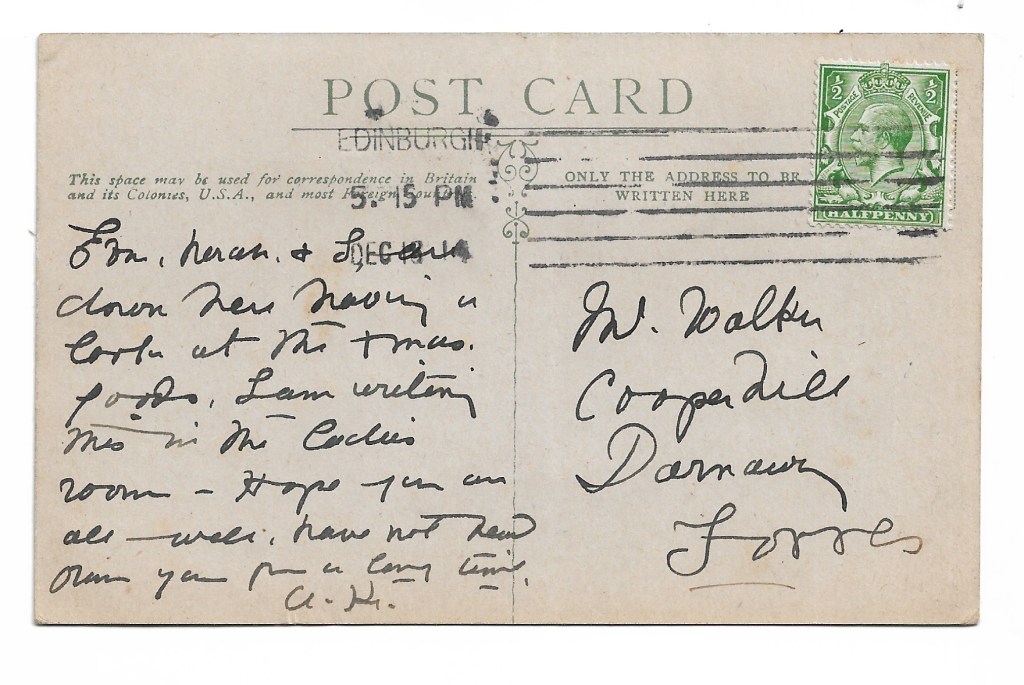
There is no indication of the artist who created the illustration, or who published this card. But it might well have been the shop themselves, as the use of postcards for advertising was quite widespread in the early 20th century. The card would fit well in an Edinburgh collection, a collection of shops, or one concentrating on advertising.
Patrick Thomson began with a small haberdashery and drapery shop on South Bridge in 1889, in the building now occupied by ‘The Inn on the Mile’ on the corner with the High Street. It became so popular they moved to the much larger North Bridge site in 1906. Besides its core business, the store’s 60 departments also sold shoes, furniture, carpets, millinery, costumes, and toys. In time it became one of the city’s leading department stores, competing with rivals Jenners and Forsyths on Princes Street, J & R Allan and Peter Allan on South Bridge, Goldbergs at Tollcross and Parkers on Bristo Street.
In 1926, the store was purchased by the Scottish Drapery Corporation, and Patrick Thomsons marketed itself as “The Shopping Centre of Scotland”. In 1952, the Scottish Drapery Corporation was purchased by House of Fraser. They continued the Patrick Thomson brand until 1976 when it became Arnotts, which finally closed in 1982. In 1984 the building reopened as the Carlton Hotel, which expanded from its original site at the north end of the North Bridge block. It is now the Hilton Carlton Hotel.
10 June 2024
Our first ‘Postcard of the Week’ is a view of a well-known location in Leith.
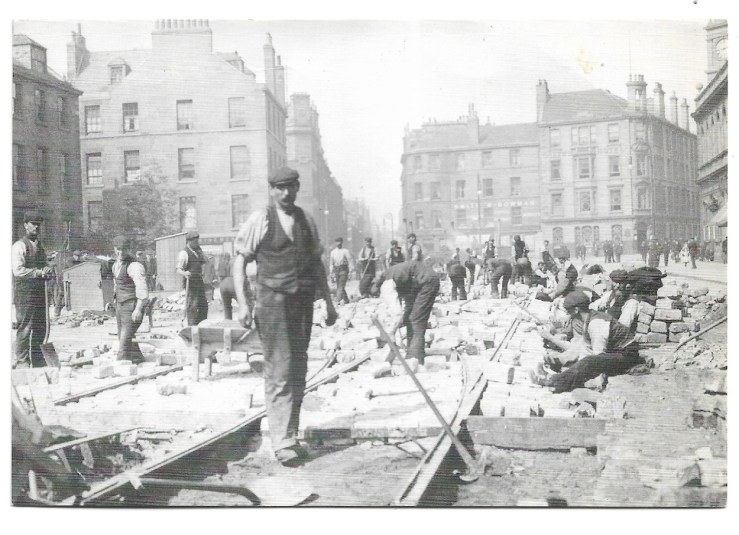
Tram works on Leith Walk ! But not the recent rather controversial affair – this view at the Foot of the Walk dates from 1904. At this time, Leith was still a “municipal burgh”, separate from Edinburgh, and very proud of the fact. Leith Corporation Tramways ran the service from 1905 until 1920, when Leith merged with Edinburgh, and the two separate tramway systems also merged (not withstanding the fact Leithers voted by a majority of more than six to one against the political change !).
Until then, passengers had to change service at Pilrig (the boundary between the two municipal areas, part way up Leith Walk), from the Leith electric system to the Edinburgh cable-drawn network. This often confused affair was known as the “Pilrig Muddle” (for more on the history of Leith, see this Wikipedia page).
The view is still very recognisable, if we compare it to a Google Street View image from June 2023, complete with the new tram lines…
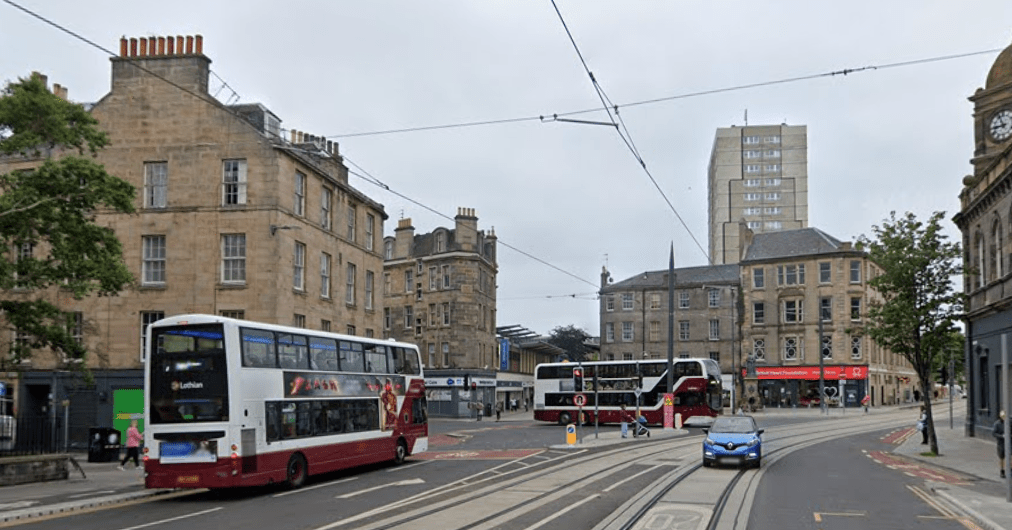
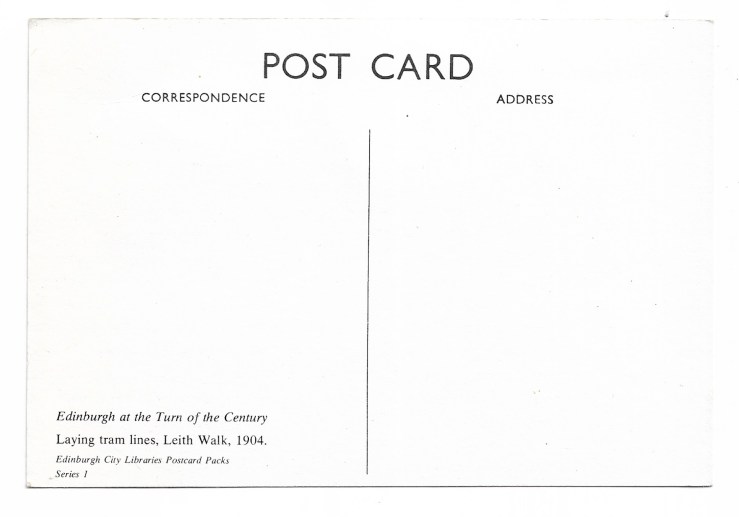
This is also an example showing that cards don’t have to be old and/or expensive to be interesting. This example is a modern reproduction by Edinburgh City Libraries, part of a series called ‘Edinburgh at the turn of the century’. It could fit well into a straightforward Edinburgh collection, as well as a collection focussing on trams, people at work, or social history.
 Lothian Postcard Club
You must be logged in to post a comment.